You are not really asking whether Shirakawa-go is beautiful. You already know it is. You are asking whether it is worth pulling an entire day out of an itinerary you cannot redo.
This guide covers the Kanazawa to Shirakawa-go day trip the way it actually runs in 2026: the bus, the booking trap that catches people on the way back, how long you genuinely need in the village, what the food and souvenirs are worth, and whether Gokayama is the better call for you. By the end you will have a verdict you can act on tonight instead of a tab you keep open for another week.
And in my personal opinion as someone who has lived in the area for 3 years and gone twice and helping friends and family go, yes, it’s worth it. But, there are some alternatives and things to know.
Shirakawa-go From Kanazawa: The Big Question
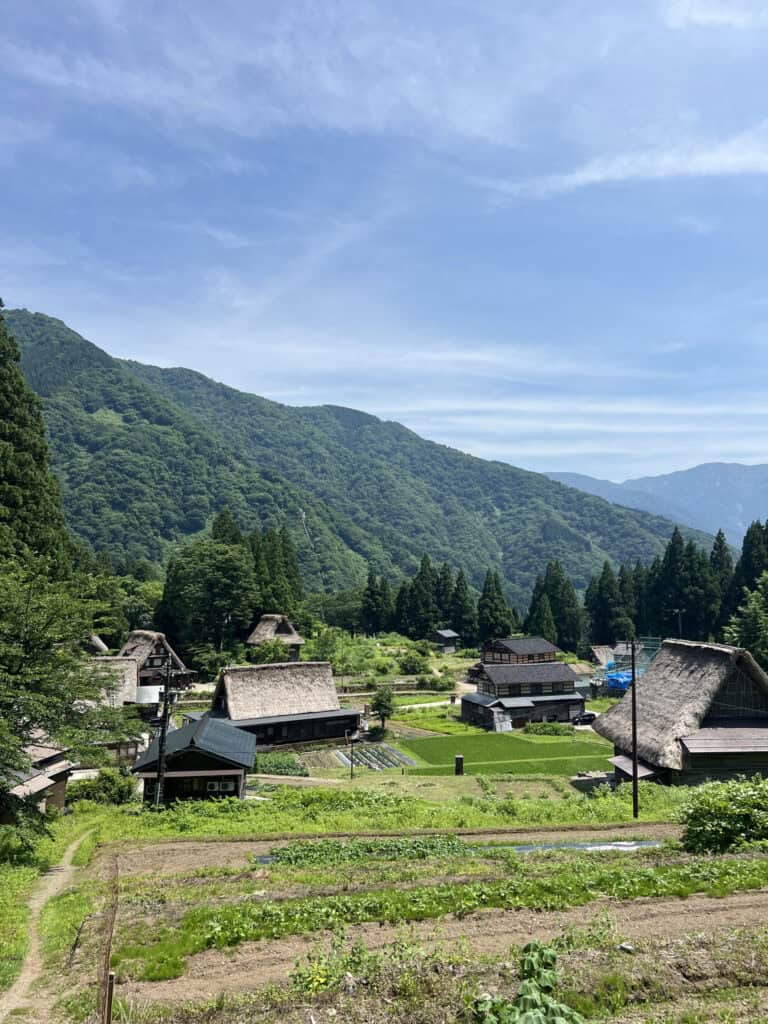
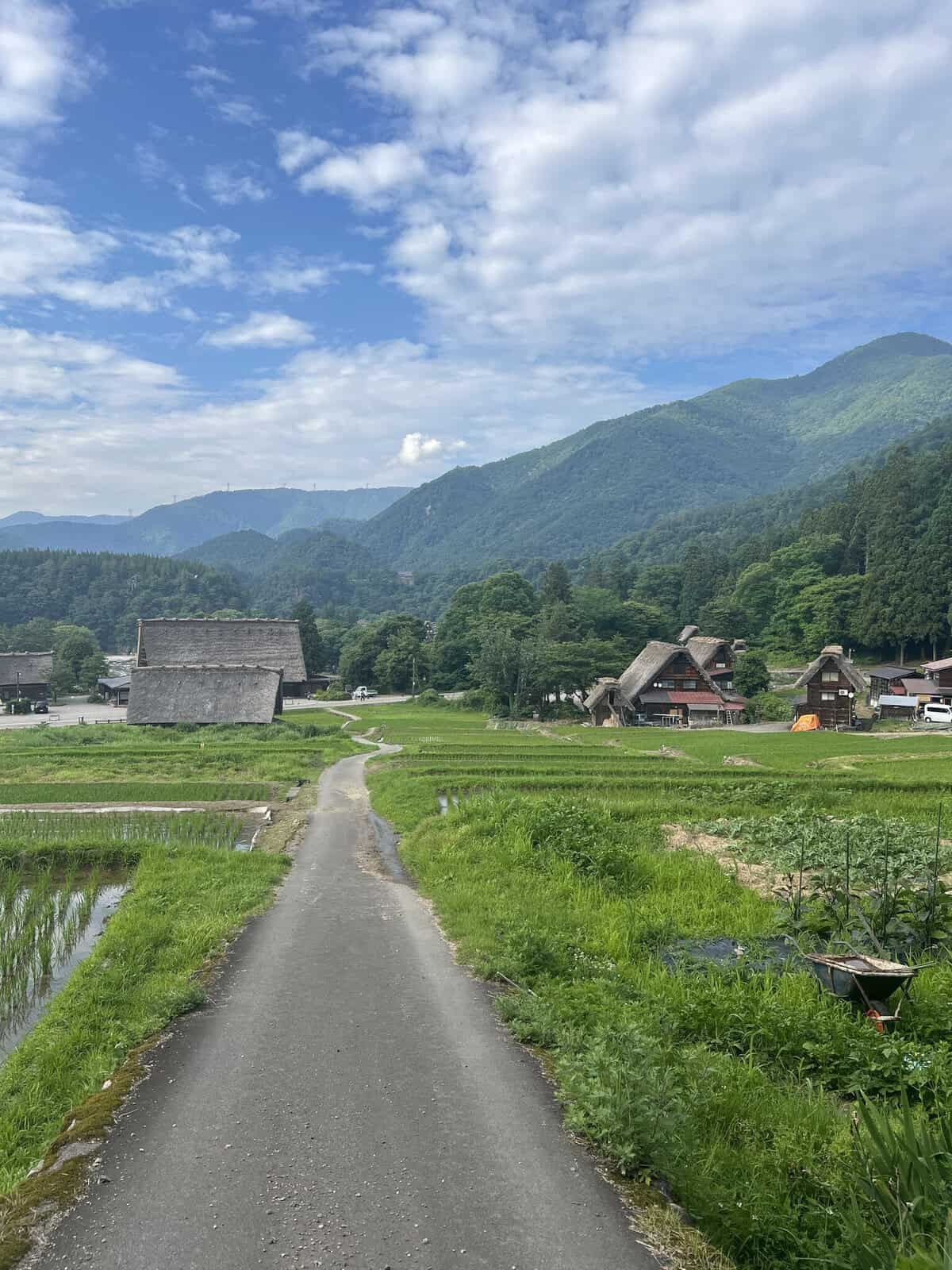
Both times I have been to Shirakawa-go, it was summer. Not the snow version everyone has pinned. The grass was green, the rice was up in the paddies between the houses, and the whole valley looked less like a postcard and more like a place where people were quietly getting on with their year.
That is the first thing worth saying out loud. The Shirakawa-go in your head is probably the January one with two meters of snow on the roofs and the lights on. The Shirakawa-go you will most likely see is a working farming village with a lot of people walking through it. That is not a disappointment. But it is a different thing, and knowing which one you are buying a day for changes the answer.
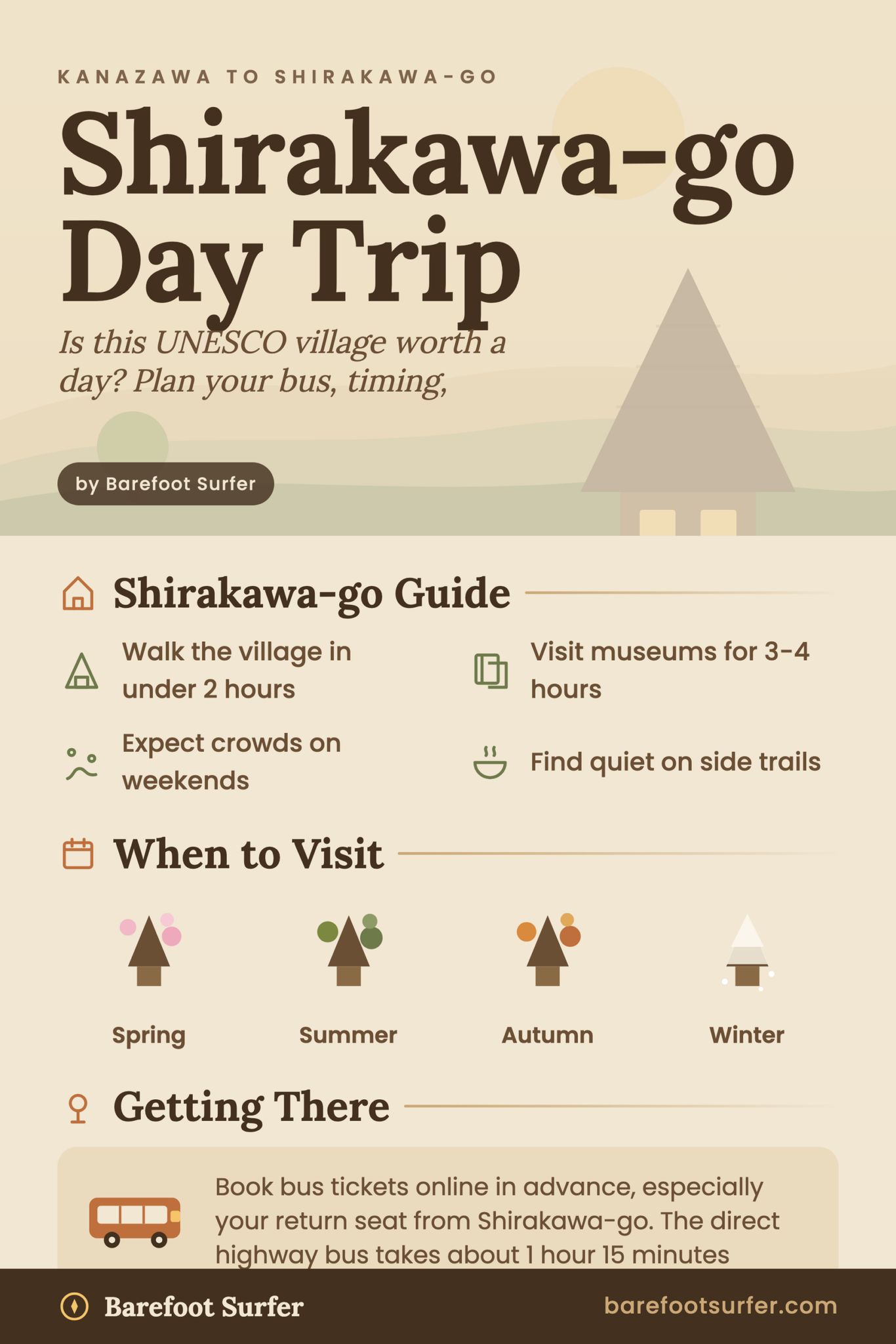
Here is the honest shape of it. Shirakawa-go from Kanazawa is a half-day trip that most people accidentally turn into a full one. The village itself is small. The bus is short. The thing that eats the day is the logistics, and the logistics are entirely solvable in about ten minutes if you do them before you leave home.
The Essentials: Getting From Kanazawa to Shirakawa-go
There is no train. That sentence surprises people more than it should. Shirakawa-go sits in a river valley in the mountains of Gifu with no rail line, so every option below is a road option.
By Bus: Your Most Reliable Option
How long does it take to get from Kanazawa to Shirakawa-go by bus? About 1 hour 15 minutes each way on the direct highway bus, per the Kanazawa City Tourism Association’s own timetable. Buses leave from Kanazawa Station West Exit, Bus Terminal #4, with the first useful departure at 8:10am.
How do you book bus tickets from Kanazawa to Shirakawa-go? Book online in advance through Japan Bus Online or by phone with Hokutetsu, and treat the seat like a reserved train seat rather than a local bus you can flag down. The one-way adult fare is ¥2,800 to Shirakawa-go and ¥2,200 to Gokayama. I have bought in person at the station and it worked, but I would not do it again, and here is why.
The second time I went, I brought my younger brother. We got there fine. We walked the village, took our time, and then strolled back to the terminal to sort the ride home like it was a normal bus stop. Every reserved seat for the next two hours was gone. Not one left. Our entire plan collapsed into standing there hoping the last two non-reserved services would not be full, because not every service on this line requires a reservation, and the non-reserved ones are the lottery you do not want to be playing at 4pm in a mountain valley with no train.
We got on. It was luck.
Book your return before you leave Kanazawa. Not your outbound. Your return. The outbound is easy because you are booking it at home with a coffee. The return is the one people leave to chance, and it is the one that turns a lovely day into a two-hour anxiety spiral at a bus terminal. This is one of the few times in Japan where I will tell you flatly not to improvise.
Two more things the operators will not put in bold. Nohi Bus warns on its own route page that delays of two hours or more can happen from car-park congestion at the village, heavy snow, or expressway closures. And the JR Pass does not cover this bus. The Takayama-Hokuriku Area Tourist Pass does, but you still have to make the seat reservation, because a pass buys you the fare, not the seat.
As for the station itself: do not lose sleep over it. Kanazawa Station is well signed, the maps are good, English is everywhere, and the staff will walk you to the right platform if you ask. It is one of the easiest big stations in Japan. If you want the rest of the city sorted while you are there, I laid it out in my Kanazawa itinerary and in what to do and what to skip in Kanazawa.
Driving Yourself: More Freedom, But With Caveats
A car gives you the early arrival, which is the single biggest upgrade available on this trip. It also gives you the parking problem. The village’s own access guide is blunt about it: on weekends and national holidays it can take over two hours to get a parking space, and it recommends weekday mornings for anyone who actually wants to enjoy the place.
The winter caveat is not a suggestion. Winter tires are required from the beginning of December to the end of March, and Japanese expressways enforce winter tire regulations during snow conditions. If you are renting, you specify studless tires at booking, not at the counter. If you have never driven on packed snow, this is not the week to learn.
My call: rent a car for this only if you are already renting one for the wider Hokuriku loop. Renting a car purely to reach Shirakawa-go is paying money to inherit a parking problem the bus does not have.
Organized Day Tours: The Hands-Off Approach
A tour is not a failure of planning. It is a trade. You give up the ability to linger, and you buy back the two decisions most likely to go wrong: the return seat and the arrival timing.
Take the tour if your dates fall on a weekend, if the good departures are already sold out when you go to book, or if you would rather spend your planning energy on the parts of the trip that are harder to get right. Skip it if you want to walk the trails at your own pace, or if you are continuing on to Takayama rather than doubling back.
And if you are going during the January light-up, the tour is close to your only realistic route in. More on that below.
Inside Shirakawa-go: What To Expect (And How Much Time You Really Need)
Under two hours. That is how long both my visits actually took, walking it properly, going up for the view, stopping for a drink, not rushing.
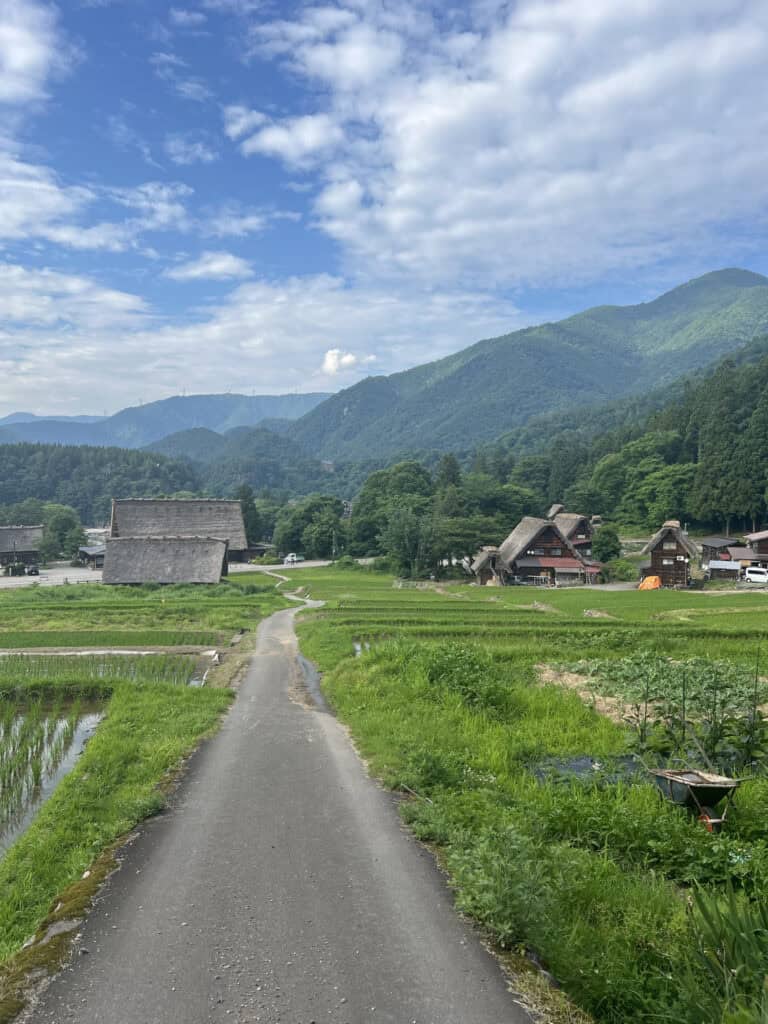
I know that number reads low against every itinerary telling you to allow four. Here is what is behind it. Ogimachi, the main village, is small and flat and walkable end to end. The tourist association says it plainly on its own FAQ: there is no sightseeing bus inside the village because the whole thing is in walking range. If you go inside two or three farmhouse museums and sit down for a proper lunch, you get to three or four hours. If you do not, you are done in two and you will feel it.
So the real question is not “how long do I need.” It is “what am I doing with the time.” Decide that before you book the bus, because the answer determines which return you want.
Walking the Village: Crowds, Views, and Local Life
Is Shirakawa-go crowded? Yes. It is one of Japan’s most visited rural sites, and it is busiest on weekends, national holidays, and during the winter light-up. Early morning on a weekday is meaningfully quieter, and the crowd thins noticeably in the last hour before the buses stop.
Here is the thing I would tell my sister. Everybody goes to the Shiroyama viewpoint, gets the shot, and comes back down the same way. But there are side trails off the main path that get you a better and much emptier look at the valley, and I walked them both times I went. That is where the day stops feeling like a queue and starts feeling like a place.
You can walk up to the viewpoint in about 15 minutes, or take the paid shuttle that runs from near the Wada House. The village guide lists the fare at 300 yen each way, cash on the bus. My advice: walk up, take the trail down. You will pass almost nobody.
The Gassho-zukuri Houses: More Than Just a Photo
The roofs are the reason the village exists as a World Heritage site and not just a pretty valley. The 45 to 60 degree pitch is not aesthetics, it is snow load. The houses all face the same direction to cut wind resistance and manage sun. Every one of them is a piece of engineering that predates the tools you would use to build it.
I have to be straight with you about my own limits here. I only ever went inside the houses that are shops. I never paid into the museum houses, so I cannot tell you what the Wada House attic feels like from the inside, and I am not going to pretend otherwise.
What I can tell you is the price and whether the trade is fair. The Wada House is ¥400 for adults, cash only, open 9:00 to 17:00, per the tourist association’s listing. Most facility admissions in the village sit at 300 to 400 yen, with the open-air Minkaen museum at 800 yen. At those numbers, going inside one house is not a financial decision, it is a time decision. If the architecture is why you are coming, pay the 400 yen. If you want the valley and the walk, you can honestly skip it, and that is what I did twice.
[STORY NOTE: William, if you have anything sensory from standing next to the roofs, the smell of the thatch in the summer heat, the sound of wind through them, drop it here. Two lines is enough. If you have nothing, we cut this note and the section stands as is.]
Eating and Shopping: What’s Actually Worth Your Money
I did not eat a real meal in Shirakawa-go either time. That is not an accident, and it is the recommendation.
What I bought was ramune, the soda with the glass marble you push into the bottle. It was tourist priced. It was also exactly right for a hot summer walk, and I would buy it again knowing full well what the markup is. That is the honest register for food in Ogimachi: the village is a working World Heritage site with a captive audience, and prices reflect it.
The souvenir I would actually point you at is the one my brother found. There are gachapon machines in the village, the capsule ones, running about 300 to 500 yen a turn. Some of them dispense little models of the gassho houses, and the variants are the different seasons. My brother put money in, got one, and kept it. It cost less than a coffee and it is a better object than anything on the shelf next to it.
If you want a proper sit-down meal in the region, eat it in Gokayama or Takayama, not here. Which brings us to the part of this article that might actually change your plan.
Beyond Shirakawa-go: Is a Combination Trip Better?
Gokayama’s Ainokura and Suganuma: The Quieter Neighbor
What is the difference between Shirakawa-go and Gokayama? Both are UNESCO-listed gassho-zukuri villages in the same river valley. Shirakawa-go’s Ogimachi is larger, far more famous, and built out for tourism. Gokayama’s Ainokura and Suganuma are smaller, quieter, and much less visited, so you get something closer to a private experience with the same architecture.
I have bought souvenirs in Gokayama. I have had lunch there and a dessert after it. All of it was more peaceful and more under the radar than anything in Ogimachi, and none of it felt like it had been priced for me specifically. If you want the version of this day where you are a guest in a village rather than a visitor to a site, that is Gokayama.
Now the part that decides it, and this is where most guides get it wrong.
Gokayama is a Toyama-side trip, not a Kanazawa-side one. The Kanazawa highway bus does stop at Gokayama Suganuma, but only from April through November, and you cannot board that bus at Gokayama heading for Shirakawa-go, or get off at Gokayama on the way back to Kanazawa. It is a one-directional stop with rules that will ruin your day if you assume otherwise.
The route that actually works is the Kaetsunou World Heritage Bus, which runs Takaoka and Shin-Takaoka through Johana, Suganuma, and Ainokura up to Shirakawa-go, with hop-on hop-off passes sold at the Takaoka ticket centers and at Shirakawa-go Bus Terminal. It is a local bus, so you can get off, look, and get back on.
So: if you are coming from or going on to Toyama through Takaoka, stop at Gokayama. It costs you almost nothing on that route and it is the better village. If Kanazawa is your only base and you are coming back the same day, Gokayama is a car trip or a separate day, not a bolt-on. I wrote the full picture in my Gokayama guide, and if Toyama is on your map at all, start with the Toyama itinerary.
One rule if you take the World Heritage Bus: it has to be the local bus, not a tour bus. A tour bus drives past Gokayama and you watch it happen through the window.
Takayama: Pairing History With the Mountains
Shirakawa-go sits between Kanazawa and Takayama, which is the single most useful fact in this whole article. The bus does not make you choose. Kanazawa to Takayama via Shirakawa-go is ¥4,200, against ¥2,800 to go halfway and come back.
That means the smartest version of this trip for a lot of people is not a day trip at all. Bring your bag, get the 8:10am bus, spend the morning in the village, get the onward bus, and sleep in Takayama. You spend one day and gain a town instead of retracing 75 minutes of the same road. I broke the connection down in Takayama to Shirakawa-go, and whether the town earns the nights is in my Takayama guide and the Kanazawa vs Takayama comparison.
If your bag is the reason you are hesitating, the Kanazawa terminal has luggage forwarding. That is a solved problem.
Shirakawa-go Through the Seasons: What to Expect When
Straight answer first: I have only seen Shirakawa-go in summer. Twice. I lived three years in Hokuriku and I know exactly what that snow does, but I have not stood in Ogimachi in January and I am not going to write you a scene I did not have.
What summer actually looks like, since that is what I can vouch for: green, loud with insects, rice up in the paddies, and warm enough that the walk to the viewpoint earns you the ramune at the top. It is not the photo you have saved. It is better in one specific way, which is that the village looks like it is being lived in rather than posed.
The winter version is the one everyone wants and the one almost nobody plans correctly. The famous light-up is four evenings only. The tourist association has already published the 2027 schedule: January 11, 17, 24, and 31. Every one of those requires an advance reservation, allocated by lottery and by parking ballot months ahead, and day visitors without a permit have to be out of the village before the lights come on. If you are reading this in July, you are actually early, which is the only time it is possible to get in.
Winter without the light-up is still spectacular and much more attainable. It is also when the bus delays and the winter tire rules bite hardest. Autumn is the sleeper: colour on the slopes, no light-up crowds, no snow logistics.
The Final Verdict: Is Shirakawa-go Worth Your Precious Day?
Is Shirakawa-go worth a day trip from Kanazawa? Yes, with a condition: it is worth half a day, not a whole one. The village is genuinely unlike anywhere else in Japan and the architecture rewards the trip. But Ogimachi is small, busy, and priced for visitors, and if you have built a full day around it you will spend the back half of that day wondering what you were supposed to be doing.
So here is the decision, cleanly.
Do the day trip from Kanazawa if Shirakawa-go is a genuine want, you book both legs of the bus before you fly, and you take the 8:10am out. You will be back in Kanazawa by mid-afternoon with the rest of the day to spend, which is exactly the right shape for it.
Do the one-way instead if Takayama is anywhere on your list. Same day, same bus, more trip.
Go to Gokayama instead if the crowds are what you are afraid of and Toyama or Takaoka is on your route. That is where I ate, where I bought something worth keeping, and where the valley was actually quiet.
Skip it if your Japan days are already full of things you have wanted for 25 years. Shirakawa-go is remarkable. It is not more remarkable than the thing you would be cutting for it.
Whatever you pick, the booking is the part that decides whether the day works. Rural Hokuriku accommodation is thin on the ground and the good places go early, but almost everything worth staying in books with free cancellation, so you can lock a room now and change your mind in September when the rest of the itinerary settles. Booking early here is not pressure. It is just permission to stop thinking about it.
Find your stay near Shirakawa-go or Gokayama on Booking.com
And before you finalise the wider route, the planning hub has the rest of it. If you are still working out whether a rail pass earns its price on your itinerary, that is [INTERNAL LINK PLACEHOLDER: Japan Rail Pass: Is It Worth It For Your Trip?], and what to actually put in the bag for Hokuriku is [INTERNAL LINK PLACEHOLDER: Packing for Japan: What I Wish I Knew].