Takayama, Japan: Is This Mountain Town the Detour You Need to Find Your Way?
I lived an hour and a half from Takayama for nearly three years and only made the trip a handful of times. That’s that laid back mountain town vibe kicking in. And that’s exactly what Takayama, Gifu has to offer.
Takayama, Japan is a small city in the Hida region of Gifu Prefecture, set deep in the Japanese Alps and best known for its preserved Edo-period streets, traditional sake breweries, and Hida beef.
This guide covers how to get there cheaply, what it actually costs to travel Takayama on a backpacker’s budget all the way to luxury, what’s worth your time, and the honest truth about whether this place belongs on your route at all.
First Up: Is Takayama Even For You?
Takayama is not a city. It does not have Kyoto’s temples or Tokyo’s energy. There are no nightclubs, no sprawling food halls, no coworking cafes with flat whites and good wifi. If you show up expecting the usual Japanese city experience you’re going to be confused by how quiet it is and how okay everyone around you seems to be with that.
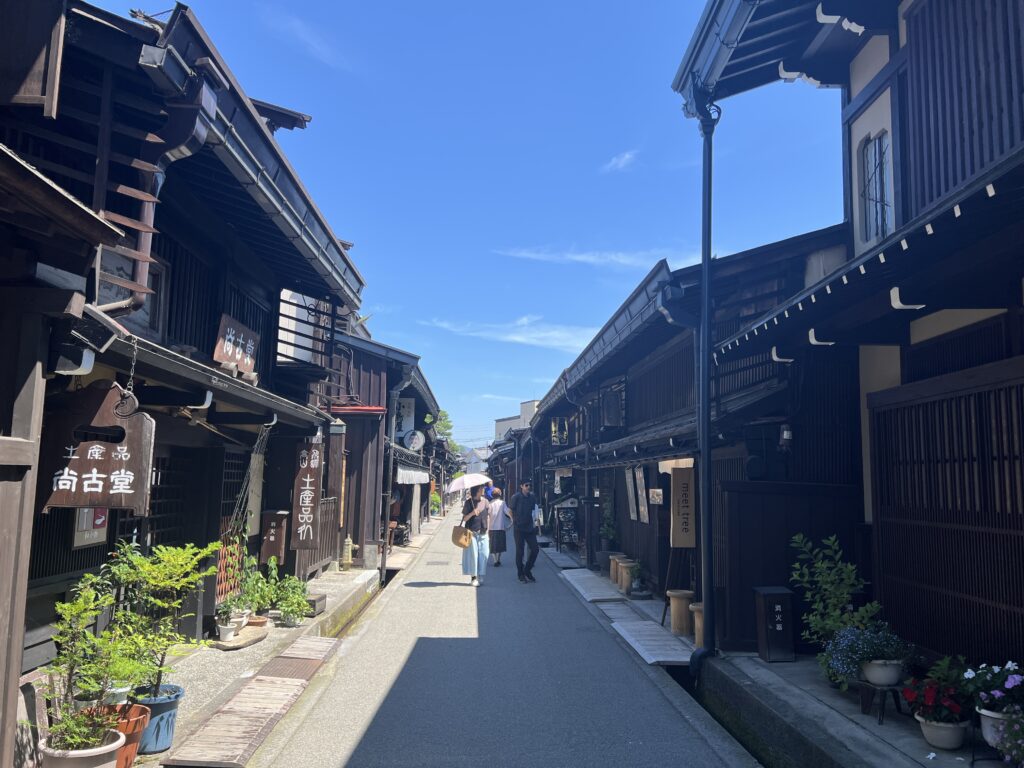
What Takayama does have is rare. Walking its main historic streets in the early morning, before the tour buses arrive, feels like stepping into Japan as it existed three hundred years ago. The wooden merchant houses haven’t been replaced. The sake breweries still hang fresh cedar balls above their doors each year, the traditional signal that new sake has been pressed. The mountains close in from every direction. There is nowhere to rush to. After a few hours the pace gets into you whether you want it to or not.
If you’re in the middle of a two-week bullet-point tour of Japan, Takayama is probably not worth the detour. You’ll feel like you’re wasting time somewhere nothing is happening. But if you’ve been moving fast for too long, or if you landed in Japan genuinely searching for something, this is the kind of place that can slow you down enough to hear yourself think.
The honest version: Takayama is a one to two night stop for most people. One day to cover the town itself, a second if you want to do a day trip to Shirakawa-go. After that you’ve seen what’s there. Go deeper or move on.
When I first visited Takayama back in 2019, it was the perfect getaway experience. My friend Liam and I had just left the bustling mega jungle of Tokyo and made our way to Toyama.
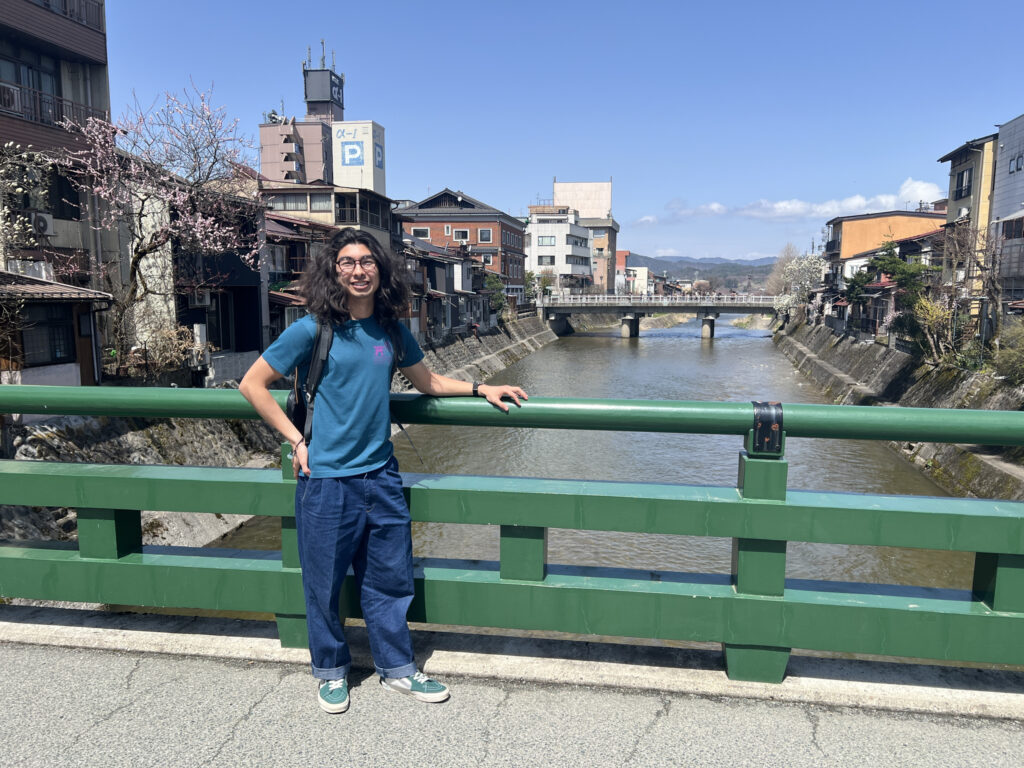
Toyama was nice, but not peaceful. But as we made our way down to Shirakawago, an old preserved village, then back to a smaller town of Takayama, it was tranquil. Enough to walk around and see for hours, but no loud noises. Just a nice old town by the river.
Since then, I’ve gone back a handful of times, and the best times are definitely during the Spring and Autumn Festivals.
If you are looking for something off the beaten path, but a little busier, take a look at these articles in the nearby Hokuriku region:
[Kanazawa: Little Kyoto. A hidden historic city in Japan, but less touristy than Kyoto]
[Toyama: Japan’s best seafood. A small city tucked away in beautiful mountains and nature]
[Gokayama: The unknown alternative to Shirakawago. Preserved Thatched Roof Villages]
Getting to Takayama: Don’t Just Jump on the Bullet Train
The first thing most people do when planning a Japan trip is assume the Shinkansen is the answer to everything. It isn’t. The bullet train doesn’t go to Takayama. This is a mountain town, not a Tokaido corridor stop, and the routes are slower and cheaper than what you’ve been using.
The main options:
- Highway bus from Shinjuku (Tokyo): roughly ¥3,700 to ¥6,500 one way, depending on the departure time and how far out you book. Journey time is approximately 5.5 hours. Operated by Nohi Bus and several others. Book in advance on Willer Express or directly through the bus company.
- JR Hida Limited Express from Nagoya: approximately ¥5,700 without a JR Pass, around 2 hours. If you have a JR Pass this is covered, and Nagoya is also reachable by Shinkansen so this is the fastest route from Tokyo with the pass.
- JR Hida from Osaka: roughly 5 hours, or you can bus to Nagoya first.
Skip the highway bus from Osaka. It exists but the train or bus-to-train combo from Nagoya is cleaner.
[STORY NOTE: Any Toyama-specific memory about learning the regional train network would work here. The discovery that Japan has two layers of trains, the Shinkansen everyone knows about and the local limited express network that connects everywhere else, is a good framing. You figured out a lot of the Japan transit system living in Toyama, and that knowledge gap between tourists and people who lived there is exactly what this section is about.]
The Bus Journey: Cheaper and Surprisingly Scenic
The Shinjuku to Takayama highway bus is the cheapest way in from Tokyo and one of the better bus rides in Japan. The final stretch of the route cuts through the Hida mountains as the highway narrows and starts winding. The mountains come up around you. You realize why they call this region the Japan Alps.
Book in advance, especially for weekends and autumn. The buses fill. You can book through Willer Express with an English interface or through Nohi Bus directly. Night buses are available but I’d take a daytime run for the scenery the first time through.
What to bring: a neck pillow, snacks from a convenience store before you board, and either a good book or downloaded content because the wifi isn’t guaranteed. The journey is long enough that you want something to do.
Trust me, Japan’s buses are nothing to brag about. Clean… and that’s about it. It’s not some luxury VIP recliner seats type of bus with tv screens like in Vietnam.
From Toyama (My Old Stomping Ground): The Local Line Advantage
This is the route nobody in most travel guides knows about because most writers haven’t lived in Toyama.
The JR Hida Limited Express also runs north from Nagoya through Takayama and continues up to Toyama. That means if you’re routing through the Sea of Japan coast, coming down from Kanazawa, or finishing a Hokuriku trip, Takayama is a natural stop before continuing south toward Nagoya. The Toyama to Takayama stretch takes roughly 1 hour 15 minutes to 1 hour 50 minutes depending on the service, and costs around ¥1,600 to ¥2,600 one way without a JR Pass.
The route itself is worth the fare. The train tracks follow the Jinzu River up into the mountains for the first stretch, then cut inland through small valley towns. There’s no reason to look at your phone for that section. It’s truly stunning.
If you’re building a Japan itinerary that doesn’t include Toyama you might not use this route. But for anyone doing the Hokuriku region, meaning Kanazawa, Toyama, and the Sea of Japan coast, this is the logical next move. Takayama becomes the mountain detour that connects the coast to Nagoya without backtracking through Osaka.
I took this train probably four or five times over three years in Toyama. Every time it dropped me off at Takayama station feeling like I’d gone somewhere genuinely different even though I’d only traveled a short distance. The town earns that feeling.
If you take the train first thing in the morning, it’s very quiet. Last time I went for the Spring festival, I met one other tourist on the whole train. We ended up chatting and exploring together for the day!
Takayama Budget: What You’re Actually Going to Spend
Budget guides for Takayama tend to be written by people who visited once on a Japan trip budget of ¥15,000 a day and are thrilled to report it’s “affordable by Japanese standards.” Here’s what a backpacker actually spends.
Tight daily budget (¥4,500 to ¥6,500): hostel dorm + two to three convenience store or market meals + free activities. This is doable if you’re disciplined and not there during peak season.
Comfortable budget (¥8,000 to ¥12,000): private guesthouse room or nice hostel + one sit-down restaurant meal per day + entrance fees for the Folk Village and Jinya. This is where most independent travelers land.
Splurge (¥20,000+): one night at a ryokan with kaiseki dinner and breakfast included. Worth doing once in Japan if you haven’t done it. Takayama is one of the better places to do it because the ryokan experience connects to everything else the town is about.
Trust me, if you can splurge on a nice ryokan hotel, do it around here. I’ve been camping in a tent near Takayama, hearing the birds in the morning, and stayed at the traditional ryokan with a nice onsen and full course dinner waiting for you. I’d take the ryokan this time.
Accommodation: Hostels, Ryokan, and a Sneaky Alternative
Takayama has decent hostel infrastructure. Expect to pay ¥3,000 to ¥4,500 for a dorm bed in a good hostel. Private rooms in guesthouses and budget inns run ¥5,000 to ¥9,000. Ryokan start around ¥15,000 and climb fast once you add dinner.
But, I’ve personally taken my brother here in the summer and paid just ¥3200 for a cheap, but great quality hotel room that even had a sento!
Book at least two to three weeks ahead in peak season, which means October, late April, and any time the Takayama Festival dates land in your window (April 14 to 15 and October 9 to 10). During festival weeks the town fills completely and prices spike.
The sneaky alternative: If you’re okay with a short bus or train ride, the surrounding villages have guesthouses that are significantly cheaper and offer a quieter experience. A few kilometers outside central Takayama the accommodation options thin out and the prices drop. Shirakawa-go has some guesthouses too, though they’re often package-deal style with meals included.
For one or two nights, stay in town. Takayama’s historic district and morning markets are early-morning experiences. Being walking distance matters.
The morning markets will fill you up with a nice breakfast of steam buns, dango, and a cheap cup of noodles! Or go all out on some Hida Beef!
Food: Your Daily Yen Burn (and How to Keep it Low)
Japan’s convenience stores are not corner stores. I wrote about this in Toyama and it’s just as true in Takayama. The FamilyMart and 7-Eleven chains carry hot food, fresh onigiri, prepared meals, sandwiches, coffee, and everything you need to eat well for under ¥1,000 a day if you’re being careful. An onigiri is ¥120 to ¥160. A cup of instant ramen or prepared bento box is ¥400 to ¥600. They are not sad meals. They are genuinely good.
For sit-down meals, Takayama has a few things worth spending actual yen on:
- Hida soba: locally made buckwheat noodles, ¥800 to ¥1,400 for a bowl. Simple, good, the kind of meal you eat without thinking much and then think about later.
- Mitarashi dango: grilled rice dumplings glazed with sweet soy sauce, sold at the morning markets for ¥150 to ¥300. Eat them walking.
- Hida beef: local wagyu, famous, and it should be on your list. A Hida beef skewer at the market runs ¥600 to ¥1,200. A proper Hida beef bowl at a restaurant is ¥2,000 to ¥3,500. A full teppanyaki course is ¥8,000 and up. The skewer is my recommendation. Same meat, fraction of the cost, better atmosphere.
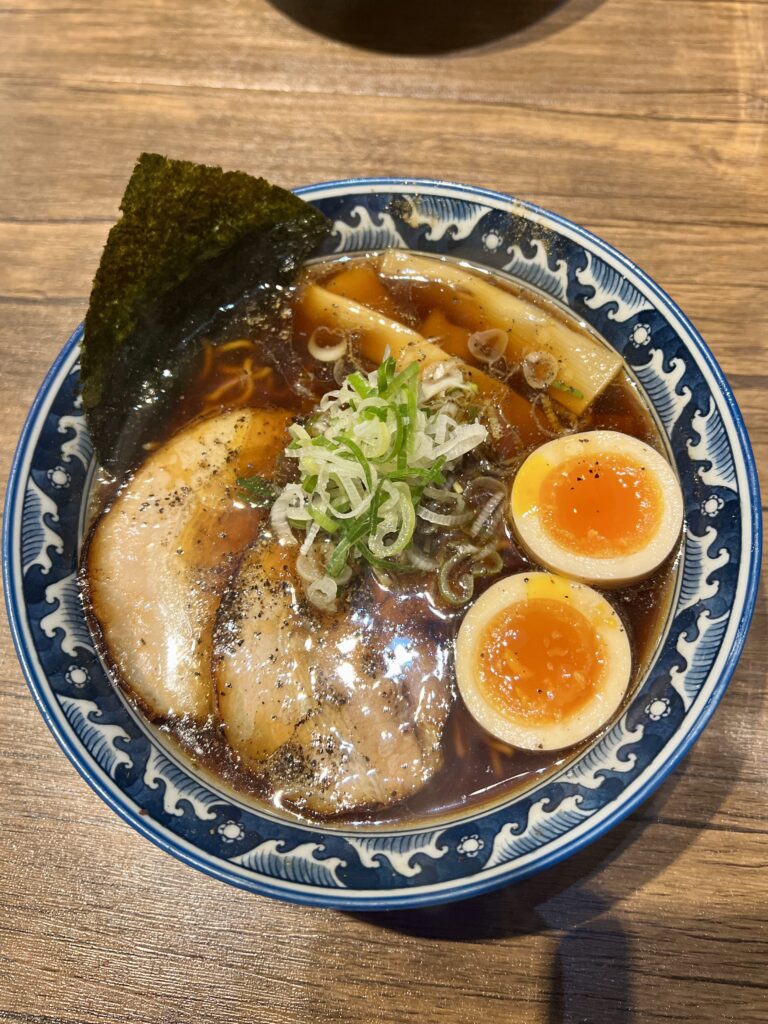
Skip: the tourist-facing restaurants on the main strip with English menus in the window. The food is fine. The price is not.
But to be fair, the ramen photo above was the most expensive bowl I’ve paid for. It was on the touristy strip… It was great. ¥1200 yen for a bowl well spent. They mix a Tonkotsu broth (my favorite) with a Soy Sauce based broth and add a lot of pepper. Amazing.
I’ve personally asked a police officer when I was walking around for his lunch recommendation when I was in Takayama. He said go to Chitose ちとせ !
Activities: Free vs. Worth the Splurge
The good news: most of what’s worth seeing in Takayama is either free or cheap.
Free:
- Walking Sanmachi Suji (三町筋), the preserved old merchant district. This is the heart of the town. Three blocks of Edo-period wooden buildings, sake breweries, craft shops, and miso shops. Most impressive early morning when it’s quiet.
- The morning markets at Jinya-mae and along the Miyagawa River. Free to walk through and browse, though you’ll spend money if you stop to eat.
- The riverside walking paths and smaller shrine areas scattered around town.
Cheap and worth it:
- Takayama Jinya (高山陣屋): the old government storehouse and administrative building, the only one of its kind still standing in Japan. ¥440 entry. An hour to walk through. Good context for understanding what old Japan actually looked like on a functional level, not just an aesthetic one.
- Sake brewery tastings: several breweries in the Sanmachi district offer free or very low-cost tastings. Funasaka and Hirase are both worth stopping into. Walk in, taste two or three varieties, spend ¥0 to ¥500 depending on whether you buy a bottle.
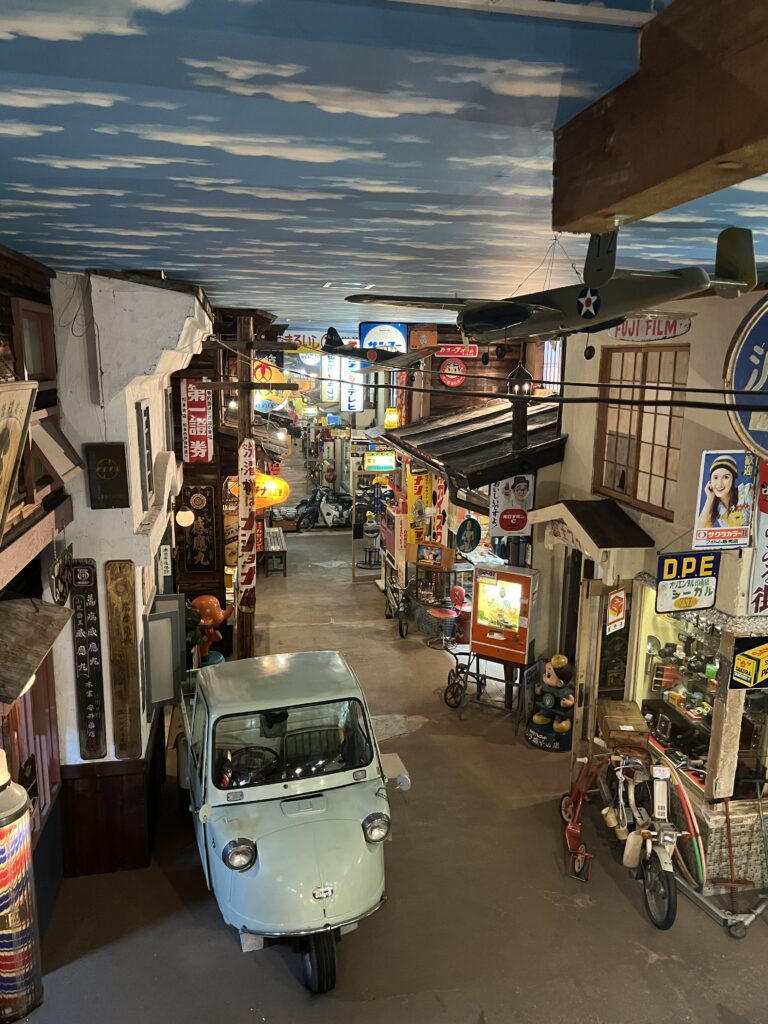
Worth the splurge:
- Hida Folk Village (飛騨の里): ¥700 entry. Outdoor museum of relocated traditional gassho-zukuri farmhouses from across the Hida region. These are actual historical buildings, reassembled on a hillside outside town. The thatched roofs are three feet thick. The interiors show what winter life in the Japanese Alps looked like before modern heating. Go in the afternoon when the tour groups have thinned.
- The Retro Museums!!! : I went with my brother when I took him to Takayama on my most recent trip. There are two different museums, the retro museum and the showa era museum. They do a ticket for both, and it is 100% worth it! Very unique experience of well preserved items from the old Japan. Not a basic museum with glass casing dislplays, but a full on building that is themed like the past.
Beyond the Tourist Spots: What Takayama Offers if You’re Really Looking
The issue with most Takayama guides is that they give you a list of attractions. That’s fine for planning. It misses what the town actually is.
Takayama is a place where nothing is performed for you. The people who run the sake breweries are brewing sake, not staging a sake experience for tourists. The morning market vendors are at the market every morning regardless of whether a busload of visitors shows up. The town has its own rhythm and it was running before you got there and will keep running after you leave. Your job is to step into that rhythm, not stand outside it looking in.
That requires slowing down. Getting up early. Walking without a destination. Sitting on a bench by the river for twenty minutes without checking your phone. Most tourists don’t do this because it doesn’t photograph well and it doesn’t produce a checklist item. But it’s the only way to actually feel what makes the place different.
Morning Market: More Than Just Food and Souvenirs
Both Takayama morning markets run from roughly 6am to noon daily, though they shrink in winter. The Miyagawa market along the river is the larger of the two. The Jinya-mae market is smaller and sits in front of the old government building.
Go before 8am. After 9am the tour groups start arriving and the experience changes completely. Before that it’s mostly locals, a few early-rising travelers, and the vendors setting up the last of their displays. The temperature in the mountains is cooler than you expect even in summer. Bring a layer.
The markets sell vegetables, pickles, dried goods, miso, local craft items, and food. Don’t buy the tourist souvenir items. Buy the food. Grab a mitarashi dango and a small container of pickled vegetables and walk the river path while you eat. That thirty minutes is one of the better things you’ll do in Japan.
Is Takayama’s morning market worth it? Yes, if you go early and treat it as an experience rather than a shopping opportunity. No, if you sleep in and arrive at 10am with everyone else.
I’ve personally purchased a package of different types of miso paste made in Takayama. From very light and easy to very dark and salty pastes. Took me a year to go through it all but very delicious and unique flavors!
Hida Folk Village: A Glimpse into the Past, Not Just a Photo Op
Hida Folk Village is ¥700 and worth every yen.
The gassho-zukuri farmhouses, the ones with the steep thatched roofs designed to shed the Hida region’s heavy snowfall, are impressive in photos. They’re a completely different thing when you’re standing inside one looking up at a smoke-blackened interior that has been holding heat and keeping families alive through mountain winters for two hundred years.
The village has around thirty relocated structures spread across a hillside with views of the mountains. You can walk through the interiors of most of them. There are demonstrations of traditional crafts happening at various points. The information boards are bilingual. Plan for two to three hours.
Go in the afternoon if you can. The morning light is better for photography but the morning crowds are worse for everything else. By 2pm a significant portion of the day visitors are gone and you can move through the village at your own pace.
One note: the walk up from central Takayama is about 20 to 30 minutes or a short bus ride. The bus is more convenient. The walk is better.
Sake Breweries: How to Taste Without Breaking the Bank
Takayama has nine sake breweries. Most of them are in the Sanmachi district and most of them are easy to identify because they hang a sugidama, a round ball of cedar, above the entrance. Fresh green means new sake has just been pressed. Brown means the same ball from last year. Peak season for fresh sake is late winter to spring.
Several breweries offer free tastings. Walk in, look around, accept the small cup they’ll pour for you. Nobody will pressure you to buy. If you like what you taste, buy a small bottle. A 300ml bottle of local sake runs ¥700 to ¥1,500 and makes a better souvenir than anything in the gift shops.
Funasaka Sake Brewery is one of the more visitor-friendly operations with a good tasting room. Hirase Sake Brewery is older and quieter. Both are in the Sanmachi district and walkable from anywhere in town.
If you want to taste without buying anything at all, you can. That’s fine. The breweries understand that not every visitor is going to purchase. Just be respectful of the space and don’t show up in a group of twenty and treat it like an open bar.
Timing Your Trip: When Takayama Really Shines (And When It’s a Tourist Trap)
The direct answer to “when should I go to Takayama”: spring or winter. Autumn is beautiful but it’s also peak crowd season and prices reflect that. Summer is underrated. The Takayama Festival months of April and October are the busiest periods of the year.
If your Japan trip dates are flexible, aim for late November after the autumn color peak, or late January through March when the snow is up and the crowds aren’t. If you’re locked into a two-week window in October, go anyway but book early and manage your expectations around the tour bus situation.
The only time you should visit when it’s busy is during the spring and fall festival times!
Autumn Leaves: The Obvious Beauty (and the Obvious Crowds)
Yes, autumn in Takayama is stunning. The mountains turn and the traditional wooden buildings sit against walls of red and orange and the whole thing looks exactly like every photo you’ve seen. That is all accurate.
It is also the most crowded Takayama gets all year outside of festival weekends. The tour buses run on a schedule you cannot avoid unless you go very early or very late. The ryokan and guesthouses are booked months in advance. Restaurant waits are real.
If you’re going in autumn: arrive mid-week rather than a weekend, get to the historic district before 8am, and book accommodation as early as you possibly can. October 9 to 10 is the Hachiman Festival, one of Japan’s most celebrated, and the town is at absolute capacity on those two days. Unless you specifically want the festival, don’t plan your Takayama visit to overlap.
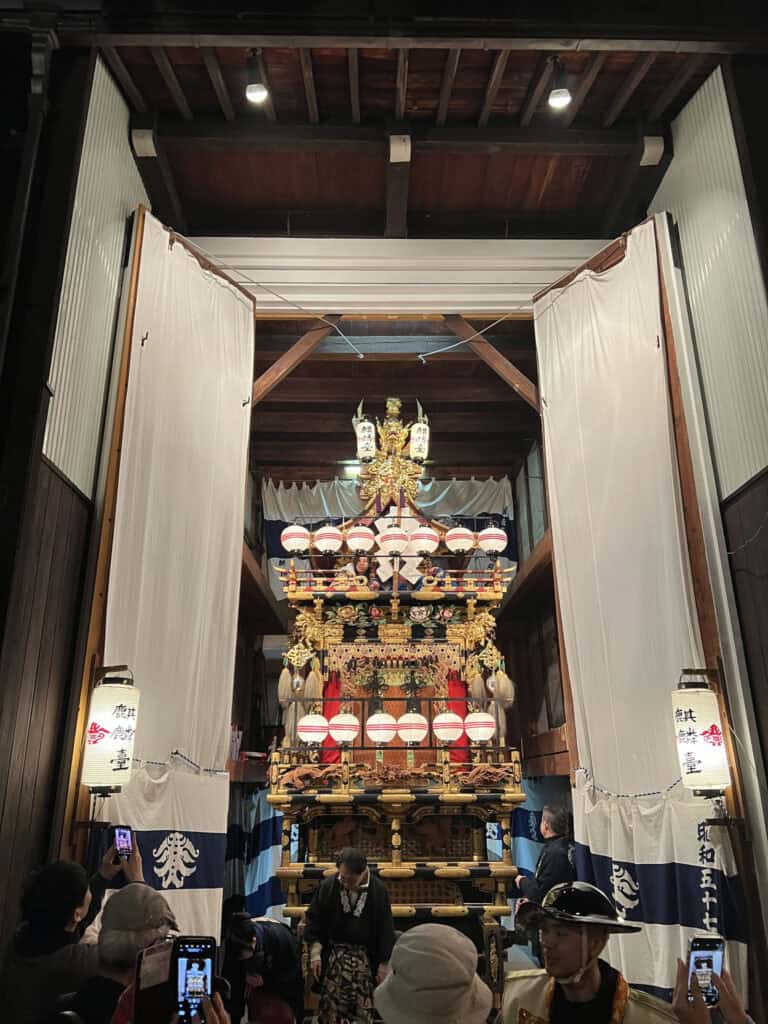
If you do land during the festival by accident or design, it’s worth seeing. The lacquered floats are extraordinary. The scale of the procession is something that doesn’t photograph correctly. You have to be standing there.
Winter: A Different Kind of Serenity (If You Don’t Mind the Cold)
This is my recommendation if you have any flexibility at all.
Takayama in winter, specifically late January through February, is a different town. The crowds are nearly gone. The streets are quiet. Snow sits on the thatched roofs of the Hida Folk Village and on the wooden eaves of the Sanmachi merchant houses and it looks like a place that has been preserved not by tourism boards but by the actual weight of time.
The cold is real. Temperatures drop to minus 5 to minus 10 Celsius overnight and the mountain chill is different from city cold. Dress for it. Thermal layers, a real jacket, waterproof boots.
What you get in exchange: the morning market without the tour groups. The sake breweries with time to actually talk to the people inside them. The Folk Village almost to yourself on a weekday afternoon. A ryokan stay that costs significantly less than it would in October.
I spent nearly three years in Toyama, which gets more snowfall than almost any city in Japan. I understand what grey mountain winters do to a person over time. I am not romanticizing the cold. What I’m saying is that two days in a snowed-in Japanese mountain town, done with the right preparation and the right mindset, is one of the more memorable Japan experiences you can have. The discomfort is part of it.
The Takayama Vibe: What You’ll Actually Feel There
There’s a word in Japanese that doesn’t translate perfectly: ma (間). It means pause, or interval, or negative space. The gap between notes in music. The silence in a conversation that carries more weight than the words around it. Traditional Japanese architecture is built around it. The blank wall that makes the hanging scroll visible. The pause that makes the phrase land.
Takayama has ma.
Walking the Sanmachi district in the early morning, with the wooden buildings still dark and the first vendors just starting to arrange their stalls, there is a quality of silence that most modern places have engineered out of themselves completely. Nothing is demanding your attention. Nothing is competing for your eyeball. The town simply exists and you are in it.
For most people, especially those who came from Tokyo or Osaka or from a week of fast-moving travel, this feels strange for the first hour. You want something to happen. Then it shifts. You start to notice things. The cedar ball hanging above the brewery door. The way the mountain framing changes as you turn a corner. The sound of water running through the open gutters along the street.
This is why I keep telling people who are in the middle of searching for something to consider making the detour. Not because Takayama will hand you an answer. It won’t. But it will slow you down long enough to remember what the question actually is.
I worked for over two years in a traditional Japanese restaurant in Toyama, under a boss who yelled at technique errors and laughed at accidents and demanded a standard of precision I hadn’t been asked for before. The job taught me something about the relationship between slowness and quality that I didn’t have a framework for until I was inside it. Takayama is built from the same understanding. The things worth doing are worth doing carefully.
Is Takayama Right for Your Journey?
If you’re moving fast through Japan trying to optimize every day for maximum famous things seen, Takayama is probably not worth two full days of your itinerary. You’ll spend those two days doing things that look underwhelming in the photo library when compared to a shot from the top of Fushimi Inari or the Shinjuku scramble crossing. I understand that logic and I’m not going to argue you out of it.
But if you’re in Japan for a while, or if you’re the kind of traveler who moves slowly and stays in places long enough to get a feel for them rather than just a photograph, Takayama earns its place.
It earns it especially if you’re doing the Hokuriku region, meaning the Sea of Japan coast from Kanazawa through Toyama. In that case Takayama is the logical pivot point that turns you south toward Nagoya. You’ll be passing through its radius anyway. Get off the train.
Here’s the practical reality: one full day and one night is enough to get the real Takayama experience. Two nights is comfortable and lets you do Hida Folk Village in the afternoon, the morning market early the next morning, the Sanmachi sake breweries in between, and a proper Hida beef meal without rushing any of it. After that you’ve had the town.
Most people who go to Takayama say they wish they’d stayed longer. Most people who go to Takayama also admit they weren’t sure it was worth the stop until they were there. Both of those things are true at once.
There’s something most people are actually looking for when they plan a Japan trip and spend time in the country thinking about themselves and where they’re going. Takayama won’t give it to you. That’s not how it works. What it will do is get quiet enough around you that you might be able to hear yourself figure it out.
I’m not sure Mamoru ever told me to go to Takayama. He didn’t need to. After a year in his house watching him work, watching him care about the quality of everything he made, I understood that the mountain town down the tracks was the physical expression of the same thing. Patience. Craft. The deep comfort of being somewhere that knows exactly what it is.
If that sounds like something you need right now, make the detour.
For more on [backpacking Japan on a budget](INTERNAL LINK PLACEHOLDER), I put together a full guide to stretching your yen without compromising the experience.
If you’re still figuring out what you’re actually looking for before you book anything, my piece on [finding your path through long-term travel](INTERNAL LINK PLACEHOLDER) is probably where you should start.
And if you’re building toward a [digital nomad life in Southeast Asia](INTERNAL LINK PLACEHOLDER) after Japan, I’ve been living that side of the equation for a while now. Here’s what it actually looks like.
So, is Takayama the next stop on your journey? What are you searching for, and do you think a place like this could help you find it? Drop a comment below. I want to hear your thoughts. Or if you’ve been to Takayama, share what it taught you.
Featured Snippet Answers (FAQ)
Is Takayama, Japan worth visiting?
Yes, Takayama is worth visiting if you’re looking for a slower pace, traditional Japanese culture, and mountain scenery away from the major cities. It’s a strong stop for anyone wanting a different side of Japan, especially if you appreciate history over modern bustle and are happy with one to two nights rather than a week.
How many days do you need in Takayama?
One to two full days is enough for most travelers. One day covers the historic Sanmachi district, morning market, and sake breweries. A second day lets you add Hida Folk Village and a day trip to Shirakawa-go without rushing. Keep your luggage light. It’s a small town best covered on foot.
What is Takayama, Japan known for?
Takayama is known for its preserved Edo-period streets, traditional wooden merchant houses, morning markets, local sake breweries, Hida beef, and the Hida Folk Village outdoor museum. The Takayama Festival in April and October is considered one of Japan’s finest, though it draws significant crowds.
Is Takayama an expensive city?
Compared to Tokyo or Kyoto, Takayama can be managed on a backpacker’s budget with discipline. Hostels run ¥3,000 to ¥4,500 per night, convenience store meals keep daily food costs low, and most of the main attractions cost under ¥1,000. Hida beef and ryokan stays are the main splurges, and both are optional.
How do you get to Takayama from Tokyo without a JR Pass?
Without a JR Pass, the most cost-effective route is the highway bus from Shinjuku Bus Terminal directly to Takayama. Journey time is approximately 5.5 hours and fares run ¥3,700 to ¥6,500 one way depending on time of departure and booking lead time. Book in advance through Nohi Bus or Willer Express.