You only get one shot at this city, and the difference between a great Kanazawa day and a wasted one comes down to about four decisions you make before you ever board the train.
This is a first-person, honest breakdown of the best things to do in Kanazawa and the handful of spots that quietly eat your time without giving much back. I lived in Toyama, the prefecture next door, for three years, which put Kanazawa a 25-minute bullet train away and made it the big city I’d run to when rural Hokuriku got too quiet. So this isn’t a list scraped from ten other lists. It’s what to do in Kanazawa, what to skip, how to get around, and how long to actually give it, from someone who kept going back.
Kanazawa: Is It Worth a Day (or Two) of Your Trip?
Is Kanazawa worth visiting? Yes, but let me set your expectations honestly, because that’s the whole point of this article. No single sight in Kanazawa is going to knock you flat. What Kanazawa gives you is the Edo-era garden, the samurai streets, the geisha district, and the gold-leaf craft, all of it noticeably calmer and more authentic-feeling than the Kyoto version, where you’d be doing the same things shoulder to shoulder with a thousand other people.
That’s the real reason to come. I went over from Toyama plenty of times, across every season, day and night, and the thing that kept it pleasant was never that any one spot blew me away. It was that I could actually walk the streets, sit in a cafe, and feel the history without fighting a crowd for it. If part of you is dreading coming home with the identical Kyoto carousel as every coworker who’s been, this is the city that quietly fixes that. Same dream, way less trampled. For the full side-by-side, I broke down how Kanazawa stacks up against my old home base in Toyama, which tells you a lot about how it fits a Hokuriku leg.
How many days do you need in Kanazawa? One full day covers the essentials if you’re disciplined: the garden, the castle, one geisha district, and the market. Two days lets you slow down, add the museums, and eat properly without rushing a single thing. I’d push you toward two if your itinerary can spare it, because the city rewards a slower pace and one rushed day here is a small tragedy.
What is Kanazawa famous for? Four things, really: Kenrokuen, one of Japan’s three great gardens; the preserved samurai and geisha districts; gold leaf, almost all of Japan’s production happens here; and the seafood coming off the Sea of Japan. Hold those four in your head and you already know the shape of the city. (I’ll push back on the seafood reputation later, that’s the kind of thing you only learn living up here.)
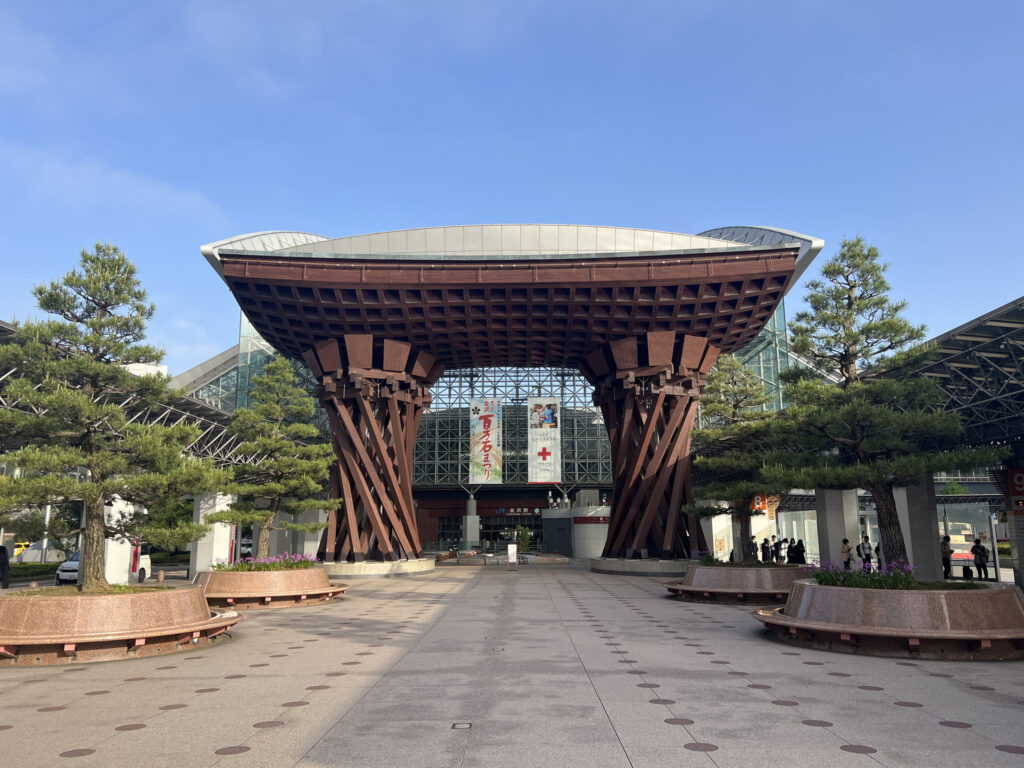
Getting There: Kanazawa’s Easy Connections
Kanazawa is one of the easier cultural cities to reach, but the route from Kansai changed recently and most articles online haven’t caught up. Read this part carefully, it’s where people get tripped up.
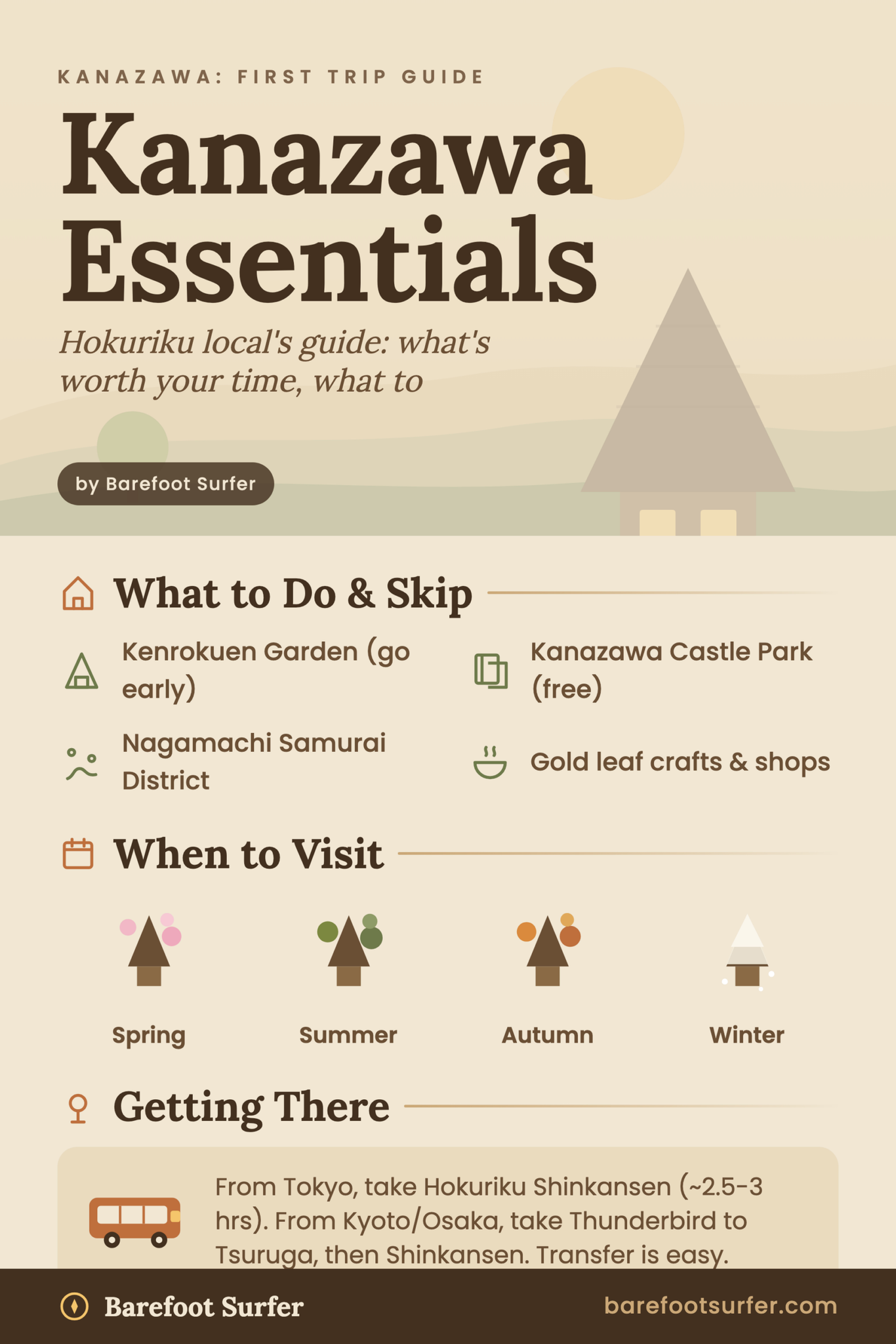
How to get to Kanazawa from Tokyo? Take the Hokuriku Shinkansen straight from Tokyo Station. The fastest train is the Kagayaki, around 2 hours 28 minutes, fully reserved seating, roughly ¥14,000 to ¥15,000 one way. The Hakutaka makes more stops, takes about 3 hours, and has non-reserved cars if you want flexibility. Trains run about every 30 minutes and it’s a direct, no-transfer ride. Easy.
From Kyoto or Osaka, here’s the thing nobody updated: there is no longer a direct train. Since the Shinkansen extended to Tsuruga in March 2024, you take the Limited Express Thunderbird to Tsuruga, then transfer to the Hokuriku Shinkansen for the last leg into Kanazawa.
- Kyoto to Kanazawa: about 2 hours total (Thunderbird ~45 to 55 min to Tsuruga, then ~1 hr by Shinkansen), roughly ¥7,700.
- Osaka to Kanazawa: about 2 hours 10 to 30 minutes total, roughly ¥9,400.
The transfer at Tsuruga sounds scarier than it is. It’s a small station, the Thunderbird and the Shinkansen platforms are stacked in the same building, JR signs you through, and you’ve got plenty of time. If you’re a foreign visitor on a Temporary Visitor stamp, look at JR West’s discounted Hokuriku One-way Ticket, which has run around ¥6,500 from Kyoto and covers the whole Thunderbird-plus-Shinkansen run in one ticket.
One pass worth checking if you’re doing the classic Tokyo-in, Kansai-out loop is the Hokuriku Arch Pass, which covers Tokyo to Kanazawa and on to Kyoto and Osaka over seven days. Whether it beats individual tickets depends entirely on your route, so price it against your actual itinerary before you buy. [INTERNAL LINK PLACEHOLDER: “Your Japan Rail Pass: Is It Worth It?” article, not yet in site index, William to add once published.]
What to Actually Do in Kanazawa (and What to Skip)
This is the part the generic lists won’t give you straight. Every attraction below gets an honest verdict: worth your limited time, or not. Because the real enemy on a trip like this isn’t money, it’s spending a non-refundable afternoon on something that photographs better than it lives.
Kenrokuen Garden: Worth Your Time?
Verdict: worth a look, but calibrate, this is the one genuinely touristy spot in the city. I’ll be honest with you in a way the guidebooks won’t: Kenrokuen lands on every “top three gardens in Japan” list, and I’ve walked it many times across every season, day and night, and it’s nice. It’s just not the showstopper its ranking implies. If you’ve seen the garden beside Himeji Castle, you might find Kenrokuen a notch below that, I did. And because it’s the number-one thing every list tells you to do in Kanazawa, it’s also the one place where you’ll actually feel the tour crowds.
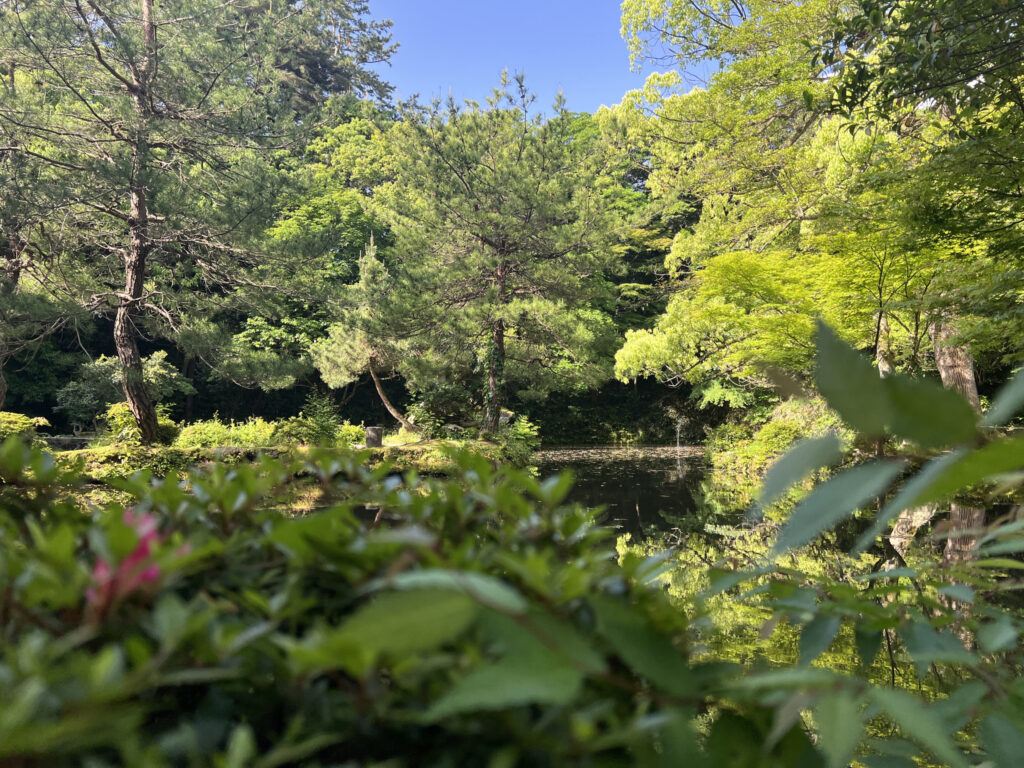
So here’s how you make it genuinely good: go before it opens, when it’s free and empty. Standard admission is ¥320, but if you arrive before the paid window, you walk in for nothing. Free entry runs from as early as 4:00 a.m. in summer to 6:00 a.m. in winter, through designated gates, and you have to be out before paid hours begin (7:00 a.m. March through mid-October, 8:00 a.m. in the colder months). Empty garden, morning light, the famous Kotoji stone lantern to yourself, no crowd. That swap of a little sleep for the quiet version is the difference between “it was fine” and “I’m glad I went.”
If you’d rather not do dawn, go right at opening and pair it with Kanazawa Castle Park next door on the ¥500 Kenrokuen+1 combo ticket. Either way, 60 to 90 minutes is plenty. Don’t build your whole day around it expecting to be moved, build it around the calmer stuff below.
Kanazawa Castle Park: More Than a Replica
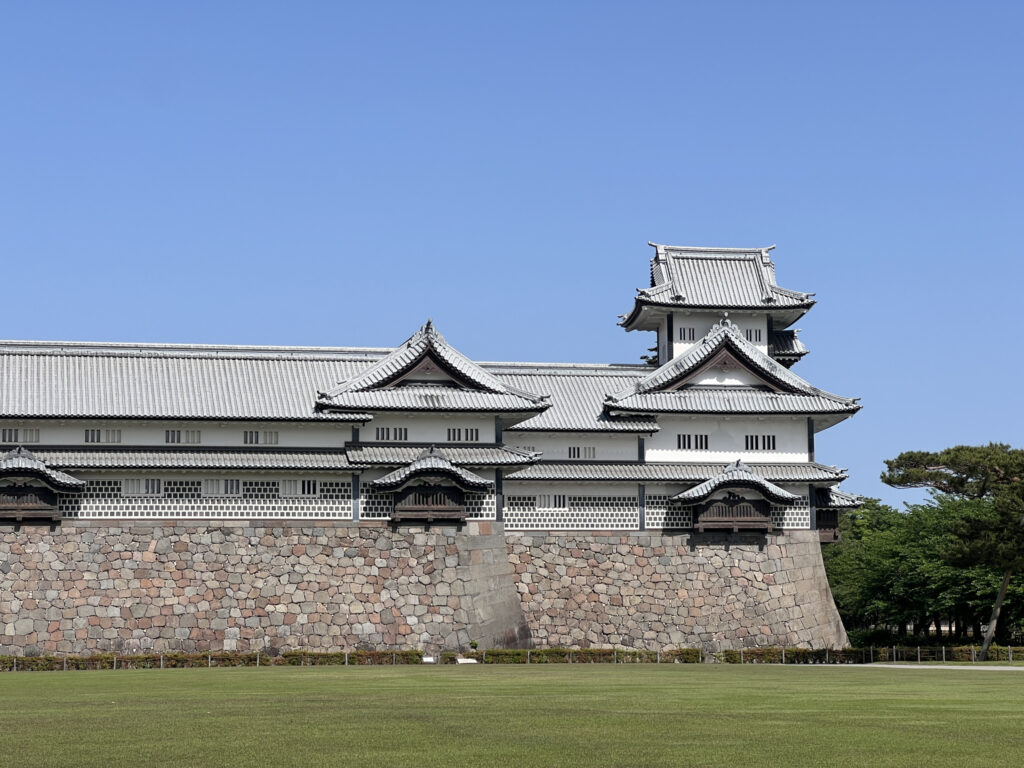
Verdict: worth a walk, mostly free, don’t overthink the paid interiors. Yes, much of Kanazawa Castle is reconstruction, but it’s some of the most impressive traditional reconstruction work in Japan, and the park grounds are free to enter. You can walk the stone walls, the long Gojikken Nagaya warehouse, and the Ishikawa-mon gate without paying a yen.
The paid structures (the turrets and warehouse interiors) cost ¥320, or are bundled into that ¥500 combo with Kenrokuen. Worth it if you love castle architecture and the carpentry detail; genuinely skippable if you’re tight on time, the exteriors carry most of the magic. A nice local detail to look for: the white lead roof tiles on the Ishikawa-mon gate were chosen so they could be melted into ammunition in wartime. Function dressed as beauty, which is very Kanazawa.
The Samurai District (Nagamachi): A Quick Walk, Not a Day
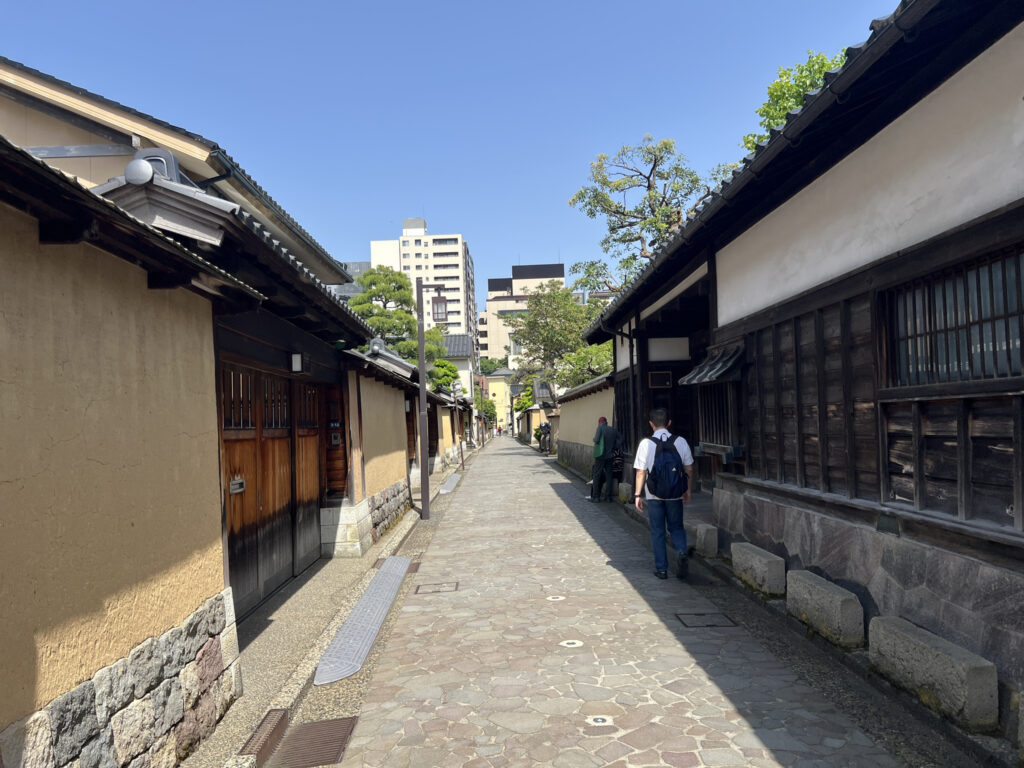
Verdict: go, but budget 30 to 45 minutes, not an afternoon. Nagamachi is a pocket of earthen-walled lanes where Kaga clan samurai once lived. It’s a nice little walk, nothing that’ll redefine your trip, and that’s actually its strength. Here’s what makes it worth your time over the equivalent in Kyoto: it isn’t mobbed. Walk the samurai streets in Kyoto, or even in Takayama (a town I love), and you’re sharing them with a steady stream of tour groups. Nagamachi stays quiet enough that you get a more authentic walk, the streets feel like streets, not a set. That low-crowd calm is the whole reason to come.
The honest play: wander the free outer lanes, which is where the atmosphere actually lives, and pay to enter only the Nomura Samurai House if you want one well-preserved interior with a small but beautiful garden. There are also some genuinely good little restaurants and cafes tucked around the district, so it doubles nicely as a place to slow down and take a break mid-day rather than a box to tick.
Higashi Chaya District: Geisha Houses and Gold Leaf (My Take)
Verdict: worth it for the streets and the gold leaf, manage your expectations on geisha. Higashi Chaya is the most photogenic district in Kanazawa, rows of preserved wooden teahouses, and it’s the heart of the gold-leaf craft. Buy the gold-leaf souvenir, eat the gold-leaf soft serve once because it’s ridiculous and fun, tour one preserved teahouse like Shima or Kaikaro if you want to see inside.
What I’ll be straight about: you are very unlikely to “see a geisha.” Real geiko work private, booked engagements, not street performances. If a guide promises you a casual geisha sighting, that’s a sales line. Come for the architecture and the craft, not a costumed encounter, and you’ll love it.
And the same thing I said about Nagamachi holds here: Higashi Chaya feels noticeably less touristy than its Kyoto counterpart. It’s photogenic enough that it does draw people, so go in the morning before the tour groups thicken it up, and you’ll get the quiet, more authentic version of the street, the one that actually looks like the photo that made you want to come.
Omicho Market: Is It a Foodie Paradise or a Tourist Trap?
Is Omicho Market worth visiting? Yes, and here’s the honest answer to the “tourist trap” question: it isn’t one. Omicho has been Kanazawa’s central market for nearly 300 years, and what struck me about it is how normal it still feels. It’s long, with a lot of different stalls and options, but it’s nowhere near the scale or the crush of the famous packed markets in Osaka. It reads more like a regular working market with a historical layer on top, the kind of place actual local people still shop, not a sanitized food-court built for tour buses. That’s its charm.
Timing still helps. Go in the morning: many of the sushi and seafood counters open around 7:00 a.m., the stalls are fully stocked, locals are doing their actual shopping, and you can sit down to a fresh kaisendon (seafood rice bowl) in a relaxed atmosphere. Lunchtime gets busier with lines, but even at its busiest it’s a fraction of the chaos you’d hit at a headline market in Osaka or Kyoto. Come hungry, come earlier rather than later, and enjoy it for what it is.
The 21st Century Museum of Contemporary Art: Is It for You?
Verdict: worth it, and surprisingly family-friendly, but know what you’re paying for. This is the round glass building everyone photographs, home to Leandro Erlich’s Swimming Pool illusion. Here’s the nuance: a lot of the museum, the outdoor installations and the public “exchange zone,” is free. The ticketed exhibition wing (where you go under the pool, plus the rotating shows) costs extra and the price varies by exhibition.
If contemporary art is your thing, pay in. If it isn’t, you can still enjoy the free zones and the architecture and spend your money elsewhere. It’s closed Mondays, so don’t build your one Kanazawa day around it without checking. Open 10:00 a.m. to 6:00 p.m., later on Fridays and Saturdays.
[VERIFY BEFORE PUBLISH: 21st Century Museum ticketed-exhibition price varies by show, confirm the current exhibition’s admission on the official site rather than quoting a fixed figure.]
D.T. Suzuki Museum: Quiet Reflection Worth the Detour?
Verdict: worth it for the right person, skip it if you’re rushing. This small museum honors the Zen Buddhist philosopher Daisetz Suzuki, and the building, three spare wings around a still “Water Mirror Garden,” is the actual draw. You don’t come for a big collection. You come to sit in the contemplative room and let the city go quiet for twenty minutes.
It’s ¥310 (free for high schoolers and younger, covered by the ¥520 Cultural Facilities Pass), open 9:30 a.m. to 5:00 p.m., closed Mondays. If you read Marcus Aurelius on the toilet or you’ve ever sat through a meditation app, you’ll get more out of this than half the famous stops. If your trip is go-go-go, it’s an easy cut.
Moving Around Kanazawa: The Smart Way
Kanazawa has no subway, which surprises people. Kanazawa Station sits about 2 km northwest of the sightseeing core, and almost everything worth seeing is clustered within a 2 km radius of the castle, so a confident walker can do a lot on foot. But the buses are how most people connect the dots, and the system is simple once you know one trick.
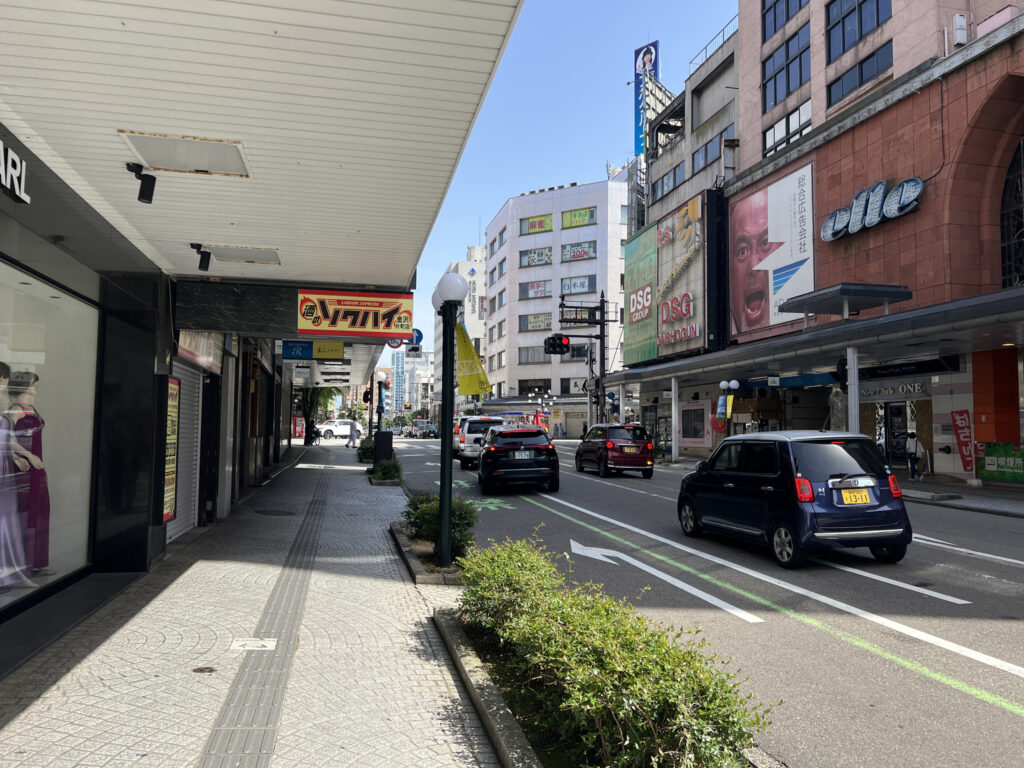
Use the Kanazawa Loop Bus. It runs two directions, the Right Loop (clockwise) and Left Loop (counter-clockwise), every 15 minutes, roughly 8:30 a.m. to 6:00 p.m., hitting Kenrokuen, the castle, both chaya districts, the 21st Century Museum, and Omicho. Flat fare of ¥210 per ride, and you can tap an IC card (Suica, ICOCA) or a contactless credit card right on the Loop Bus. A one-day Loop Bus pass (around ¥600) pays off if you’re making four or more hops in a day.
Two things a first-timer wouldn’t know. First, the loops only go one way each, so for a short backtrack it’s sometimes faster to walk than to ride the loop all the way around. Second, the D.T. Suzuki Museum is slightly off the main loop, you’ll likely take a local Hokutetsu bus to the Hondamachi stop (about 15 to 20 minutes, ~¥200), and unlike the Loop Bus, some local city buses are cash-friendlier than IC, so keep coins on you.
[VERIFY BEFORE PUBLISH: Loop Bus one-day pass price, sources show both ¥500 and ¥600 across recent years, confirm current rate at the Hokutetsu Ekimae Center page before publishing.]
Eating in Kanazawa: Beyond the Market
Let me save you from the trap every list walks you into. Kanazawa sells itself hard on seafood, and the seafood here is good. But I lived next door, and I’ll tell you straight: the seafood in Toyama is better, and a lot of what gets sold in Kanazawa comes off Toyama Bay anyway. If your route touches Toyama at all, eat your big seafood meal there and get it closer to the source. I made the case for that in detail in my Toyama seafood guide. In Kanazawa, treat seafood as a nice meal, not the reason you came.
So what is actually worth ordering here?
- Kanazawa curry. This is the real local specialty almost nobody tells you about. It’s a darker, deeper, thicker curry roux than standard Japanese curry, served on a metal plate, often with a fork, a tonkatsu cutlet on top, sauce, and a little shredded cabbage. It’s heavy, it’s distinctive, and it genuinely originated here. Get this.
- Gold-leaf foods. Yes, you can get soft serve or a sweet dusted in edible gold leaf. Just know going in: the gold adds nothing to the flavor, it’s purely for looks and the photo. Worth doing once for the novelty, not because it tastes like anything.
- Jibuni, if you want the old-school dish: a traditional Kaga duck-and-vegetable stew thickened into a glossy broth. Not a must-eat, but it’s the genuinely local, traditional plate if you’re curious.
The honest bottom line on food: it’s good in Kanazawa, but unlike Toyama or Osaka, there isn’t one specialty I’d tell you that you have to try here or you missed the city. Eat well, don’t stress about chasing a signature dish. The rule that served me across Hokuriku is to walk two or three streets back from the obvious tourist row and look for the places full of Japanese diners, not the ones with English picture menus out front. Katamachi and the lanes around Korinbo are where locals actually eat dinner. The best small counters are often reservation-only, so if you’ve pinned a specific sushi or kaiseki spot, book it before you arrive.
Where to Stay: Kanazawa Hotel Areas Worth It
Three areas make sense, depending on your trip:
- Around Kanazawa Station: the convenient pick. Easy in and out by Shinkansen, a covered shopping concourse, plenty of hotels at every price. The trade-off is you’re a 10-to-15-minute bus or walk from the historic core, so it’s slightly less atmospheric. Best if you’re here one night or arriving late and leaving early.
- Central, near Korinbo / Katamachi: my pick for two nights. You’re walking distance to Kenrokuen, the castle, and the chaya districts, and you’re in the middle of the real nightlife and dining, not the tourist strip. This is where the city actually feels lived-in.
- Near Higashi Chaya / the river: the atmospheric splurge. A machiya guesthouse or small ryokan here, waking up in an old wooden townhouse on a quiet lane, is the most “I’m really in Kanazawa” you can buy. Quieter at night, a little further from dinner options.
For most first-timers doing two nights, central wins: you trade a few minutes of station convenience for being able to walk home from dinner. If you want it mapped out hour by hour, I put the routing into a full day-by-day Kanazawa itinerary, and the deeper background lives in my complete Kanazawa guide.
Now that you know what’s actually worth your time and what to skip, locking in where you sleep is the one piece that genuinely sells out, the good central and machiya places book weeks ahead in cherry-blossom and autumn season. Most listings on Booking.com hold free cancellation until about a week out, so there’s no downside to securing your spot now and refining later.
Find your perfect Kanazawa hotel on Booking.com
So, the honest bottom line: Kanazawa is worth it, as long as you come for the right reason. Not because any one garden or street will floor you, but because you get the whole cultural-Japan experience, the garden, the samurai lanes, the geisha district, the market, at a calm, authentic, un-mobbed pace that Kyoto can’t give you anymore. Hit Kenrokuen at dawn while it’s free and empty, eat your big seafood meal in Toyama if you can and a Kanazawa curry while you’re here, give the historic districts a relaxed hour each, and you’ll come home with the version of this trip your friends didn’t think to take.
[INTERNAL LINK PLACEHOLDER: “Beyond Kyoto: Exploring Japan’s Other Cultural Capitals”, not yet in site index, William to add once published. Money/planning link to the travel-card guide also available if you want it here: https://www.barefootsurfer.com/travel-credit-card-points-full-guide/ ]