You have maybe fourteen days for a trip you waited twenty-five years to take, and somewhere in a browser tab is the question of whether one of them belongs to Toyama and its hot springs.
This is the honest answer to whether Toyama onsen deserve a dedicated day on your Japan trip, written by someone who lived in Toyama City for nearly three years and spent his first year there soaking in a new bath twice a month. You will leave knowing exactly what Toyama’s onsen scene actually is, where the one genuinely special soak in the prefecture hides, and whether any of it is worth trading a day you cannot get back.
Should Toyama Be Your Japan Onsen Stop?
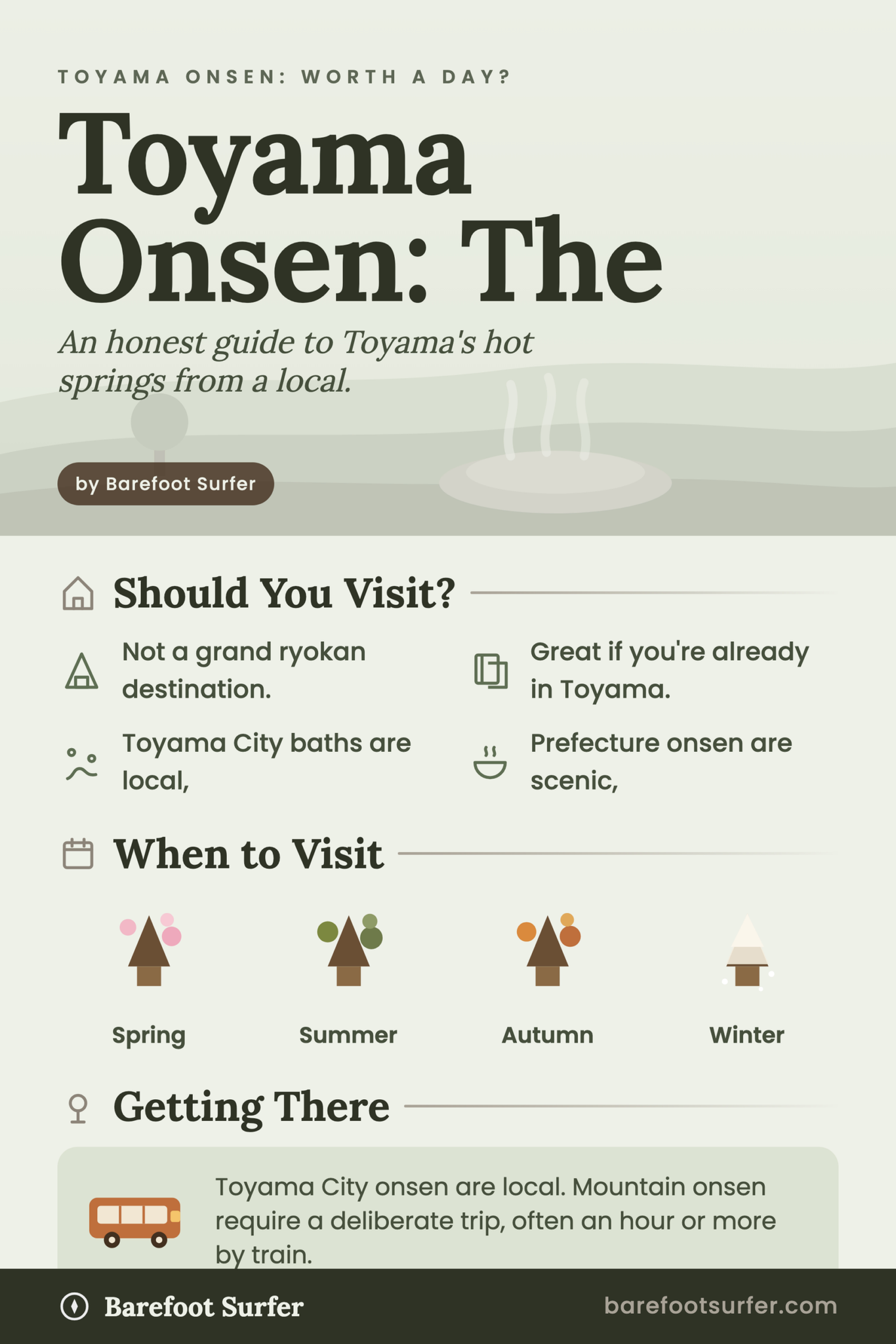
Let me kill the suspense before you scroll, because your time matters more than my word count. If your dream is the grand ryokan splurge, the private cypress bath, the ten-course kaiseki, the whole once-in-a-lifetime onsen fantasy, Toyama is not where you build your trip around that. There are better places in Japan to spend that money, and I will name them.
But if you are already going to be in Toyama for the Alps, the seafood, or as a break from the Kyoto crowds, then yes, there is real onsen worth your evening here, and one soak up in the mountains that almost nobody in your Facebook group will have done. The difference is whether the onsen is the reason you came or the reward for coming. Get that straight and the rest of this is easy.
And as a TLDR, my favorite onsen in Toyama that I wouldn’t skip is Manten-no-yu Toyama (満天の湯 富山店).
Why Toyama Is Even On Your Radar (And What It Isn’t)
Is Toyama known for its onsen? Not the way Hakone or Kinosaki are. Toyama Prefecture has hot springs, but Toyama City itself is not a hot-spring destination. Its onsen are local and functional, and the prefecture’s standout soaks sit far out in the mountains, an hour or more from the city, tied to bigger experiences like Kurobe Gorge and the Tateyama alpine crossing.
What Toyama is actually known for is the mountains. On a clear day the Tateyama range stands over the city like a wall, and that range, not the baths, is why most travelers end up here. It is also one of the best seafood bays in the country. I go deeper on all of that in my Toyama Prefecture guide, but for onsen purposes the point is this: set your expectations for “excellent everyday baths and one incredible mountain oddity,” not “onsen resort town.” Do that and you will not feel let down, and you will not show up planning a day that does not exist.
The Truth About Toyama’s Onsen Scene
Here is what a soak in Toyama City really looks like, from someone who made it a hobby.
My favorite was a super sento a short bike ride from where I lived. Not one of those mall-sized bath complexes you find in the big cities, and not a bare little neighborhood tub either. Somewhere in between. You walk into a big entrance hall, leave your shoes, buy a ticket from the machine, and hand it to the front desk for a locker key. There is a restaurant right there for after. Down the hall, massage chairs, a reading corner, gachapon machines for the kids, a proper massage room. Then it splits off to the changing room and the baths.
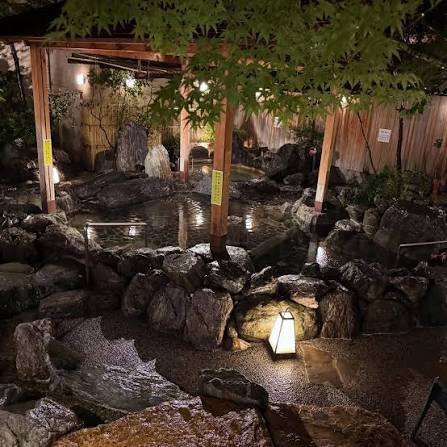
Inside, everything you could want and all of it spotless, because this is Japan and the baths are never anything but spotless. A hot pool and a hotter one. The little electric bath that buzzes your muscles. Shallow single-person pods. A sauna, a cold plunge, and a second steam room that grips heat onto you differently. Then outside: small shallow tubs you can drop into with a group, and a bigger rotenburo half sheltered from the snow, half open to the trees, set in a full Japanese garden. Body wash and shampoo already at every station.
I usually went at night. That is when the place fills with high schoolers coming off sports practice and salarymen coming off work, everyone soaking side by side without a word, and you realize you are not at a tourist attraction, you are just living there for an hour. The entry was 800 yen when I started going, 880 by the time I left. That is the price of a cheap meal in Japan, and worth every yen.
That is the middle tier. Below it are the true neighborhood baths, run by a grandma and grandpa, usually a flat 500 yen, reception right at the door, a basket for your clothes, straight into the water. No frills, no hall of massage chairs, just a clean hot bath in a residential block. They are everywhere. And up toward Toyama Bay there is a bath on an upper floor of a building with a window looking out over the whole bay while you soak, which is exactly as good as it sounds.
None of these is a “destination.” All of them are better than almost anything you will find at home. That is the honest read: Toyama City onsen are a wonderful part of living here and a lovely evening if you are already in town. They are not, on their own, worth crossing the country for.
Toyama City vs. Toyama Prefecture: A Key Distinction
What’s the difference between onsen in Toyama City and Toyama Prefecture? City onsen are the local super sento and neighborhood baths above: cheap, excellent, close, and not tourist destinations. Prefecture onsen means the mountain hot springs out in Unazuki and up on the Tateyama route, which are scenic and special but sit an hour or more away and are wrapped inside a much bigger day.
This distinction is the thing competitor articles blur, and blurring it is how you lose a day. When a listicle says “onsen near Toyama,” it is almost never talking about anything you can reach on foot from Toyama Station. The famous ones live out in the prefecture, and getting to them is a real journey, not a stroll. I could soak for 800 yen any night I wanted in the city. Reaching the mountain onsen meant a deliberate trip, a train booked around a timetable, a whole day given over to it. Plan as if those are the same thing and you will torch an afternoon standing on a platform. For how the wider region actually connects, my Toyama itinerary lays out where a day here fits.
The Local Onsen Experience (What to Expect)
Expect functional, not fancy. Expect to be the only foreigner in the room and to be completely fine, because nobody is watching you. Rinse off fully at the shower stations before you get in, tie your small towel on your head or set it aside rather than dip it in the water, and go quiet. That is the whole etiquette. A super sento gives you the food-and-massage-chair afternoon; a neighborhood sento gives you fifteen honest minutes and a nod from the owner. Neither is the marble ryokan of your Pinterest board, and that is the point of this section: if the “local Japan” bath is what moves you, Toyama delivers it in spades. If you are chasing the grand version, keep reading, because it is not here in the city.
Where to Find the Best Onsen Near Toyama (If You Decide to Go)
Say you have read all that and you still want a real onsen experience out of the Toyama region. Good. There are two genuinely worthwhile options, and they are completely different animals. One is a hot-spring town you can day-trip to. The other is the highest hot spring in Japan, and you earn it.
Unazuki Onsen: The Standout Choice for a Day Trip
What is the best onsen near Toyama City for a day trip? Unazuki Onsen, at the mouth of Kurobe Gorge, is the prefecture’s main hot-spring town and the easiest scenic soak to reach from Toyama City. It is a relaxing riverside resort you get to by a single train, no transfers, which makes it the sane choice if you want one proper onsen-town day.
How long does it take to get to Unazuki Onsen from Toyama City? Take the Toyama Chiho Railway (locals call it Dentetsu) straight from Toyama Station to Unazuki Onsen Station. It runs about 90 minutes and 1,230 yen one way, and it is a private line the JR Pass does not cover, so budget for it separately.
I have been to Unazuki twice. It is a nice, calm town wedged into the valley, good for a slow afternoon and a soak with the gorge as your backdrop. Here is the part you need for 2026 though, and it is the kind of thing an AI listicle written last year will get wrong: the Kurobe Gorge Railway, the little open-air trolley that is half the reason people come, is running a reduced shuttle only, between Unazuki and Nekomata, not the full run to Keyakidaira, with service beyond that and the later-season schedule still being sorted out. Check the operator’s own page before you build a day around the gorge ride, because the full experience I had is not the one currently on offer.
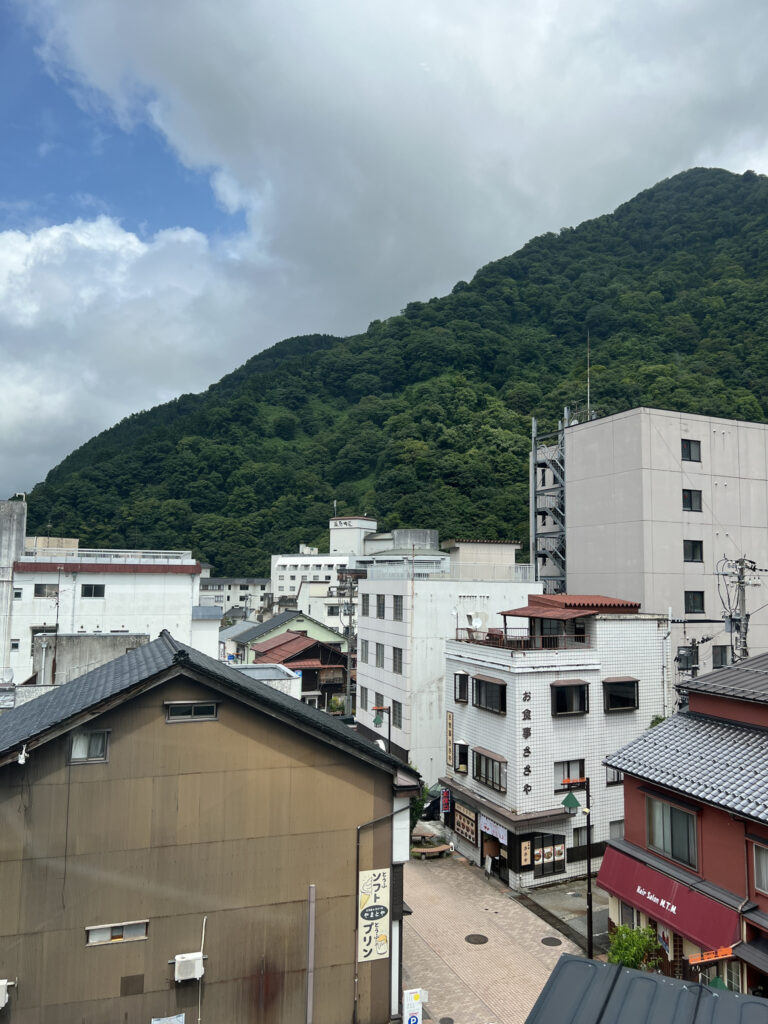
And now the honest verdict, the one you actually came for. As a day trip, Unazuki is a yes if you have the time and want a scenic onsen town. As a place to drop 300 dollars on a splurge ryokan night, it is a no from me, and I say that as someone who loves this prefecture. The price does not match the payoff for a once-in-a-lifetime trip. Unazuki is where local families go for a lovely weekend, and it is genuinely good at that. But you are seeing all of Japan, and there are hot-spring towns built for exactly the splurge you are imagining. If it were me and it were spring or summer, I would point that big ryokan money at a destination onsen town like Gero. If it were winter and I were pairing it with snowboarding, I would put it toward a snow-country onsen like Nozawa. Save Unazuki for a day, not a splurge.
Murodo & Midagahara Onsen: When the Alpine Route Calls
This is the one soak in the whole prefecture I will tell you to chase, and it is not really an onsen trip. It is a mountain crossing that happens to end in hot sulfur water at the roof of Japan.
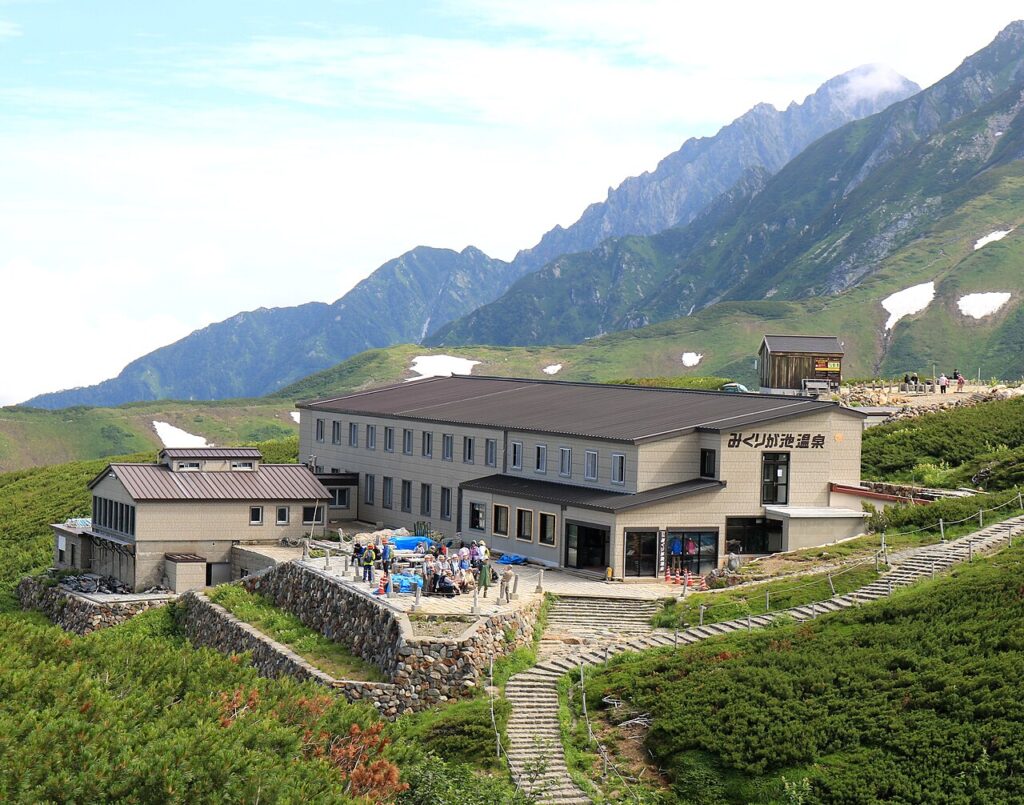
Up at Murodo, the high point of the Tateyama Kurobe Alpine Route, sits Mikurigaike Onsen, the highest hot spring in Japan at roughly 2,410 meters, a genuine claim you can back up. The water is heavy with sulfur, milky, fed by the volcanic vents steaming out of Hell Valley just below. It is a small, unpretentious bath, usually not crowded, and when you climb out you can honestly say you have soaked in the highest onsen in the country, probably one of the highest on earth. I recommend it without reservation. The Midagahara Hotel, lower down the route, is the other high-altitude option if you would rather break the journey partway.
Alpsdake
Now the logistics, because this is where “near Toyama” gets you. To get up there you ride the Chiho Railway from Toyama to Tateyama Station, then chain together a cable car, a highland bus, and more, six modes of transport in all to cross the range. The route only runs from April 15 to November 30 in 2026, a full one-way crossing runs around 11,000 yen, and the JR Pass does not cover it, per the route operator. Plan a full day, start on the first train around 6:30am to beat the tour buses, and understand that the bath is a detour off a major all-day excursion, not the reason for the day. That excursion is worth doing on its own merits, and I break down the timing and the famous snow corridor in my Tateyama snow wall guide. The onsen at the top is the bonus that makes it unforgettable. [INTERNAL LINK PLACEHOLDER: dedicated Alpine Route how-to guide, once published]
Finding a Ryokan Near Toyama: The Reality
Are there traditional ryokan in Toyama City? Not the destination kind. Some Toyama City hotels have lovely public onsen baths, but the classic ryokan experience, a traditional inn with a private open-air bath and a multi-course kaiseki dinner, is out in the prefecture in towns like Unazuki, not in the city center. Search for that in central Toyama and you will come up mostly empty.
What to Expect from a Toyama City Ryokan (Or What to Book Instead)
Here is what the city actually offers, and it is better value than people expect. There are a handful of hotels in Toyama City with their own onsen bathhouses, some of them open to the public just for the bath, and they are quite nice. They run a bit more than a bare business hotel but still land inside the 10,000 yen a night range, around 65 dollars. For context, that will not get you a cheap motel in a rough part of an American city anymore, and here it buys you a clean room and a proper soak. As a base for the Alps or the seafood, that is a smart, unglamorous booking.
If what you want is the grand ryokan night, book it out in Unazuki, where the riverside inns and kaiseki dinners actually exist, or better yet aim that budget at one of the destination onsen towns I mentioned and give Toyama City the practical hotel-bath booking. Speaking of the food those kaiseki dinners are built on, Toyama Bay’s seafood is the real reason to eat well here, which I get into in my Toyama Bay seafood guide. [INTERNAL LINK PLACEHOLDER: Hokuriku Arch Pass value guide, once published]
The Barefoot Surfer Verdict: Is Toyama Onsen for Your Trip?
So, worth a day or not? Here is the call, no hedging.
For a once-in-a-lifetime trip with limited days, Toyama City onsen alone are not special enough to justify a dedicated day. They are a wonderful evening if you are already in town for the mountains or the seafood, and I would soak every night if I were you, but they are not a reason to come.
If a genuine onsen experience is the mission, do one of two things. Take Unazuki as an intentional day trip, going in knowing the gorge railway is on reduced service for now. Or, far better, treat Mikurigaike at the top of the Alpine Route as the crown on a full mountain day, because the highest onsen in Japan is the one thing here that no one else back home will have done. And if the dream is specifically the splurge ryokan, spend that money in a town built for it, not in Toyama.
That is the whole decision. If you are weighing Toyama against other Hokuriku bases in general, my Toyama vs. Kanazawa breakdown and my solo Japan travel guide will help you slot it into the wider trip. [INTERNAL LINK PLACEHOLDER: Kyoto alternatives guide, once published]
If you have decided an onsen night out of Toyama is right for your itinerary, here are vetted Unazuki ryokan with free cancellation, so you can hold a room now and change your mind later with zero risk. [BOOKING.COM AFFILIATE CTA: Unazuki Onsen ryokan, free-cancellation filter]
Whatever you decide, decide it now and take the tab down. You have a country to see.
—
Getting there in the first place: my guide on how to get from Tokyo to Toyama covers the shinkansen run.