The night before you commit Toyama to your itinerary, you’re really asking one question: is this side trip worth a whole irreplaceable day, or am I about to burn one of my sixteen on a town nobody back home will recognize?
I lived in Toyama for almost three years, and I made the Tokyo to Toyama run more times than I can count. This guide breaks down every way to get from Tokyo to Toyama: the Hokuriku Shinkansen, the highway buses, and the flight nobody really needs to take. I’ll give you the real costs, the real travel times, and a straight answer on whether Toyama earns its place on your trip.
Why You’re Looking at Toyama (And What It Offers)
You’ve already done the research. You know Toyama isn’t on the Tokyo, Kyoto, Osaka conveyor belt that everyone you know has done. That’s exactly why it’s on your radar.
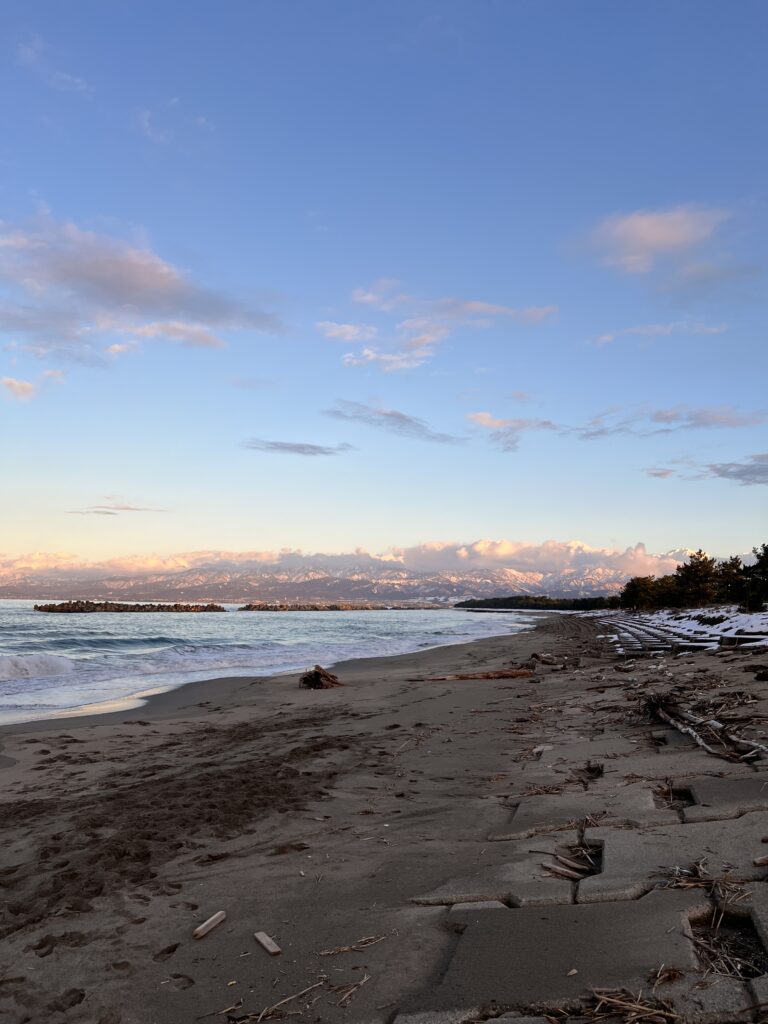
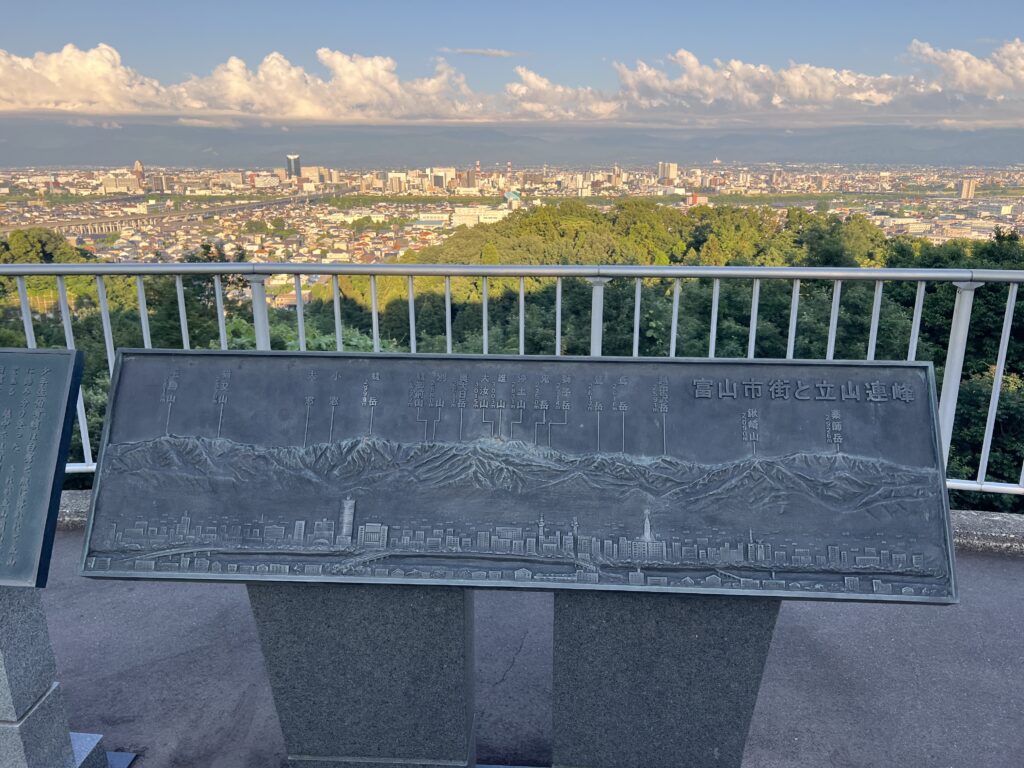
Here’s what Toyama actually is. It’s a mid-sized city pinned between the Sea of Japan and a wall of 3,000-meter mountains, the Tateyama range, which on a clear day looks fake, like someone painted a backdrop behind the city. It’s the launch point for the Tateyama Kurobe Alpine Route and the towering snow walls. It has some of the best seafood in the country pulled straight out of Toyama Bay. And it has a quiet that the big three cities lost decades ago. Nobody is screaming at you to buy anything. The trains run silent. You can hear the river.
It is not a place that performs for tourists. That’s the appeal, and it’s also the catch. If you need temple-after-temple density and a checklist of famous sights, Toyama will feel thin. If you want a couple of days where Japan stops feeling like a theme park, this is the move. If you’re still torn between this and the more famous neighbor an hour west, I broke that down in Toyama vs Kanazawa.
The Fastest Way: Japan’s Shinkansen Bullet Train
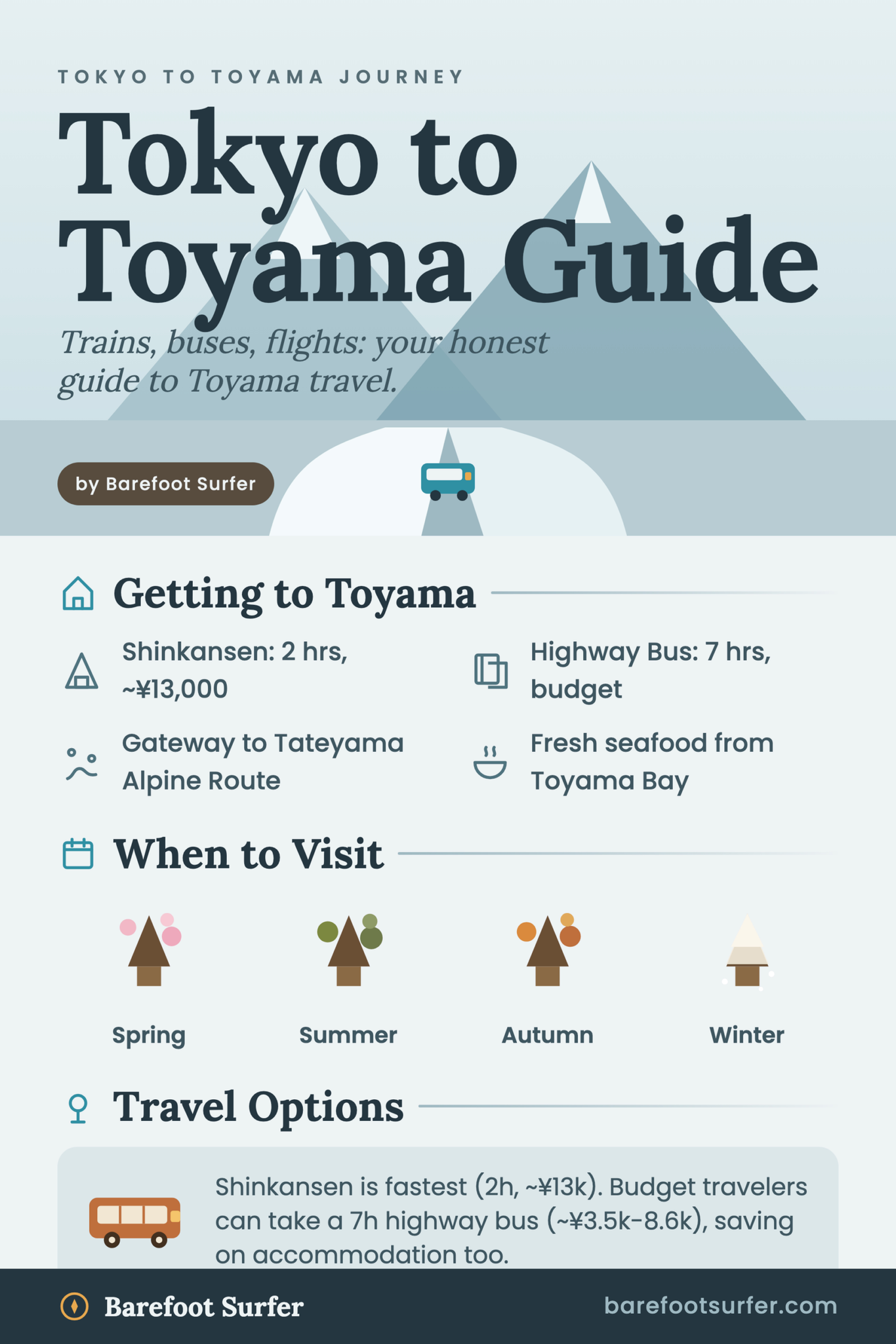
How long does it take to get from Tokyo to Toyama by Shinkansen? The Hokuriku Shinkansen runs direct from Tokyo Station to Toyama Station in about 2 hours and 8 minutes on the fastest Kagayaki service, with no transfer required. The slightly slower Hakutaka service makes more stops and takes around 2.5 hours.
This is the way you should take. The Hokuriku Shinkansen leaves from Tokyo Station and drops you in the center of Toyama in just over two hours, city center to city center, no airport, no transfer, no stress.
Three trains run this line and the distinction matters. Kagayaki is the express, fewest stops, fastest, fully reserved seating. Hakutaka stops more often and has non-reserved cars, which gives you flexibility if your plans shift. Tsurugi runs short hops at the western end and isn’t your train from Tokyo. For Tokyo to Toyama, you want a Kagayaki if the timing works and a Hakutaka if it doesn’t.
Here’s what got me my first time, and it’s worth knowing before you budget. Older Japanese train travel was a card-juggling nightmare. A long trip with transfers could leave you holding five or six tickets at once, in the right order, terrified of feeding the wrong one into the gate. The Hokuriku Shinkansen has simplified that a lot. Buy online or at the designated Shinkansen ticket booth in the station and you’re mostly sorted.
What surprised me was the fare itself. Some of these trains, the Kagayaki especially, are reserved-seat only. You can’t just buy one cheap ticket and grab any open seat. You pay a base fare ticket plus a separate reserved-seat ticket, two components, with no non-reserved option to dodge the second one. The roughly 13,000 yen above already bundles both, so you won’t get ambushed at the total. Just know that’s how it’s built, so the breakdown makes sense when you see it at the machine, and so you’re budgeting for the real number and not the base fare alone.
Shinkansen Tickets and When to Book Them
How much does the Shinkansen cost from Tokyo to Toyama? A one-way ticket in an ordinary reserved seat costs around 13,000 yen. Green Car (first class) runs higher, and the top-tier Gran Class higher still. Prices are mostly fixed year-round, unlike flights.
You can buy tickets three ways: at the green ticket machines (switch the screen to English, takes two minutes), at the JR ticket office, or online in advance through the JR-EAST or JR-WEST reservation sites, which lets you book up to a month out and pick your seat from your couch.
Here’s the local-knowledge part. The fare doesn’t swing with demand the way a flight does, so you’re not “saving money by booking early.” What you’re buying with an early reservation is a seat on the train you actually want. That only matters at specific times, and they’re predictable: Golden Week (late April into the first week of May), Obon (mid-August), and New Year. During those windows the Hokuriku line fills with families heading home and skiers heading to the mountains, and a packed Kagayaki means standing in the aisle for two hours with your luggage on your feet. Outside those weeks, walking up and buying same-day is completely fine. Book ahead for the holidays, relax the rest of the year.
Is the Hokuriku Arch Pass Worth It for This Journey?
Is the Hokuriku Arch Pass worth it for a trip to Toyama? For a simple Tokyo to Toyama round trip, no. The pass costs 35,000 yen (raised from 30,000 yen on March 14, 2026), while two one-way Shinkansen tickets total around 26,000 yen. The pass only pays off if you’re looping Tokyo, Hokuriku, and Kyoto/Osaka with several stops inside seven days.
Let me save you the spreadsheet, because this is the exact calculation that keeps you up at 11pm.
The Hokuriku Arch Pass is a 7-day pass for foreign visitors that covers JR trains from Tokyo to Osaka via the Hokuriku route, including this Shinkansen. It does not cover the Tokaido Shinkansen, the fast Tokyo to Kyoto line. As of the March 2026 revision it’s 35,000 yen for an adult, ordinary car only.
Now do the math for your trip. Tokyo to Toyama and back is roughly 26,000 yen in regular tickets. The pass is 35,000 yen. If Toyama is an out-and-back from Tokyo, the pass loses you about 9,000 yen and you’ve gained nothing. Skip it.
The pass only makes sense if your trip is shaped like an arch: Tokyo, then west through Toyama and Kanazawa, then down to Kyoto and Osaka, all inside seven consecutive days, using the train hard the whole way. If that’s your route, run the numbers and it can pull ahead. If Toyama is a side trip off a Tokyo base, buy the individual tickets and move on. And don’t let “but I already bought the pass” start reshaping your whole itinerary. That’s the tail wagging the dog. A pass should fit the trip you want, not the other way around.
The Budget Option: Highway Buses (Day and Night)
If the train fare stings and you’d rather spend that money on a real meal in Toyama, the highway bus is legitimate.
The Tokyo to Toyama bus takes about 7 hours and costs between roughly 3,500 and 8,600 yen, depending on the operator, the day, and how far ahead you book. Willer Express and the JR Bus lines are the main players, bookable through Willer or Japan Bus Online. There are daytime runs and overnight runs.
I’ve ridden the sleeper bus between Toyama and Tokyo several times, so let me be straight about it. The overnight bus doubles as a night of accommodation, and that’s where the real savings hide. You’re not just saving on the ride. You’re skipping a hotel night too. Figure 5,000 to 10,000 yen saved on the fare versus the train, plus the roughly 5,000 yen a budget hotel runs in Toyama, or closer to 10,000 in Tokyo. For a true budget traveler, that stacks into real money.
But the experience swings wildly by company and by bus, and this is the part nobody warns you about. One bus I took had standard charter-style seats and left the lights on all night. Miserable. Zero sleep. Another was a full reclining couch-style seat with a pull-down hood you could draw over your head to black out the cabin. Slept like a baby. Same route, completely different night. So look at the seat photos and the bus details before you book, every single time. The listing tells you exactly which one you’re getting. Land the good bus and the overnight is a smart move. Land the bad one and you’ve traded a precious first morning in Toyama for a zombie shuffle off the bus. For a trip measured in days I’d still lean train, but if the savings matter to you, just book carefully and you’ll be fine.
Flying to Toyama (The Less Common Path)
Is it better to fly or take the train from Tokyo to Toyama? The train. The flight is one hour in the air, but once you add getting to Haneda, check-in and security, and the bus from Toyama Airport into the city, real door-to-door time climbs past four hours, beating the 2-hour-8-minute Shinkansen on paper only.
Yes, you can fly. ANA runs several flights a day from Haneda Airport to Toyama Airport, about one hour in the air. The regular fare is around 32,000 yen, though discount tickets in the 13,000 to 14,000 yen range show up if you book ahead. From Toyama Airport, a bus reaches Toyama Station in 25 minutes for 420 yen.
So why am I telling you not to bother? Because “one hour” is a lie of omission. Add the trek out to Haneda from central Tokyo, the recommended buffer for check-in and security, the wait at the gate, and the bus on the far end, and you’re at four-plus hours door to door, often more. The Shinkansen does it in 2 hours 8 minutes from the middle of Tokyo to the middle of Toyama, and you spend that time watching the country roll by instead of in a security line. The flight makes sense if you’re already at Haneda connecting from an international leg, or if you find a genuinely cheap fare and you enjoy flying. Otherwise the train is faster, simpler, and more pleasant. This is the one option I’d cross off your list.
Getting Around Toyama City (Once You Arrive)
This is the part the other guides drop you on, right at Toyama Station with no idea what to do next. Here’s how the last mile actually works.
Toyama is small and flat, and the downtown is walkable for anyone who likes walking. The castle and the Toyama Glass Art Museum sit south of the station, an easy stroll. The thing that makes the city click is the tram. The lines all run through or start at Toyama Station, the fare is a flat 210 yen per ride anywhere in the city (190 yen with a local ecomyca or passca card, not worth buying for a short stay), and your Suica, Pasmo, or Icoca works fine. Tap on, tap off, done.
Here’s the part no guide tells you, and it’ll save you a confused moment on the platform. The Toyama trams are not punctual the way JR trains are. About one ride in five, the tram turns up 5 to 15 minutes off, even though they’re only meant to come every 15 minutes. It isn’t bad management. In stretches, the two directional tracks merge into a single shared rail, so the second one tram gets held up (someone fumbling payment, a wheelchair boarding), it backs up the whole line in both directions. As a visitor it won’t really bother you. Just don’t treat the tram timetable like gospel the way you can with the Shinkansen.
What the tram does beautifully is connect everything you’d actually want to see. The lines run from Iwasehama, the beach out on the bay, down through the main station, into the Sogawa shopping and dining area, out to the south side of Toyama Station, with a branch toward the big Toyama University. Almost every main attraction in the city sits on a tram line, so for a couple of days you barely need anything else. I biked a lot when I lived there, the city is built for it, but you don’t need a bike to do Toyama right. The tram has you covered.
So, Is Toyama Worth Your Trip (And How to Make the Most of It)?
Straight answer: yes, if you want two days where Japan feels real instead of curated, and no, if you need a dense hit list of famous sights.
Toyama rewards a specific kind of traveler. The one who’d rather sit by the Matsukawa river with a coffee and watch the mountains than stand in a queue for a photo everyone already has. The one who books the seafood dinner over the souvenir shop. If that’s the trip you’re building, Toyama isn’t a detour, it’s the part you’ll talk about when you get home, precisely because nobody else in your group went.
How I’d fit it: treat Toyama as a one or two-night anchor on the way between Tokyo and Kanazawa, not a day trip. A day trip from Tokyo wastes the train fare and the city’s whole point, which is the slow evening, the food, the quiet. Come in on the Shinkansen, drop your bag, give it a real night. Here’s how I’d actually spend that time.
What kept me in Toyama wasn’t a plan. I came for a three-month homestay, and the deal with myself was simple: do the three months, fly home, start a career, become a normal adult. Then it snowed.
The first morning the city goes white, I’m hooked. For about a week. Then I’m trudging through grey slush to work every single day, soaked to the shins, and the magic wears thin fast. I’ve heard driving in it is worse. But every evening I’d walk home with those 3,000-meter mountains standing snow-capped over the city, and something about that view kept talking me out of booking the flight home. Then I went snowboarding for the first time in my life, up in those mountains, and that was it. Three months turned into almost three years.
The thing that sealed it was the onsen in winter. I’m sitting in an outdoor hot bath with snow falling on my head, steam coming off the water. I climb out of the sauna into the minus-five-degree air, every nerve lighting up, then lower back down into the hot water. That swing between freezing air and scalding water with snow on your face is one of the most relaxing things I have ever felt. That’s the Toyama nobody puts in a brochure. It’s the one I’d send you for.
Best Time of Year to Visit Toyama
I lived there through every season, so here’s the honest calendar.
Spring (April to June) is the headline season. The Tateyama Kurobe Alpine Route opens around April 15 and runs to late November, and the famous snow walls are at their tallest from opening through about late June before they melt down. This is also when the firefly squid light up Toyama Bay, roughly March into June, with the glowing-bay boat tours concentrated in April. If you can only come once, come in spring. (Verify exact 2026 Alpine Route and firefly squid dates close to booking, they shift slightly each year.)
Summer is green and humid, hot down in the city but the gateway to the high mountains. If hiking is your goal, summer through autumn is the window, and September is the sweet spot, warm enough up top, past the worst of the lowland heat. Spring hikes are possible on the lower peaks, but the high ground is still frozen. Autumn brings foliage on the Alpine Route and is gorgeous and underrated.
Winter is a trade-off, so go in knowing it. Toyama sits under one of the cloudiest, snowiest skies in Japan, and the Tateyama range hides behind grey for long stretches of December through February. But when it does clear, the snow-capped peaks standing over the city are the most spectacular view of the entire year, and the winter seafood is at its best. Come in winter for the snow, the food, and the gamble on one jaw-dropping clear mountain day, not for guaranteed sightlines.
My Top 3 Non-Tourist-Trap Experiences in Toyama
Not a top-ten list scraped from a brochure. Three things I actually did and would send my own sister to.
- Eat like a local: the seafood, and the black ramen for the story. Toyama is famous across Japan for its seafood, and the locals are picky about it the way Floridians are about stone crab. Some of these specialties you genuinely can’t get anywhere else on earth. The headliner is firefly squid (hotaruika), eaten raw or boiled with a special mustard-flavored sauce. It’s one of my favorites, though plenty of locals don’t love it, so you’re in good company whichever way you land. It’s a spring-only delicacy, roughly March to May, and on a lucky early morning in that window the whole of Toyama Bay glows with them. A tour is your best shot at seeing it, and I broke that down in the firefly squid in Toyama guide. The other one to order is white shrimp, tiny pale shrimp usually served deep-fried at izakayas. I used to grab them at a restaurant right inside the gift-center area of the main Toyama Station, perfect before a train. And try the black ramen once, for the story more than the flavor. It’s historic, jet-black from a brutal extra hit of soy sauce that started as a salt replenisher for laborers sweating through hot workdays. It’s so salty you’re not meant to drink the broth. The local move is to order a side of rice and dunk the rice into the broth at the end. Not my favorite bowl in Japan, but worth doing once for the novelty. Full history in the Toyama black ramen write-up.
- Take an evening to the onsen, not just the sights. The most “Japan” thing I did in Toyama wasn’t a landmark. It was biking to a local hot spring at the end of a normal day, sitting in the water for an hour, and walking out clear-headed into the cold. Find a local sento or onsen and give it an evening. It’ll do more for you than another temple.
- Catch the snow-capped mountains, ideally in winter. When the cloud lifts and the Tateyama range stands up behind the city, snow-capped and 3,000 meters tall, it’s one of the best views in the country, and you can see it from almost anywhere in Toyama. Winter is when it’s at its most spectacular, when it’s clear. If you’d rather get into the mountains than just look at them, summer through autumn is hiking season, with September the best month for it, while the lower spring peaks are doable but still frozen up top. Free, quiet, and the kind of view most visitors miss because they’re inside a museum when it happens.
Your Japan Trip: Making Toyama Fit Your Flow
Here’s the thing to hold onto at 11pm with thirty tabs open. You don’t have to justify Toyama to anyone. The whole reason it’s on your list is that it’s not the version of Japan everyone else is doing, and that instinct is good. Trust it.
Take the Shinkansen (skip the pass, skip the flight, skip the bus unless you’re truly counting yen), give it a night instead of a rushed afternoon, and slot it on the line between Tokyo and Kanazawa where it fits naturally. That’s it. That’s the decision. If you want help shaping the days once you arrive, I laid out a full Toyama itinerary you can lift straight into your planning doc.
You’ve got this. It’s a great call, and it’s yours.
—
If Toyama is starting to feel like part of your trip, lock in where you’re sleeping before you do anything else. The good locally-owned spots are small and they fill fast in spring and autumn, and most book with free cancellation, so reserving now costs you nothing and just holds your place while you finish planning. Check Toyama stays on Booking.com