The first time someone tells you Takayama needs three days, ask them how long they actually stayed.
If you are trying to figure out your Takayama itinerary and how many days the town really deserves on a tight Japan trip, here is the straight version from someone who lived an hour and a half up the same train line for three years.
This guide gives you a clear day-count verdict (1, 2, or 3 days), what to prioritize and what to skip, how to actually get there from Tokyo, Kyoto, and Osaka, whether Shirakawa-go earns the side trip, and the one seasonal detail that quietly makes or breaks the visit. No padding. Just the calls I would make if you were my little sister texting me at 11pm with thirty tabs open.
I lived in Toyama, the city at the northern end of the Takayama Main Line that drops straight down into the Hida valley. The gassho-zukuri villages people fly across the world to photograph were a normal weekend for me. So when I tell you what is worth your days and what is a polished tourist machine, it is not from a press trip. It is from living in that corner of Japan through three winters. For the full town breakdown beyond the day-count question, I keep a separate complete Takayama guide you can read alongside this.
Should Takayama Even Be On Your Japan Trip Shortlist?
Here is the honest pre-qualification before you spend a single irreplaceable day on it.
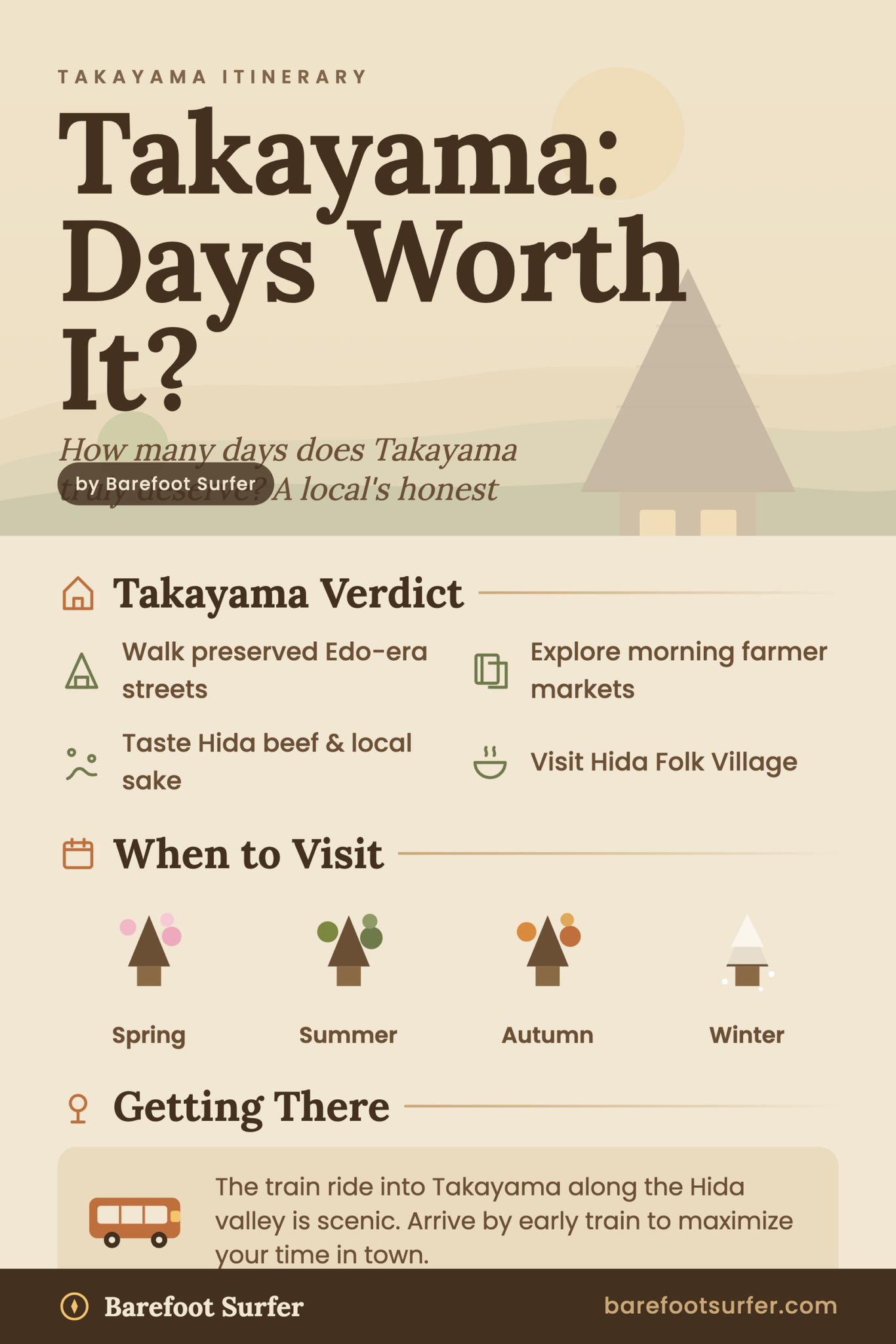
Is Takayama worth visiting? Yes, if you want preserved Edo-era streets, real artisan crafts, and some of the best beef in the country away from the Kyoto crush, but only for 1 to 3 days. It is not a city you build a week around.
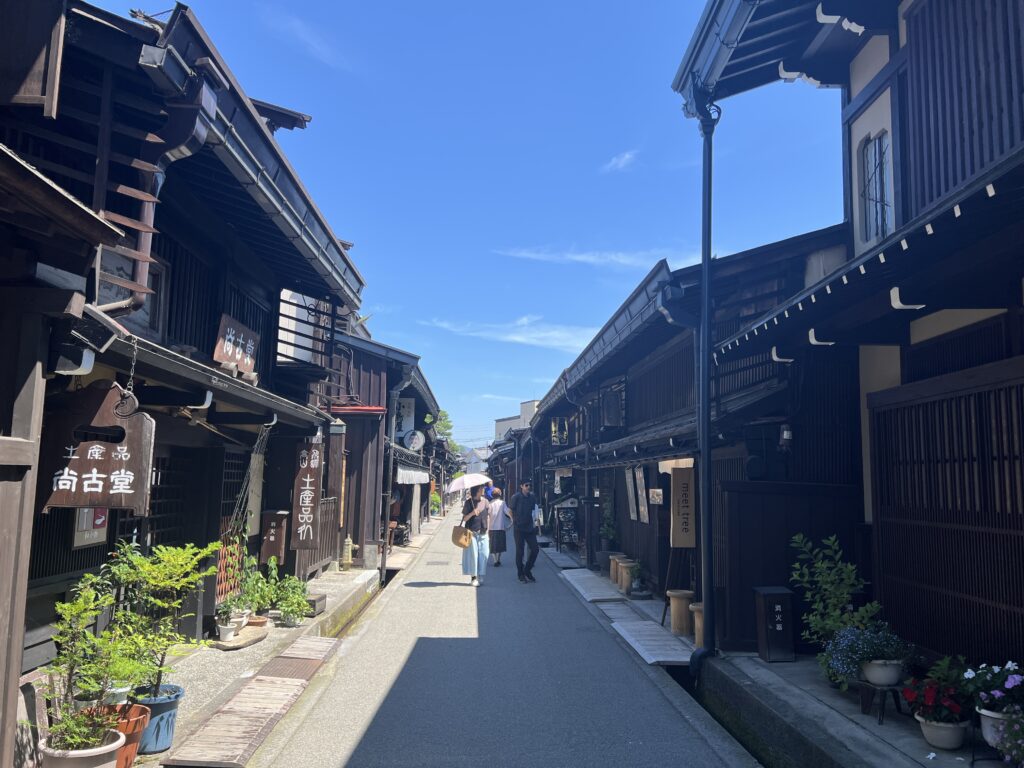
Takayama is for you if you want the version of “old Japan” that still functions as a real town. People live in the wooden houses. Farmers who speak in thick Hida dialect run the morning markets their great-grandparents ran. The sake breweries are working breweries, not gift shops with a barrel out front. If your fear is coming home with the exact same Kyoto carousel as everyone else you know, Takayama answers that directly. It feels earned.
It is not for you if you need nightlife, big-ticket landmarks, or a packed list of headline sights. Takayama is slow on purpose. By 8pm the old town is quiet and most kitchens are closing. If “a beautiful town where I mostly walk, eat, and slow down” sounds like a wasted day to you, be honest with yourself now and skip it. Better to know before you book than to stand on an empty street at night wondering where the trip went.
The first time I went, I took the train down from Toyama with my friend Liam, and the ride itself is half the reason to go. The line follows the valley, the river on one side, the mountains closing in, and you just sit there watching Japan roll by. If you do nothing else right, do that ride. It is the best way to arrive.
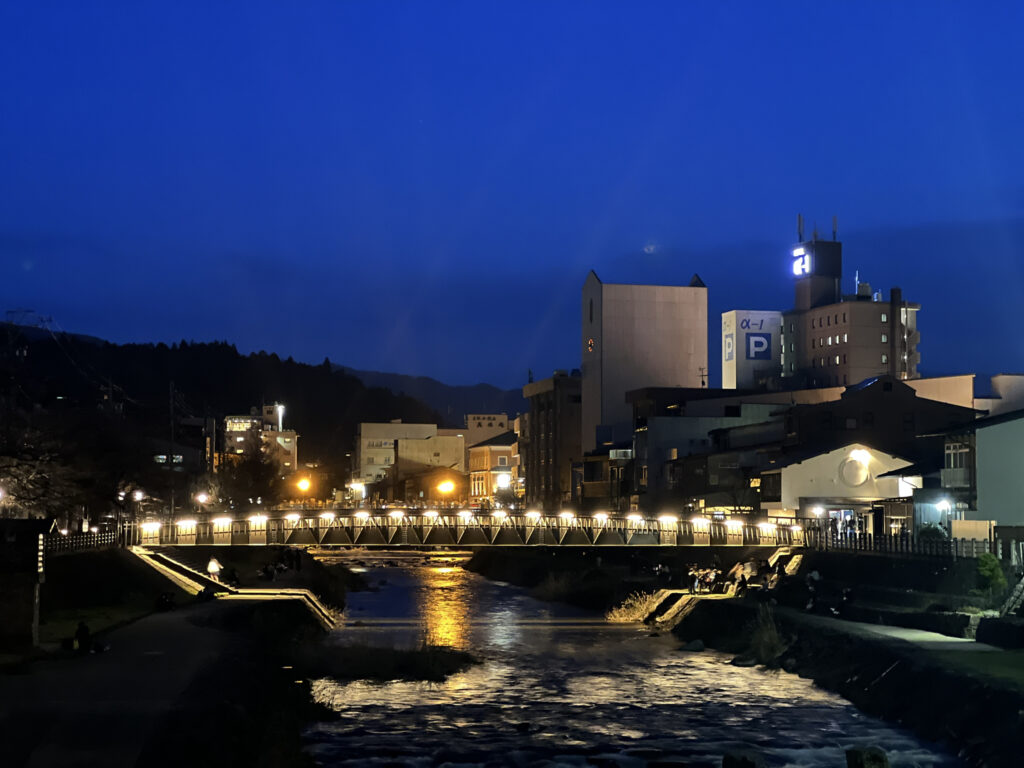
Then you step out of the station into something that is busy enough and a little touristy, but somehow still has the small-town feel intact. You could wander off into the middle of nowhere if you wanted. Instead there is almost a path laid out for you, a strip that handles all your tourist needs and your food and carries you straight down to the river. It feels unplanned and planned at the same time. The whole thing is just relaxing. That is the word I keep coming back to for Takayama. Relaxing.
The Honest Verdict: How Many Days Takayama Actually Needs
How many days do you need for Takayama? Most travelers find 2 days ideal to walk the old town, hit a morning market, eat properly, and not feel rushed. 1 day works if you are tight and disciplined. 3 days only earns its place if you are using Takayama as a base for a side trip or a festival, not for the town itself.
The mistake I watch people make is treating Takayama like a city to “do.” It is not. It is a town to be in. You can see the physical sights in half a day. What you cannot rush is the part that makes it worth coming: the slow morning at the market, a long lunch, an afternoon with no agenda, the old town after the tour buses leave around 4pm and the streets go quiet and gold. Cram it and you get the photos but miss the entire reason the place is special. Overstay it and you run out of town by lunch on day three.
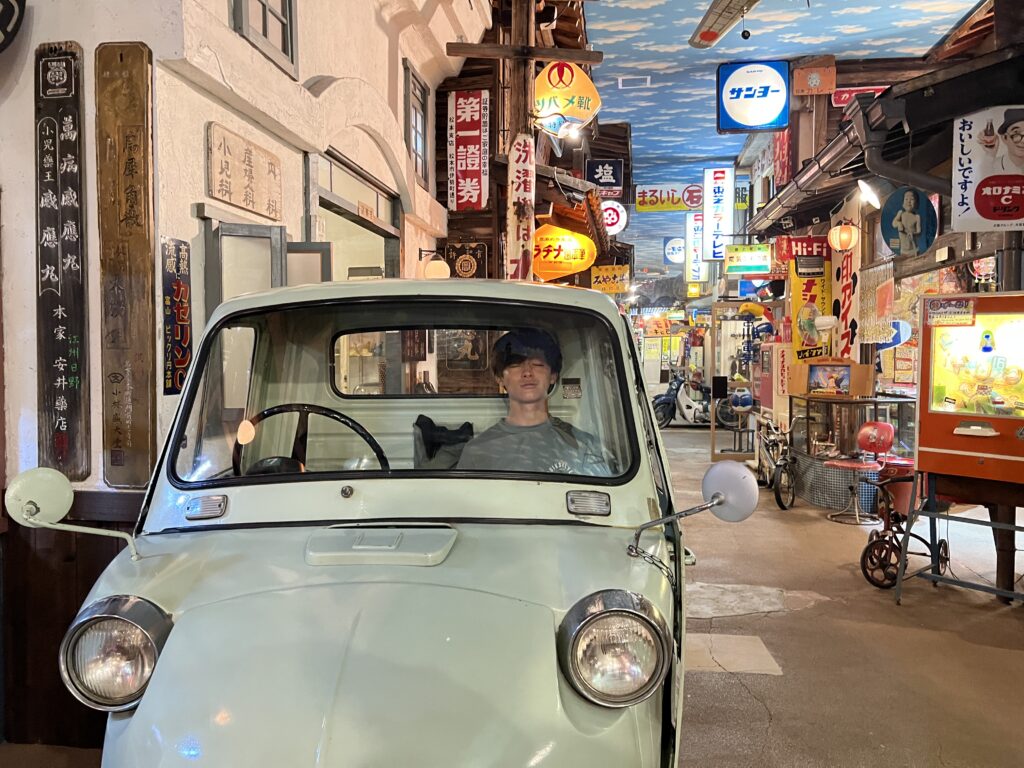
I will be straight with you, because this is exactly the call you came here to get. You do not need a lot of time in Takayama. There is not a crazy amount to do, and that is not a knock on the place, it is the point of it. You could honestly do a full day and one night and walk away satisfied. If you have it to spare, a second day is the comfortable version: it lets you eat slowly, see the historic streets without rushing, and if you are into it, sink a couple of hours into the retro museums or get out for some trail walking. But if your instinct is telling you Takayama is a half-to-full-day town, your instinct is right. Trust it and spend the saved day somewhere it counts.
Takayama in 1 Day: Fast but Focused
One day is enough to taste it if you move with intent. Get in the night before or on an early train so the clock starts at sunrise, because the best part of Takayama happens before 9am.
Start at the Miyagawa morning market along the river. It runs 7:00 to noon (from 8:00 in winter) and the first two hours are when the farmers are chattiest and the produce is freshest. Walk the Sanmachi old town while it is still empty, roughly a 30 to 45 minute loop of preserved merchant streets. Find a Hida beef lunch or grab beef skewers on the street for ¥500 to ¥1,000. Duck into one or two of the working sake breweries (look for the round cedar ball, the sugidama, hanging by the door; tastings run ¥200 to ¥500 a cup). That is a real, full day. Leave by late afternoon and you have not missed anything essential.
Takayama in 2 Days: The Sweet Spot
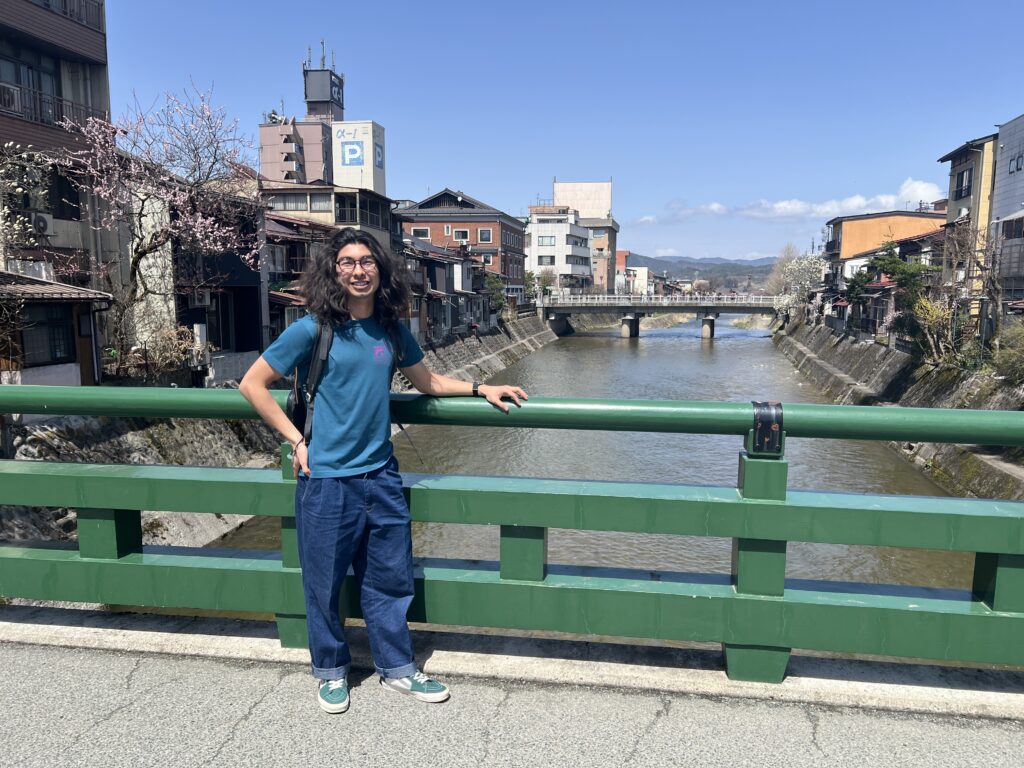
This is the comfortable version, and it is what I would tell my sister to do if she had the time: roughly two days and one night.
Day one is the old town and markets at dawn, then either the Hida Folk Village (Hida no Sato) in the afternoon, an open-air museum of relocated thatched-roof farmhouses about 2km out, a 10-minute Sarubobo Bus ride from the station (¥700 entry, open 8:30 to 17:00), or a couple of hours in the two retro Showa-era museums in town, which are quietly some of the most fun things here and can eat a relaxed half day. Day two is for the things that need breathing room: the Higashiyama temple walk and some trail time if you want it, a second brewery, a long lunch, and just sitting in the town as it empties in the evening. Two days is where Takayama stops being a checklist and starts being a memory.
Takayama in 3 Days: When It’s Worth Slowing Down
A third day is worth it in exactly three situations. One, you are timing the Takayama Festival (more on that below) and want the town on a non-festival day too. Two, you are using Takayama as a base for a Shirakawa-go day trip and want it to feel relaxed rather than a sprint. Three, you genuinely fell for the place and want a day with zero plan. Outside those, a third day in Takayama itself is a day you could have spent in Kanazawa or the Alps. Spend it on purpose or move on.

Your Best Takayama Itinerary: What to Prioritize (and What to Skip)
Not everything in this town is worth your time. Here is the honest sort.
Non-Negotiables: Don’t Miss These
The morning markets. Both the Miyagawa market and the Jinya-mae market run roughly 7:00 to noon. They are cash only and they are the real thing, farmers selling pickles, mountain vegetables, and sarubobo dolls, not a staged tourist set. Go before 9am. Note the Jinya-mae market closes entirely December through March, so in deep winter you only get the Miyagawa one.
Sanmachi old town and the sake breweries. The three preserved Edo streets are the heart of it. Takayama has seven working breweries within walking distance. Tasting fresh local sake where it is actually made is the kind of thing Claire-grade trips are made of, and it costs almost nothing.
Hida beef, done right. This is premium wagyu that sits next to Kobe and Matsusaka. Have it as a proper meal at least once, and try the street skewers too. This is the one place I would tell you not to cheap out.
Hida Folk Village. Worth the short bus ride for the gassho-zukuri farmhouses and craft workshops, especially if Shirakawa-go is not making your cut.
Worth Considering: If You Have Time
Takayama Jinya, the only surviving Edo-era government office in Japan (¥440, open 8:45 to 17:00), is genuinely interesting if you like history and it is light on crowds. The town’s two retro Showa-era museums are an easy couple of hours and more fun than they sound, the kind of nostalgic, hands-on stop that fills a relaxed half day if the weather turns. The Yatai Kaikan float exhibition hall displays real festival floats year-round if you are visiting outside festival dates. The Yoshijima Heritage House, a 1907 sake brewer’s home, is a quiet stop for anyone who loves carpentry and light. None of these are essential. All are good with a spare hour.
What to Skip: Tourist Traps and Time Wasters
This is the section only someone who lived nearby will give you straight.
Skip the rickshaw rides unless you specifically want the photo; you will see more on your own feet for free. Be wary of the cluster of generic souvenir shops on the busiest stretch of Sanmachi between 10am and 4pm, that window is wall-to-wall tour groups and the prices reflect it. And do not build your day around any single “famous” sweet or snack stall you saw go viral; the lines are long and the payoff is small. The town’s real value is the streets, the market, the food, and the slowness. Everything sold hard to tourists is the part you can safely ignore.
Is Takayama a tourist trap? Takayama itself is a real historic town, not a manufactured one. But specific attractions and shops along the main strip lean hard on tourists. The town is worth it; some of what is marketed inside it is not.
Getting to Takayama: Your Options from Tokyo, Kyoto, Osaka
The train is the answer from every major city, and the ride down the Hida valley is one of the prettier ones in the country.
How to get to Takayama from Tokyo? Take the Tokaido Shinkansen from Tokyo to Nagoya (about 1 hour 40 minutes on a Hikari), then transfer to the Limited Express Hida from Nagoya to Takayama (about 2.5 hours). Total is roughly 4.5 hours and around ¥16,000 one way, fully covered by the Japan Rail Pass if you stick to the Hikari and not the supplement-charging Nozomi.
From Kyoto or Osaka, the simplest route is the Shinkansen to Nagoya, then the Hida north. There is also one direct Hida #25 per day that runs from Osaka through Kyoto straight to Takayama (about 4 hours 15 minutes from Osaka, around ¥8,450), which is lovely if the timing lines up. The Hida is fully covered by the Japan Rail Pass either way, and the modern HC85 trains have big windows, power outlets, and free wifi.
One current note worth knowing: the Takayama to Toyama stretch of the line was suspended for several months and resumed on May 30, 2026. That matters because if you are coming from the Hokuriku side (Kanazawa, Toyama) on the Hokuriku Shinkansen, the Toyama-to-Takayama Hida leg is running normally again, roughly 90 minutes. If you want to know whether the Japan Rail Pass still pencils out for your whole route, I break that math down separately. [INTERNAL LINK PLACEHOLDER: Japan Rail Pass worth-it article, not yet in site index]
A few hard-won specifics. Reserve your Hida seat (free with the pass) on weekends, holidays, and especially around Golden Week, when the train runs all-reserved and fills fast. Sit on the correct side and you get the river and mountains; book the opposite side for the return so you see both. Once you arrive, Takayama Station is a 10-minute walk from the old town, and the local Sarubobo / town buses are ¥100 a ride or ¥500 for a day pass if your feet need a break to the Folk Village.
A note on routes, because I have done most of them. The scenic train down from the Toyama side into the Hida valley is the best way in, hands down, and it is the one I would pick every time. The Nagoya line works fine and is the practical default if you are coming from the south, just know it is less scenic than the Toyama approach. And if you are renting a car, I have driven in from Matsumoto through the Alps, which is a fine, pretty route, though not the one I would call the obvious recommendation unless you already have the car.
Here is the tip most itineraries miss: if you are riding the line between Nagoya and Takayama, or doing the full loop from Toyama down through Takayama and on to Nagoya, stop at Gero Onsen. It is a stop right on the train line and it is one of the most relaxing little onsen towns in the country. If you have ever wanted the old-style Japanese ryokan night, a proper dinner, the private onsen, this is the place to spend on it. It is the kind of slow, special night Claire-grade trips are built around, and almost nobody passing through Takayama thinks to add it.
If you are building a wider route through the region rather than a single stop, my Toyama prefecture guide covers the rural Hokuriku side most people miss, and Takayama slots in naturally on the way up or down.
Beyond Takayama: Is Shirakawa-go Worth Your Limited Days?
This is the side trip everyone asks about, so here is the real verdict.
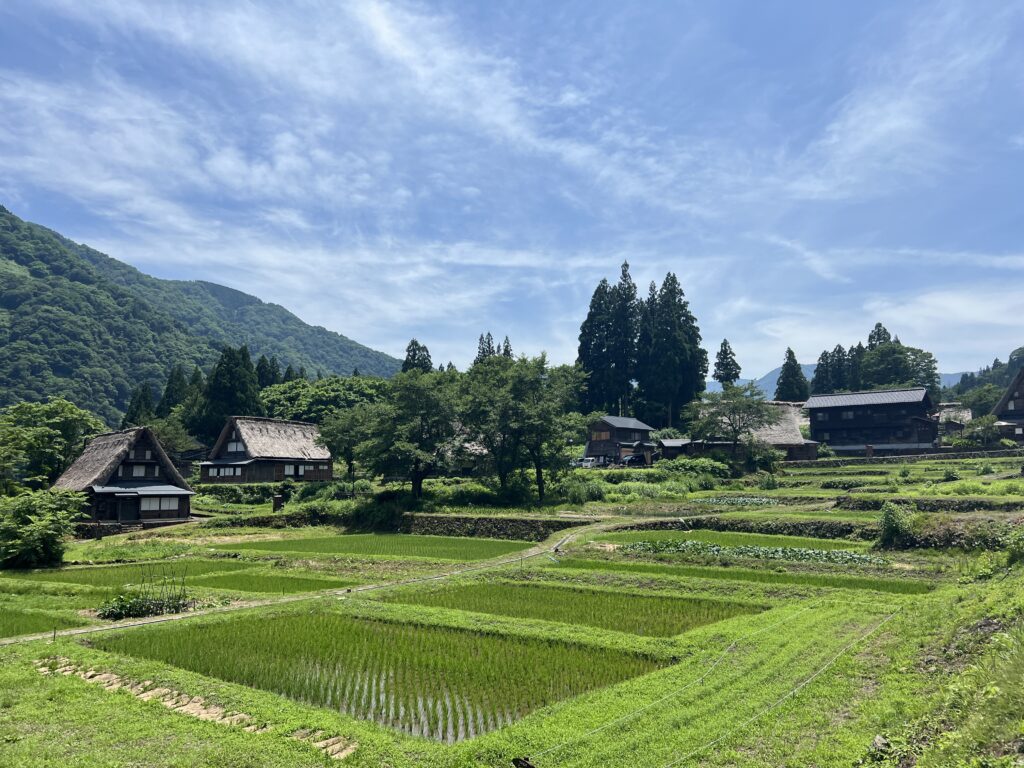
Is Shirakawa-go worth it from Takayama? Shirakawa-go is a genuine UNESCO World Heritage village of gassho-zukuri farmhouses, and it is beautiful. It works as a half-day trip by Nohi Bus from Takayama, about 50 minutes and around ¥2,600 one way, with buses running through the day. It is worth it outside peak times. In peak autumn foliage and winter, the crowds and the bus lines can swallow the magic.
Here is my honest read, having spent time in both. Shirakawa-go is extremely touristy, but it is also big. That size is the saving grace: if you are with friends and you want to actually walk around, see the houses, maybe even stay the night, there is enough there to make it work despite the crowds.
But if you want the same gassho-zukuri houses with the place closer to yourself, in the quieter pockets most people never reach, Gokayama is the better call. It is smaller, calmer, and it feels like a real village people live in rather than a stop on a tour. Same architecture, fraction of the people, and it lands as local instead of staged. It is the one I would actually send my sister to. I wrote up Gokayama here so you can compare honestly before you commit a day.
There is also a routing reason to like Gokayama. If you are not riding the whole line top to bottom, you can go Toyama to Gokayama to Kanazawa faster than you would route through Shirakawa-go, and you see essentially the same thing at a smaller, more local scale. The Nohi bus does continue from Shirakawa-go on to Kanazawa too, so either way you can chain the village with the city. My Kanazawa itinerary sorts out how many days Kanazawa actually deserves.
Whichever you pick, the practical playbook is the same: go early, reserve your bus seat in advance (some Nohi services require it, especially in autumn and winter), and give yourself 2 to 3 hours on the ground. That is enough to walk the village properly without killing half your day in transit.
Takayama’s Best Time to Visit (and What to Expect Seasonally)
Season changes this trip more than people expect, and I felt every one of these living up the valley.
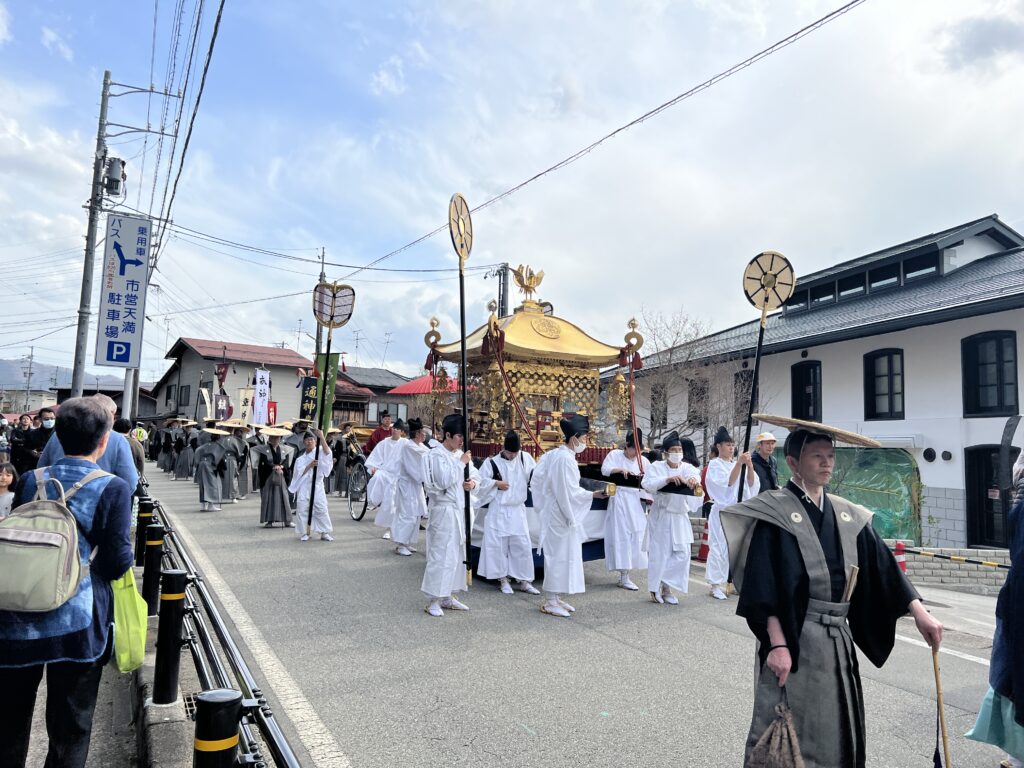
Spring and autumn are the headliners, because of the festivals. The Takayama Spring Festival (Sanno Matsuri) runs April 14 to 15 every year, and the Autumn Festival (Hachiman Matsuri) runs October 9 to 10. These are fixed dates, not rough windows. The towering yatai floats and the karakuri puppet performances are some of the most genuinely impressive things in the country, which is exactly why hotels book out months ahead and prices climb. If you want the festival, lock your room now and consider basing in Gero Onsen or Furukawa nearby if Takayama itself is full.
Late spring through early summer (May, June) is my quiet pick: mild weather, late cherry blossoms possible in mid-April, lively markets, and none of the festival pricing. Autumn foliage is stunning and busy. Winter is the one to think hardest about. Snow on the dark wooden roofs is honestly gorgeous, and the Folk Village illuminations are special. But this is Hokuriku winter, which I know intimately, it is grey, cold, and heavy with snow. Some hours shorten, the Jinya-mae market closes for the season, and a Shirakawa-go bus can get cancelled in bad weather. Winter is worth it if you want the snow-globe version and you plan around the trade-offs. Go in expecting sunshine and you will be disappointed.
The Verdict
Takayama is absolutely worth a place on an independent Japan trip if you want a real taste of old Japan, the kind your friends did not get on the standard Tokyo-Kyoto-Osaka run. Give it 1 to 2 days. Add a third only for a festival, a relaxed Shirakawa-go or Gokayama day trip, or because you fell for it. Do not stretch it past that or cram every “must-see” off a generic list, because the entire point of Takayama is the part that cannot be rushed.
You came for a clear call. There it is. Two days, slow mornings, good beef, the markets at dawn, and the old town after the buses leave. That is the trip.
When you have your dates, lock the room early. Takayama is a small town with limited beds, and the good guesthouses near the old town fill first, especially around the festivals. Booking.com lets you reserve with free cancellation until about a week out, so there is no reason to leave it as a “we’ll think about it later” tab. Decide now, hold the room, and adjust later if you need to.
[Booking.com : Secure your stay in Takayama now, free cancellation, before the old-town guesthouses fill.]