Da Nang or Hoi An? Real Talk From a Guy Who Backpacked Both and Just Moved Here
In April 2023 I passed through this stretch of coast with a 45 liter bag, no plan, and almost no money, and I wrote in my journal that I’d come back to live here one day. Three years later I’m typing this from Da Nang.
This is a straight comparison of Da Nang vs Hoi An for anyone deciding where to land in central Vietnam, whether you’re backpacking through for a week or trying to set up a base for a few months. I’ll cover what each place actually feels like to live in, real costs in 2026, the surf, getting between the two, and the visa and money stuff nobody tells you until you’re already there. By the end you’ll know which one fits where you’re at right now.
First Off, Why Are You Even Looking at Vietnam?
Most people who land on a “Da Nang or Hoi An” search aren’t really asking about two cities. They’re asking a bigger question they haven’t said out loud yet. Something like, can I actually do this. Can I leave, can I afford it, can I build a different kind of life somewhere cheap and warm and far from whatever I’m trying to get away from.

So let me answer the small question and the big one.
The small one: Vietnam runs cheap, it’s stunning, the food is some of the best on earth, and central Vietnam puts a modern beach city and a 400 year old riverside town 40 minutes apart. You don’t have to pick perfectly. You can sample both.
The big one is the one I care more about. I came to Vietnam the first time half running from the feeling that I was behind, that everyone my age had a plan and I had a backpack. What I learned hitchhiking the north with no money and no Vietnamese is that the people here serve each other before they serve themselves, constantly, in small ways, and it cracked something open in me. If you’re holding a passport that lets you show up here and live on a fraction of what you’d burn back home, you’re already in the top sliver of people on this planet. That’s not a flex. It’s a responsibility. You’re a guest. Come grateful or don’t come.
It’s my first trip, spring 2023, and I’m hitchhiking from Dien Bien Phu toward Hanoi with a French girl named Eva I met on a border bus an hour earlier. We have no Vietnamese money, no SIM, and maybe three hours of daylight left. A white pickup pulls over. The driver speaks zero English, has his Vietnamese EDM cranked, and then spends two hours flying past every car on a one lane mountain road, racing the sun to get us closer to a town before dark. He doesn’t have to. He just does. Earlier that same day a different guy drove an hour out of his way to drop us somewhere better. Nobody asks for a single thing back. That’s the day it clicks that people here serve each other before they serve themselves, and I’m the one getting carried.
Da Nang: The City That Builds You Up
Da Nang is the one you pick if you’re trying to build something. A remote income, a routine, a body, a life. It’s a real city, close to a million people, with a long clean beach on one side and mountains on the other, and it’s set up for someone who wants to plug in and get to work.

When I rolled through in 2023 it was a quick stop on the way to Japan. Coming back to actually live here is a different thing entirely, and I’m only a month in, so I’ll tell you what I’m seeing with fresh eyes rather than pretend I’ve got it all figured out.
[For first time Da Nang Visitors, here’s the in depth Da Nang Guide]
What Da Nang Feels Like To Live In
Da Nang feels like a beach town that’s quietly becoming a city, or a city pretending to still be a beach town. The pace is calmer than Hanoi or Saigon. People are friendly without hustling you as hard. The expat and nomad scene clusters around My An and My Khe, near the beach, which is where you’ll find the Western cafes, the coworking spaces, and most of the affordable long term apartments.
One honest thing nobody puts in the glossy guides: I arrived at the start of the hot, rainy stretch. Central Vietnam gets brutal heat through summer and serious rain and the occasional typhoon from roughly October into November. If you’re choosing when to come, the dry months are gold and the back half of the year tests your patience. I’m finding that out in real time.
A month in, so this is a first read and not a verdict. The thing I keep noticing is that the city can’t decide what it is yet. Quiet beach mornings, then a wall of scooters and construction by mid morning, then a sunset over the sand like none of it happened. Ask me again after a full season.
[For a more in depth view of Living in Da Nang, read the full digital nomad guide here]
Real Costs: What Da Nang Actually Runs in 2026
A solo digital nomad can live comfortably in Da Nang for around $900 to $1,300 a month, and a lean version is doable closer to $700 to $900. That’s a modern one bedroom near the beach, eating a mix of local and Western, coworking, a scooter, and still having room for gym, massages, and weekend trips. Local street food keeps you fed for under $5 a day if you commit to it.
Here’s where I have to be straight with you, because this blog has a thing about money and I won’t fudge it. I backpacked Southeast Asia in 2023 on about $500 a month. That number is real, and I’ll show you exactly how in How I traveled on less than $500/month in Asia. But $500 was hostels, street food, and a bag. Renting your own apartment and living a settled life is a different math. Plan on more like $300 to $500 a month for a decent one bedroom near My Khe, and budget separately for electricity, which gets billed on top of rent and spikes hard once you’re running the AC through summer.
Old habit from the 2023 trip that still runs my budget. When I land somewhere new I find where the locals actually eat before I find anything with an English menu. In Hue I walked 90 minutes from the bus station into the city with my whole bag on my back instead of paying for a ride, and I was glad I did, because I got to see the place and then ate a bowl of bun for the price of a coffee back home. The cheap option is usually the better story anyway.
How to Build a Routine and Find Your Tribe Here
This is the part most travel articles skip, and it’s the part that actually decides whether you make it past month two. The loneliness of moving somewhere new is real. The fix is not waiting for it to pass. The fix is structure.
Da Nang has the infrastructure for a routine: real coworking spaces, gyms for $15 to $30 a month, a beach you can train on at sunrise, and a big enough nomad and expat community that there’s something social on most nights if you go looking. The community is here. It does not come to your apartment. You have to leave and start the conversation, every time, until it stops feeling like work.

I learned that the hard way in another country, sitting in my room knowing exactly what I should be doing and not doing it. The exit from that is always the same door. Do something hard with your body, get outside, find people who push you, then see how you feel. Movement first, mood second.
Something I had to learn the hard way, and I’m still working on it. I’m shy. On my first trip half the people I met told me the same thing, that I was too shy and needed to get out there. Tuan, my couchsurfing host up north, said it straight to my face. They were right. Nobody talked to me until I started the conversation first. Every real friend I made out there, I made because I opened my mouth before I felt ready to. The community is here. It will not come knock on your door.
Catching Waves and Clearing Your Head: Surfing in Da Nang
Yes, you can surf in Da Nang. My Khe Beach is the main spot, and the waves are most consistent through the colder months, roughly September into March. Summer mostly goes flat. It’s not a heavy world wave, but it’s a friendly, fun beach break that’s perfect for getting back in the water or learning.

I’ve surfed since I was a kid in Destin, Florida, so getting an ocean back at the bottom of the street was a big part of why I picked Da Nang over anywhere inland. There’s something about paddling out that resets your head in a way nothing else does. You can’t doomscroll on a wave. You can’t worry about your five year plan when you’re reading the next set. The ocean makes you present whether you want to be or not.
Full honesty, I’m fresh off the move and still scoping the lineup here, so I won’t pretend I’ve got My Khe dialed yet. What I can tell you is the feeling of having a wave at the bottom of the street again after years away from a home break. That part doesn’t get old. First proper session report goes in the next surf piece.
[More info on: Surfing in Da Nang]
Hoi An: The Town That Slows You Down
If Da Nang is for building, Hoi An is for slowing down enough to figure out what you’re building toward. It’s a small, lantern-lit old town on a river about 40 minutes south, and it moves at a completely different speed.
What Hoi An Feels Like To Live In
Hoi An is all yellow walls, tailor shops, lanterns over the water, and a pace that practically forces you to exhale. The historic center is tiny and walkable. It’s beautiful in a way that’s almost too on the nose, and it pulls a lot of tourists because of it. Live here and your days get quieter, your circle gets smaller, and your phone gets less interesting, which is either exactly what you need or slowly maddening, depending on who you are.

Straight up, I’m going off visits here, not months on the ground, so I won’t dress it up as resident knowledge. What gets me every time is how the whole town seems to drop its shoulders once the day-trip crowds thin out and the lanterns come on over the river. That’s the Hoi An people fall for.
Real Costs: Can You Actually Live Here Long-Term?
Hoi An runs in the same broad range as Da Nang, roughly $800 to $1,300 a month for a comfortable solo life, and local food is just as cheap if you eat where locals eat. The catch is that Hoi An is small and heavily tourist-priced, so some things, certain cafes, Western food, anything aimed at visitors, cost more than they would in Da Nang. Long term apartment options are also thinner simply because it’s a smaller town. You can absolutely live here. You’ll just have fewer choices and pay a slight charm tax for the privilege.
Finding Your Rhythm: Why Hoi An Might Be Your Reset Button
Here’s the case for Hoi An, and it’s a real one. Sometimes you don’t need more options. You need fewer. You need a small town, a slow river, and nothing to distract you from the work you keep avoiding, whether that’s a business, a book, or just figuring out who you are.

The first time Vietnam slowed me down, it wasn’t here. It was up north, on my first trip, when a French girl I’d been hitchhiking with dragged me toward a little pagoda she spotted across a rice field. I figured we’d peek in and leave. Instead the monks fed us, and I ended up coming back day after day, meditating with my legs crossed wrong until they went numb, sweeping floors, helping the nuns cook, sitting still for the first time in months. One of the books on their shelf said that being proud of yourself burns off the good karma from your good deeds. I didn’t agree with all of it. But sitting in that silence did something the eight months of motion hadn’t. It let everything settle enough that I could see the bottom again.
That’s the thing a place like Hoi An can give you, if you let it. Not an answer. Just enough quiet to hear yourself ask the question.
My Take: Da Nang vs Hoi An for Finding Your Footing
I’ll give you the verdict I’d give my own brother and sister, because that’s who I actually write this for.
If you don’t know what you want yet, that’s fine. I didn’t either at your age, and the trip was me going out to find the answer with my hands instead of thinking my way to it. But know this before you book a flight. Travel won’t help you escape anything. You carry yourself with you. The people who come back changed weren’t running from something. They were looking for something. Get clear on which one you are, because the city you pick should match.
Pick Da Nang If…
- You’re building a remote income or trying to, and you want coworking, fast internet, and other people doing the same thing within walking distance.
- You want a real city base with a beach, a gym, surf, and the option to be anonymous.
- You’re prone to isolating, and you need the structure and social options of a bigger place to keep you out of your own head.
- You’re staying a while and want room to build a routine.
Pick Hoi An If…
- You want to slow all the way down and you trust yourself with the quiet.
- You’ve got focused creative or solo work and you want fewer distractions, not more.
- You’re after deep, slow immersion in one small place over speed and options.
- You’re there for weeks, not months, or you’re using it as a reset between bigger moves.
Still figuring out your next move after all this? Don’t just sit on it. The whole point of this trip is that you find the answer by moving, not by reading one more blog post. Pick a date, book the flight, and come see for yourself. If you want the full game plan first, start with my guide to long-term backpacking in Southeast Asia.
The Best of Both Worlds: Why You Don’t Have To Choose Just One
Here’s the part that takes the pressure off. Da Nang and Hoi An are 40 minutes apart. You can base in one and visit the other any time you want. A lot of people live in Da Nang for the infrastructure and ride down to Hoi An for a slow weekend, or post up in Hoi An and pop into Da Nang when they need the city. It’s not either or. It’s both, on your schedule.
Getting Around: From One Vibe to the Next
Getting between Da Nang and Hoi An is easy. It’s a 30 to 45 minute trip, and your options are a Grab car or motorbike, a private taxi, or the local bus. Grab is the simplest. Open the app, see the price before you commit, done.

Quick lesson that’ll save you money everywhere in Vietnam. When I came up this coast in 2023, a friendly guy offered to get me to a bus station for Hue going to Da Nang for 80k dong, and I paid it happily even though I knew a Grab motorbike was about 22k for the same trip, because he gave me good info and a good story and I wanted to share the love. That’s a fine choice when you make it on purpose. The trap is making it by accident. Know the real local price before you negotiate, then decide how generous you feel. Don’t let someone decide it for you.
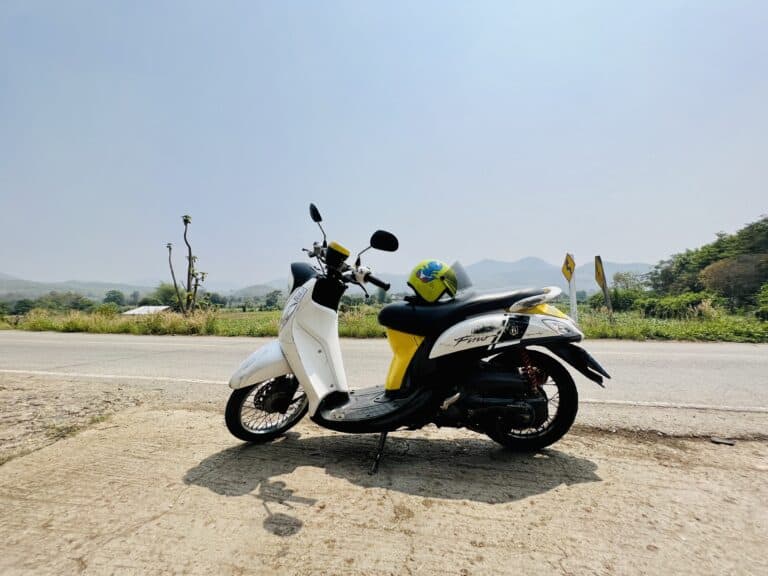
One more, and it’s not optional. If you rent a scooter, wear closed shoes, not flip flops or sandals. I’ve watched too many travelers shred their feet on a bike because sandals looked good enough. Closed shoes, minimum. That one’s a rule, not a suggestion.
[For the best shoes for traveling Asia, read this article (from personal experience)]
Don’t Forget the Basics: Visa, Money, and Staying Safe
This is the part that turns a dream into an actual plan. Don’t skip it.
Visa. As of 2026, most travelers from countries like the US, Canada, and Australia enter Vietnam on the e-visa, applied for online before you fly. You can get a 30 day single-entry for around $25, or a 90 day multiple-entry for around $50. If there’s any chance you’ll leave and come back, like a Laos or Thailand run, get the multiple-entry from the start. Two things that bite people: the e-visa cannot be extended from inside Vietnam, so when it’s up you physically cross a border, and you must first enter through the specific port you listed on the application. Apply on the official government site, evisa.gov.vn, not a lookalike.
Verify before publishing: I pulled these visa details current to early 2026, but Vietnam changes entry rules often. Re-check evisa.gov.vn the week you publish and again before any reader would act on it.
Money. Vietnam is a cash country once you’re off the tourist track. Cards work in nicer places, but local food, buses, markets, and small towns want dong. Pull cash from ATMs, carry more than you think you need, and never assume the next town has a working machine. I learned that hitchhiking the countryside with no Vietnamese money and a few hours of daylight left, sweating it until we finally found an ATM in a town whose name I can still picture.
Picture it. Deep in the northern countryside, no Vietnamese cash, no signal, the sun dropping, and Eva and I just walking down a flag lined street hoping. Every restaurant owner waves us in to eat and we keep having to say we have no money. Then Eva stops dead and yells “ATM!” like she spotted water in a desert. And she had. The relief of that one little machine in the middle of nowhere is something I can still feel. Carry cash. Carry more than you think you need.
Staying safe. Central Vietnam is genuinely safe. The realest dangers are the roads and the water, not people. Traffic is chaos that works on its own logic, so ease into riding and don’t ride drunk. Respect the ocean and the rip currents, especially in the off season. Get travel insurance before you come, somewhere in the $40 to $80 a month range for nomad coverage. Don’t be the person who skips it and finds out why on a scooter.
If loneliness or the lost feeling creeps in once the novelty wears off, and it can, that’s normal, and you’re not the only one. Finding community when you’re a solo nomad is the next thing I’d read.
Da Nang or Hoi An, you’re not really choosing a city. You’re choosing whether you’re here to build or here to breathe. Either one beats kicking a can around your hometown wondering. Pick one, book it, and send it. Life is good over here. Come find out.