Da Nang Vietnam: The Complete Travel Guide (2026)
Da Nang is the best city in Vietnam for people who want to actually do things: surf, ride, eat well, explore without burning through money. It’s not a museum town. It’s not a resort bubble. It’s a functioning city with a beach running through the middle of it.
Hey, I’m William and I live in Da Nang. Not visiting. Actually based here, riding motorbikes up to the pass, surfing My Khe before the tourists show up, eating bun cha ca, xoi man, and banh mi for breakfast most mornings.
Most travel guides about this city are written by people who spent four days here on their way to Hoi An. This one isn’t.
Here’s everything you need to know.
Why Da Nang? (Is It Worth Visiting?)
Yes. It’s underrated relative to Hanoi and Hoi An… is what I would have said 5 years ago. Da Nang is a city that has blown up online the past 5 years.
It used to be that city you pass through on the way to Hoi An.
Now, people have discovered that it is one of the few areas in Southeast Asia with an actual sizable city as well as a beautiful beach. A combo not found often.
And it’s expanding fast.
Da Nang is known for My Khe Beach, the Dragon Bridge, the Marble Mountains, and the Golden Bridge up at Ba Na Hills. But the real reason to come here is the combination: a genuine beach city with mountains on one side, ocean on the other, world-class street food, a cost of living that makes your budget stretch further than almost anywhere in Southeast Asia, and most importantly: the friendliest local people.
Most visitors need 3–5 days in Da Nang to cover the main beaches, a day trip to the Marble Mountains, and an evening on the Han River. If you’re surfing, motorcycling, or doing day trips, a week disappears fast.
It’s also one of Vietnam’s safest cities. Low petty crime, easy to navigate, friendly locals. Easy place to land if it’s your first time in Vietnam.
[If you’re looking for a longer term base here, check out the nomad guide to Da Nang]
Best Things to Do in Da Nang
Da Nang’s attractions are more spread out than you’d expect from a beach city. You need a motorbike or a plan. Here’s what’s worth your time.
My Khe Beach
My Khe is one of the best urban beaches in Southeast Asia. Full stop.
It runs for about 30km, it’s mostly clean, it’s walkable from the city centre, and from November through March it has real surf. Not Indo surf, not Bali-level power, but shoulder-high beach break that’ll keep you busy if you’re at an intermediate level or below.
I’d take a look at SurfersofDanang to get an idea.
The beach itself is wide and white. Early mornings are quiet: local swimmers, a few fishermen. By 9am the sunbeds are out. If you want to avoid the resort strip, head south past the main cluster toward Non Nuoc. More space, fewer hawkers.
Surfboard rentals are available at the northern end near the big hotels. Lessons run around $15–20 USD for two hours. [→ See the Da Nang surfing guide for the full breakdown on surf season, spots, and who to rent from.]
Marble Mountains
Five marble-and-limestone outcrops rising out of the flat coastal plain, about 9km south of the city center. Worth a half-day.
The caves inside are the real draw. Some have natural skylights where light pours through the rock. Huyen Khong Cave is the most impressive. There’s also a working Buddhist shrine inside the mountain, which is a strange and memorable combination.
Entrance is 40,000 VND ($1.60 USD). Get there early. By 10am the tour groups arrive and the narrow passages get crowded. Ask me how I know haha. Motorbike from the city takes 20 minutes.
Dragon Bridge
The Dragon Bridge is the symbol of Da Nang and yes, it’s worth walking across at least once. The dragon spans the Han River and breathes actual fire and water on weekend nights at 9pm.
It’s more interesting than it sounds. There’s a viewing crowd that gathers, and the Han River waterfront is worth exploring anyway: cafes, food stalls, the Ferris wheel.
The bridge itself is more photogenic at night. Cross it in the evening, grab banh mi from the street stalls on the west bank, and watch the light show from the riverbank.
If you have children, the east side riverbank, (beach side) has many stalls that are kid friendly with arts and craft stations, as well as little electric cars for kids to race around in. It looks really enjoyable, I just don’t fit.
Son Tra Peninsula & Lady Buddha
Son Tra is the forested peninsula northeast of the city, basically Da Nang’s version of a national park. The Lady Buddha statue at the top is 67 meters tall and visible from most of the city.
The ride up the peninsula is one of the better motorbike routes in central Vietnam. You pass through thick jungle, get views back over the city and My Khe, and can stop at lookout points along the way. Red-shanked douc langurs live in the forest. You can spot them in the trees near the road in the early morning.
Allow two hours minimum. Don’t come on weekends if you can avoid it. The road gets busy.
Hai Van Pass
The Hai Van Pass (Cloud Pass) is 30km north of Da Nang and one of the most famous motorcycle roads in Vietnam. It’s been on every travel show about Southeast Asia for a reason.
The view from the top is worth the climb. You’re looking down at Lang Co Bay on one side and Da Nang Bay on the other. The road is genuinely good: sweeping corners, manageable gradient, no major potholes on the Da Nang side.
Rent a semi-auto or manual motorbike if you’re comfortable (and legal!). Ride early. Fog rolls in by midday. An easy half-day there and back, or combine it with a trip to Hue if you’re heading north.
If you are not properly licensed with a motorcycle license from your home country as well as carrying a valid IDP, do not ride yourself. A licenseless 50cc scooter will not make it through comfortably.
There are many guides that will take you from Hue to Da Nang or the opposite way that you can contact and ride on the back.
Ba Na Hills & the Golden Bridge
The Golden Bridge (the one held up by giant stone hands) is genuinely unique. The image has been everywhere for years, and seeing it in person is strange in a good way.
That said: Ba Na Hills is a theme park. The cable car up costs around $40 USD and the complex at the top is a French village fantasy built for Vietnamese domestic tourism. It’s crowded on weekends and the food inside is overpriced.
Worth it if you want that photo and don’t mind the tourist machinery around it. Skip it if crowds and theme parks aren’t your thing. I’ve been once.
Cham Islands (Day Trip)
The Cham Islands are 19km offshore from Hoi An, technically closer to Hoi An than Da Nang, but easy to combine with either base. UNESCO biosphere reserve. Clear water, snorkeling, small fishing communities.
Tours run from both cities. A full day trip costs $30–50 USD including boat, snorkeling gear, and lunch. Best visited between April and August when the seas are calm.
Da Nang Beaches Guide
The da nang beaches in Vietnam stretch wider than most people realise. Here’s a breakdown:
My Khe Beach: The main beach, closest to the city centre. Best for swimming, surfing, and convenience. The northern section has beach clubs and rental gear. The southern end is quieter.
Non Nuoc Beach: Continuing south from My Khe, this merges into Non Nuoc near the Marble Mountains. Less developed, more local. Good for a quieter afternoon.
Pham Van Dong Beach & Man Thai Beach: The stretch near Son Tra Peninsula. Calm water, local atmosphere, fewer tourists. Popular with Da Nang families on weekends.
Xuan Thieu Beach: Further north, near the base of the Hai Van Pass. Largely undeveloped. Worth the ride if you want space.
Best time to surf: November through March. Northeast swells hit My Khe during this window and the beach break fires consistently. The rest of the year it’s flat.
Water temperature stays warm year-round: 24–28°C. You don’t need a wetsuit.
There’s also some nicer surf spots that we’d rather not blow up for surfers, with AI crawling the internet revealing all the secrets. But reach out if you’re interested.
Where to Eat in Da Nang
Da Nang food is underrated. The city has its own regional dishes that most tourists miss because they’re eating at English-menu restaurants on the beach strip.
Bun cha ca: Fish cake noodle soup. The Da Nang dish. A bowl costs 30,000–50,000 VND ($1.20–2 USD). Eat it at a plastic-stool place, not a tourist restaurant. It’s on almost every street in the city.
Mi Quang: Yellow turmeric noodles with pork, shrimp, herbs, and a small amount of broth. Regional dish of Quang Nam province. Filling and cheap.
Banh xeo: Sizzling rice crepe with shrimp and bean sprouts. Wrap it in greens and dip in fish sauce.
Han Market: The main central market, near the Han River. Ground floor has fresh produce and local snacks. Good for wandering and cheap eating. A bit touristy. More local markets in every neighborhood.
Night market (Bach Dang): Along the river on weekend evenings. Touristy but the food is decent. Worth one visit.
Budget breakdown: Eating local, you can spend $3–6 USD per day on food. Street food breakfasts are often under $1. International meals will cost between $3-$8 at a regular restaurant. (75,000-200,000 VND).
If you want international food, it’s most plentiful in the tourist neighborhood of An Thuong. The Korean area is a little further north in Phuoc My.
How to Get to Da Nang
By Air
Da Nang Airport (DAD) is 3km from the city centre, one of the more convenient airports in Vietnam. International flights arrive from Bangkok, Singapore, Seoul, and other regional hubs. Domestic flights connect Da Nang from Hanoi and Ho Chi Minh City frequently. The flight from Hanoi or HCMC takes about 1 hour 15 minutes.
Da Nang Vietnam flights are cheap if you book early on VietJet, Bamboo Airways, or Vietnam Airlines. Hanoi to Da Nang can be as low as $20–30 USD one way on budget carriers.
Airport transfer: Grab (ride app) from the airport to the city costs 60,000–80,000 VND ($2.50–3.20 USD). Metered taxis run slightly higher. Don’t accept fixed-price offers at the terminal door. There’s airport wifi to book a ride.
From Hanoi
Flight: 1h15m, $20–60 USD depending on timing and carrier. Easiest option.
Train: 16–17 hours on the Reunification Express. Sleeper berths available. Scenic but long. Around $25–40 USD. If you have the time, the coastal sections are worth seeing.
Sleeper bus: 12–14 hours. Budget option around $15–20 USD. Functional, not comfortable.
From Ho Chi Minh City
Same options. Flight is the obvious choice ($25–50 USD). The train is 17+ hours. Sleeper buses run overnight.
If you’re traveling directly between the three, just take a flight. If you are traveling the country, the buses are very high quality at great prices. The sleeper buses in Vietnam are actually laid out with reclined seats, or a full bed in higher class cabins. Better than any other sleeper busses I’ve been on, even better than Japan.
From Hue
There is a local bus station south of Hue’s city center and west of Da Nang’s airport that can take you directly between the two for cheap. Super local small bus. I didn’t see any other tourists when I rode it.
There are also Hai Van Pass tour guides that can take you on the back of their motorbike. Quite a scenic route I would recommend.
From Laos
If you’re planning a trip traveling from Laos to Vietnam, check out this guide
Getting Around Da Nang
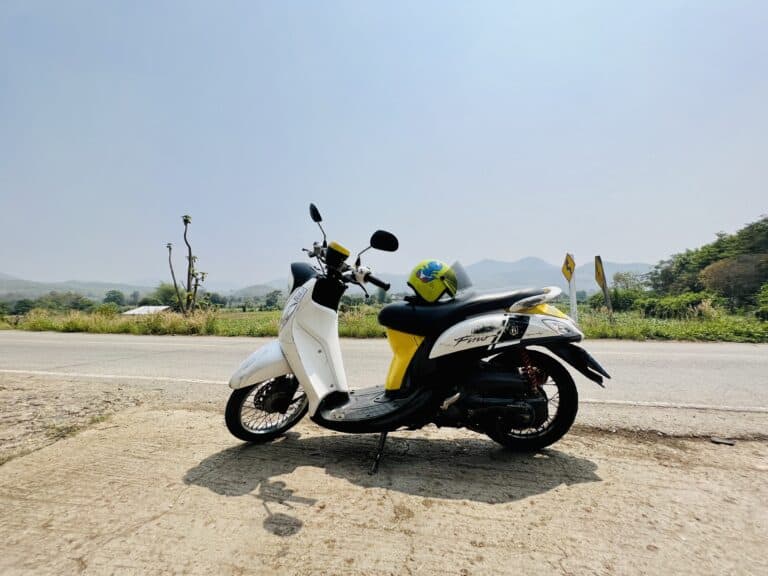
Motorbike: The right way to do it. Semi-auto (like a Honda Wave) rents for $5–8 USD per day. Manual (Honda XR or similar) for $8–12 USD per day. You need a basic level of riding competence. Da Nang traffic is busy but not chaotic compared to Hanoi or HCMC.
Check the bike before you take it. Photos of any existing damage. Make sure the brakes work. Fuel costs almost nothing.
If you are not comfortable on a motorbike, do not rent one here.
If you are comfortable, but you are not properly licensed, you can rent a low power electric scooter or 50cc. If you ride any larger without a proper license, your travel insurance is invalid and you will be liable for all accidents and damages even if you are not at fault.
Grab: Reliable, app-based, priced fairly. Good for airport runs and late nights when you don’t want to ride. Also has Grab Food for delivery.
Xanh SM: This is currently my little secret. New electric vehicle taxi service by Vinfast. Cheaper than grab in most cases. I can book a ride and tip the driver and still pay less than a Grab ride.
Taxi: Vinasun and Mai Linh are the legitimate metered companies. Avoid unmarked taxis at tourist spots.
Bicycle: Rentable for around $2–3 USD per day. Good for beach cruising but you won’t get to Son Tra or the pass on one. Or maybe you will
I’ve walked from Hai Chau to Hoa Xuan, An Thuong, and to Son Tra Peninsula in a day so if you’re a walker, it’s totally doable.
Best Time to Visit Da Nang
Best time: February through May.
The weather in Da Nang follows a distinct seasonal pattern driven by Vietnam’s monsoon cycle.
- Feb–May: Dry season. Warm (25–32°C), low humidity, minimal rain. Best for beaches, day trips, and surfing the tail end of swell season. Least crowded before the summer peak.
- Jun–Aug: Hot and humid. Peak domestic tourism. Vietnamese families from Hanoi and HCMC hit the beach hard. Water is calm and warm. Accommodation prices spike.
- Sep–Nov: Typhoon season. Heavy rain likely. Flooding can disrupt travel. Some years are fine; some years are brutal. Not the ideal time to visit if you have flexibility.
- Dec–Jan: Cooler (20–24°C), quieter, cheaper. Northeast swells arrive and My Khe picks up surf. A good time to come if you’re after waves and fewer crowds. Can be overcast.
Da Nang doesn’t have a bad season the way some destinations do. Even the wet months can have stretches of good weather. Just don’t plan a beach trip around September to December without a backup plan.
Da Nang vs Hoi An: Which Should You Visit?
How far is Da Nang from Hoi An? Da Nang is 30km from Hoi An, about 45 minutes by car or motorbike.
They’re close enough to do both in a single trip without backtracking. Most people base one and day-trip to the other. I’d personally stay a night or two in Hoi An.
A very touristy riverwalk with a lot of Koreans, but quite a beautiful area. It feels like Vietnam’s version of the Gion area in Kyoto for me.
The honest comparison:
Da Nang: Beach city, active, practical. Better for surfers, motorcyclists, digital nomads, and people who want a base with real infrastructure. Cheaper. More local feel.
Hoi An: Historic, atmospheric, walkable. Better for slow travel, culture, and photography. The lantern-lit old town is genuinely beautiful and worth at least two nights. More expensive. More tourist-saturated.
If you’re here for a week or less, spend 3–4 nights in Da Nang and take a day trip (or overnight) to Hoi An. The motorbike ride between them along the coast road is part of the experience. [→ Full Da Nang vs Hoi An comparison here.]
Where to Stay in Da Nang
The city breaks into a few zones for accommodation:
My Khe Beach strip: Best for beach access. Most guesthouses and mid-range hotels are here. Budget guesthouses run $10–20 USD per night. Mid-range $25–50 USD.
Han River / City Centre: More local feel, easier access to markets and street food. Slightly cheaper. Good if you have a motorbike and don’t need to walk to the beach.
Son Tra Peninsula: Quieter, more resort-focused. Not practical without a vehicle. Nice residential neighborhoods if you live longer term.
Budget pick: Small guesthouses behind the beach strip. Look for fan rooms or rooms without sea views to cut costs significantly.
Mid-range: The strip has solid options in the $30–50 range with pools and breakfast included.
Splurge: Large resort hotels line the northern beach. Skip the branded ones. The markup isn’t worth it when a $35 guesthouse gives you the same beach access. [→ Full Da Nang where to stay guide coming soon.]
Book through [Booking.com] for the most options at the budget and mid-range levels.
Da Nang Travel Tips (Practical Info)
Is Da Nang safe for tourists? Yes, it’s one of the safest cities in Vietnam. Petty theft exists such as helmets being taken, but is not common. Standard precautions apply: don’t flash expensive gear, use a money belt in markets. Personally, it’s as safe as Japan.
Currency: Vietnamese Dong (VND). $1 USD = ~25,000 VND. ATMs are everywhere. Withdraw in large amounts to minimise fees. Credit cards accepted at larger restaurants and hotels, cash everywhere else.
SIM card: Buy at the airport (Viettel or Vinaphone) or any phone shop in the city. A tourist SIM with 20–60GB data costs 100,000–200,000 VND ($4–8 USD) for 30 days. The data is fast. 4G & 5G coverage across the city is solid.
Language: Very little English outside tourist areas. A few Vietnamese phrases go a long way. Google Translate camera function is your best tool at markets and local restaurants. The aunties get a nice smile when I say “Ngon” (tasty).
Scams: The main ones are motorbike taxis at the airport quoting fixed non-metered prices (use Grab instead) and overpriced tours sold through accommodation. Book tours directly or through a reputable online provider. You’ll get overpriced in markets, but that’s just bargain culture.
Motorbike rules: You technically need a Vietnamese driving licence or an International Driving Permit that covers motorbikes. In practice, tourists ride without one constantly. Know the risk if something goes wrong.
Digital nomad angle: Is Da Nang good for digital nomads? Yes, genuinely. Fast internet is standard (most cafes have 50–300Mbps), co-working spaces are scattered around the city, and the cost of living is low. You can live alright here on $700–1000 USD per month including accommodation, food, and a motorbike rental. [→ Full Da Nang cost of living breakdown here.]
The Bottom Line
Da Nang is the kind of city that grows on you. It doesn’t hit you over the head with attractions. It’s functional, affordable, and genuinely enjoyable to live in.
Spend a few days here, get on a motorbike, eat bun cha ca every morning, and go watch the Dragon Bridge breathe fire on Saturday night. Then ride south to Hoi An and compare.
Most people who plan three days end up staying longer. That’s the sign of a place that works.
Planning a longer stay? Read the [Da Nang cost of living guide] for monthly budget breakdowns, or check the [SE Asia budget travel guide] if you’re planning the wider trip.
Subscribe to the Barefoot Surfer email list for route guides, budget breakdowns, and surf reports from Central Vietnam.