Every “things to do in Da Nang” list sells you the same three photos: the giant golden bridge, the cable car, the dragon that breathes fire.
This guide is the honest version of that list. I live in Da Nang now, and I am going to tell you which Da Nang attractions actually earn a day of your Vietnam trip, which ones are a quick stop, and which one is mostly an expensive photo. By the end you will know how Da Nang fits into a central Vietnam itinerary, and whether it deserves a slot at all.
Here is what made it click for me. I first passed through here in 2023, eight months into backpacking Asia, scouting surf spots. I came back this year to live, and one night near the end of April, in my room, it landed: the thing that makes Da Nang special is not on any attractions list.
It is a full-size city sitting on a beach you can actually surf. That combination is genuinely rare almost anywhere in the world. You usually get one or the other. A real city with restaurants you could rotate through for months, where you still bump into the same faces in your own neighborhood, and a surf break out front.
Bali had it. Parts of Morocco have it. Those places get found by a few surfers, word spreads, regular travelers follow, and then they blow up. Da Nang feels like it is somewhere on that curve right now.
One honesty note, because it is the whole point of this site. I have been based here only since this spring, and there are two famous sights, My Son and Ba Na Hills, I have not made it to yet. I will tell you exactly where that line is. Everywhere else, this is lived or verified.

Should Da Nang Even Be On Your Vietnam Itinerary?
Here is the thing nobody says up front: Da Nang is a great base and a so-so destination. It is a clean, easy, modern beach city with a long stretch of sand, good coffee, cheap flights, and Hoi An and the central Vietnam sights all within an hour or two. What it does not have is a dense historic core you wander for days. If you are picturing the old-town magic of Hoi An or the imperial weight of Hue, Da Nang is not that. It is the comfortable, well-connected city you sleep in while you go see those things.
What it does have is balance. It is big enough to feel like an actual city, where you can see somewhere new every day and never eat at the same place twice, but small enough that you start recognizing people in your local area. City life and neighborhood life at once, on a surfable beach. That is the kind of place that suits a traveler who wants a real base with a pulse, not a resort strip and not a museum town.
Is Da Nang worth visiting for a first-time trip to Vietnam? Yes, but mostly as a base rather than a standalone destination. Da Nang gives you a beach, an international airport, and easy day trips to Hoi An, Hue, and the Marble Mountains, which makes it an efficient hub for central Vietnam. If your trip is short and you want dense culture or old-town atmosphere, you can sleep in Hoi An instead and treat Da Nang as a stopover.
How many days should I spend in Da Nang? Two to three days is the sweet spot for most travelers. One full day covers the city’s own sights (Marble Mountains, Son Tra Peninsula, the riverfront and the beach), and one or two more let you day-trip to Hoi An, Hue, or My Son without rushing. If beach time is a priority, add a day. There is no real reason to give Da Nang more than four.
If you are still building the wider trip, the Vietnam leg of a Southeast Asia route lays out how central Vietnam connects to the rest of the country, and the full Da Nang travel guide goes deeper on neighborhoods and where to stay.
Da Nang’s Most Famous Spots: Honest Verdicts
Most guides list these with zero judgment, as if you have infinite days. You do not. So here is each headline sight with a clear verdict and what it actually costs you in time and money.
What are the top 3 attractions in Da Nang? For most travelers the three that earn their time are the Marble Mountains (caves, pagodas, and coastal views in one compact stop), the Son Tra Peninsula and Lady Buddha statue (free, green, and the best views over the city), and My Khe Beach itself. Ba Na Hills and the Golden Bridge are the most marketed attraction, but as you will see below, “most famous” is not the same as “most worth it.”
My Son Sanctuary: Worth the Drive?
Straight up: I have not made the My Son trip myself yet, it is on my list. So this section is the honest read from the verified logistics and the history, not an I-stood-in-the-ruins account. When I go, I will update it with the real thing.
My Son is a cluster of ruined Hindu brick temples built by the Champa kingdom between roughly the 4th and 13th centuries, set in a jungle valley. It is a UNESCO World Heritage site and the most important Cham religious site in Vietnam. Entry is 150,000 VND (about $6) for foreign adults, which includes the electric shuttle from the gate to the temple area. It is open daily from around 6:00am, and the site sits roughly 40 to 70 km southwest of Da Nang, about a 1 to 1.5 hour drive each way.
The honest framing: this is a half-day commitment for ruins that are real and atmospheric but heavily damaged. Much of the complex was destroyed by American bombing during the war and has been partly restored, and you can see the seams where old brick meets new. If you have seen Angkor or Bagan, temper your expectations. If you have not, and you care about history, the setting in the valley under the peaks does a lot of the work. Go early. By 9am the open ground bakes and there is almost no shade. The free Apsara dance performances run at set times in the morning and are included with your ticket.
Practical call: worth it for history-minded travelers who do not mind a half-day round trip, and skippable if your days are precious and ruins are not your thing. Going independently in the afternoon means thinner crowds, since the tour buses hit it in the morning.
Marble Mountains: A Quick Stop or a Day Trip?
Marble Mountains, or Ngu Hanh Son, is a cluster of five limestone and marble hills about 8 to 11 km south of the city center on the road toward Hoi An. The main hill, Thuy Son, holds caves, pagodas, and viewpoints over the coast. This is the rare central Da Nang sight that delivers a lot in a small footprint.
Entry to Thuy Son is 40,000 VND (about $1.60). The elevator up is 15,000 VND one way or 30,000 VND return, and the alternative is climbing roughly 150 stone steps. The Am Phu (Hell) Cave is a separate 20,000 VND and is the most dramatic of the caves, with carved hell-scene tableaux. It is open daily, roughly 7:00am to 5:30pm.
Verdict: a quick stop, not a day trip. Budget 1.5 to 2.5 hours. Take the elevator up to save your legs for the caves, then walk down. Prioritize Huyen Khong Cave, Am Phu Cave, the Linh Ung Pagoda courtyard, and the viewpoints. Wear real shoes, the paths are uneven and slick, and bring water because it gets hot fast. This pairs neatly with a Hoi An day since it is right on the way.
Dragon Bridge and the Han River Night Market: A Fun Evening?
The Dragon Bridge is a six-lane bridge shaped like a golden dragon over the Han River, and on weekend nights it breathes real fire and then sprays water, typically around 9pm on Saturday and Sunday. It is free, it is a spectacle for about fifteen minutes, and it is genuinely fun the first time. The nearby riverfront and night market give you somewhere to walk, eat, and people-watch after.
Honest read: this is a one-evening, no-cost bit of fun, not a reason to structure your trip. Show up a bit before the show on a weekend, stand on the east bank for the best angle, watch the fire, eat something at the market, and call it a night. If you are only in town midweek, you miss the fire show, and the bridge is just a bridge. The night market itself is fine, not essential, and aimed at tourists, so keep your expectations at “pleasant walk” rather than “great food.”

Ba Na Hills and the Golden Bridge: The Instagram Trap?
Same honesty flag as My Son: I have not personally gone up to Ba Na Hills yet. But what it is is not really in dispute, so here is the straight read.
Ba Na Hills is a French-themed hilltop resort and amusement complex at 1,487 m elevation, reached by a record-setting cable car, and home to the Golden Bridge, the one held up by two giant stone hands that you have seen a thousand times online. A foreign adult ticket runs roughly 950,000 to 1,000,000 VND (about $37 to $39) and includes the round-trip cable car, the Golden Bridge, the French Village, and the Fantasy Park rides. It is generally open from around 8:00am.
The honest verdict, and it is the whole reason this section exists: Ba Na Hills is a heavily commercialized theme park, and the Golden Bridge is one viewpoint inside it that is almost always crowded. The cable car ride and the mountain air are legitimately nice. The French Village is a manufactured European stage set. None of it is “the real Vietnam,” and the photos you have seen are shot at angles that crop out the crowds. For a couple or a family who enjoy theme parks, it can be a fun, cool-weather day. For a traveler chasing something special to their trip, it is the definition of paying a premium for the same photo everyone else brings home.
Is Ba Na Hills and the Golden Bridge worth the cost and time? It depends what you want. It is a full day and about $38 a head, and you are buying a polished theme-park experience with a famous photo op, not a cultural or natural sight. If you love amusement parks or are traveling with kids, it can be worth it. If you came to Vietnam for something real and unrepeatable, your day is better spent on the coast, in Hoi An, or at the Marble Mountains. Go early to beat the worst of the crowds and the afternoon mist if you do go.
But to be fair, there are better amusements parks in Vietnam if you’re an adrenaline junkie. But, for a family trip, this could be the perfect destination.
What Else to Do in Da Nang: Beyond the Tourist Trail
This is where Da Nang quietly earns its keep. The famous list is thin, but the everyday city is genuinely good: the food, the long beach, the Son Tra Peninsula with the Lady Buddha statue and the monkeys, the coffee culture. This is the part of a trip that ends up feeling like yours instead of the carousel everyone else posts.
Where to Eat Local: Your Best Meals in Da Nang
I do not find good food on Google Maps, Instagram, or TikTok. I find it the way Anthony Bourdain did. Boots on the ground. You walk around, you look for locals, you look for local pricing, and you trust your eyes.
In Vietnam there is a dead-simple tell, and it almost never fails. The place either has low plastic stools and tables short enough that your knees go over the top, or big tall stainless-steel tables with stools. If it has one of those and it is full of locals, sit down. And here is the part nobody tells you: some of my favorite meals here were not at busy spots at all. Just a local auntie cooking, maybe one other person eating, and the food looking good enough to risk it. It usually is.
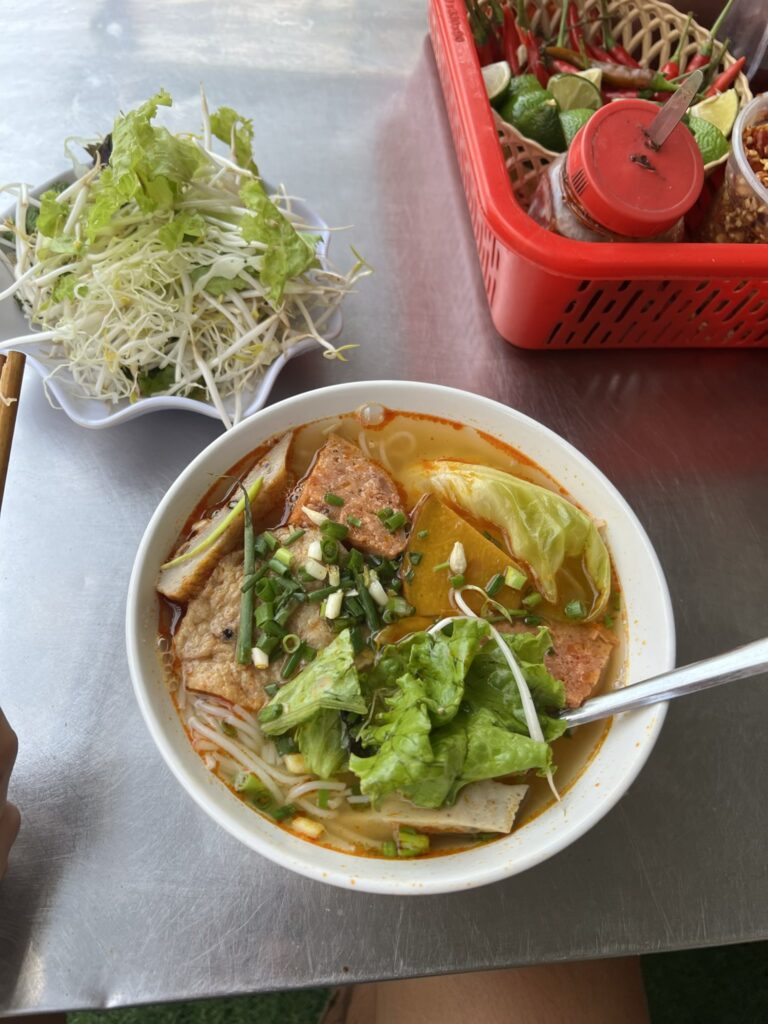
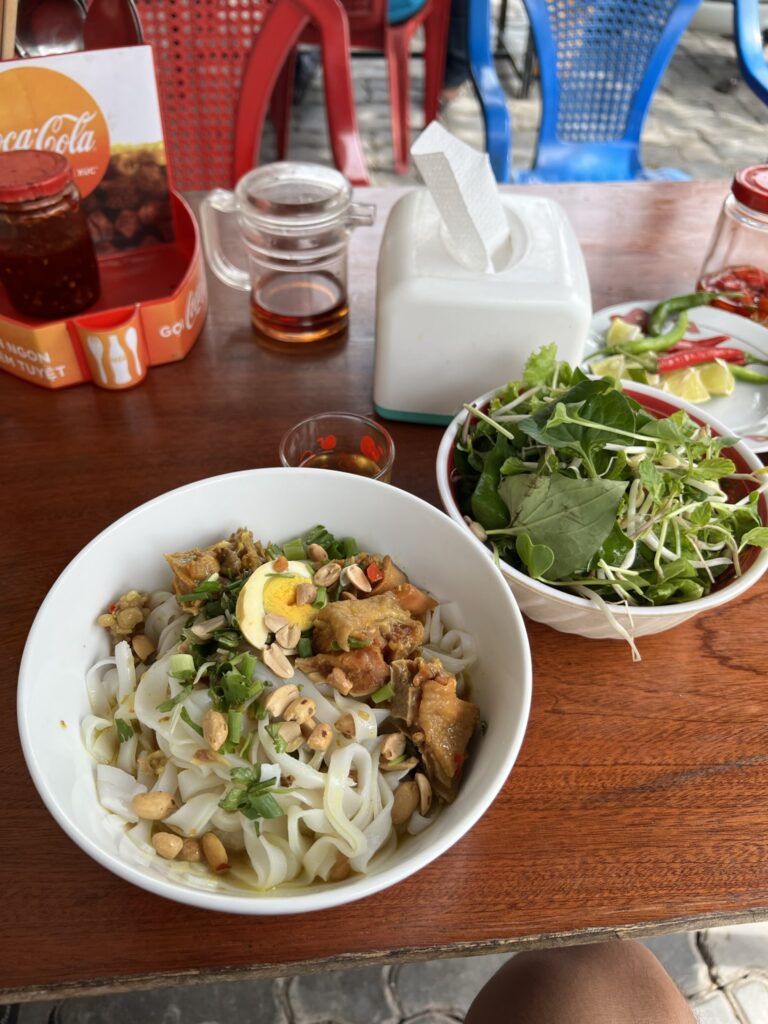
The dishes to chase are the regional ones: mì quảng (turmeric-yellow noodles with a little broth, herbs, and pork or shrimp, the signature dish of this region), bánh xèo (crispy savory pancakes you wrap in rice paper and greens), bún chả cá (fish-cake noodle soup), and the seafood on the My Khe side in the evenings. A full local meal runs a few dollars, not a few tens of dollars. The tourist-strip restaurants are almost always the worst value in the city.
On the thing everyone worries about: I have never had a food safety issue in Vietnam, and I have eaten at a lot of plastic-stool aunties. It is cleaner than you think. If you are still nervous, go work a shift in a kitchen in your own country and watch what really happens behind the pass. I worked in kitchens in Japan for a few years. Trust me, the bar in your home town is lower than you imagine.
The Best Beaches (That Aren’t Packed)
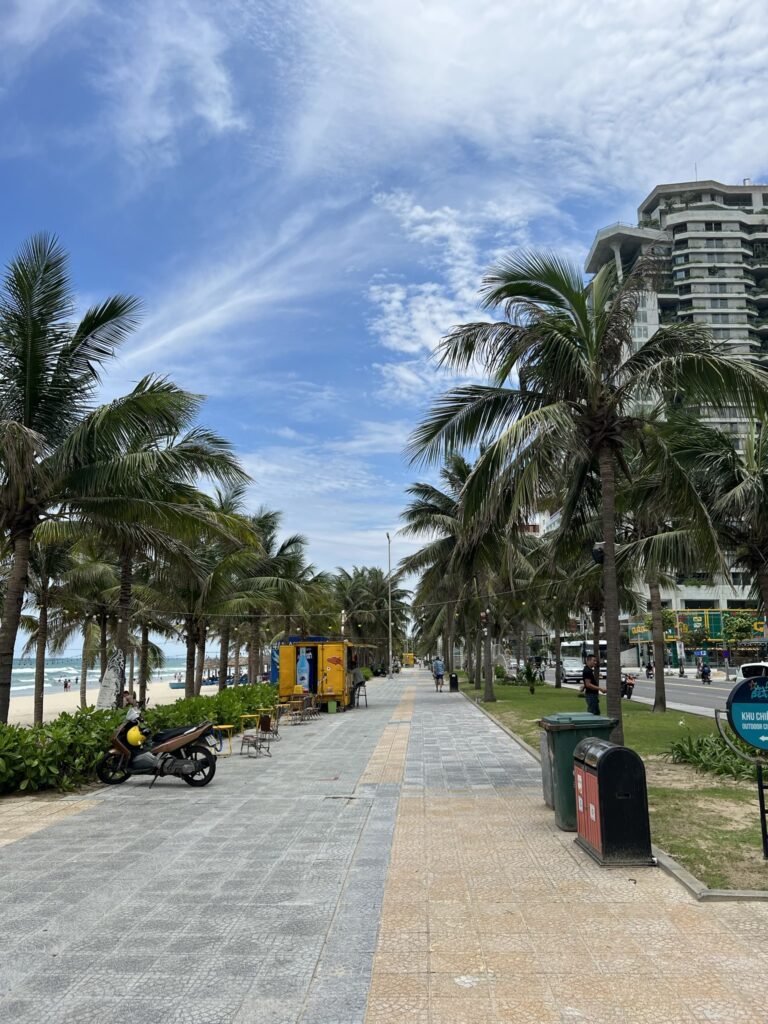
The My Khe promenade, walking south toward My An, is the prettiest beach walk in the city. Wide sidewalks, real greenery and trees, and no trash. It is the postcard stretch, which also means the central part by the resorts is the busiest. Two easy fixes. Walk north toward the Son Tra Peninsula for quieter, more peaceful sand. Or head south, to the public beach accesses tucked around the private resorts, where you get the same great sand and water without the crowds, just without the manicured beachwalk. Your call: polished and busy, or plain and empty.
One safety note that is real. From roughly September through December the sea turns rough, and the city flies red flags during the worst of it. Swimming is genuinely unsafe then. Respect the flags.
On surf, since it is part of why I ended up here: Da Nang is viable, not a destination. During the winter season it gets swells that honestly remind me of Florida. It is never going to be Indonesia or Bali. But it is real, unlike most of Thailand or Malaysia where only very specific pockets work at all. If you want the actual wave breakdown, that is its own thing: see the Da Nang surf guide.
Practicalities for Your Da Nang Trip
The reassuring part: Da Nang is one of the easiest cities in Vietnam to handle as an independent traveler. Modern, walkable in parts, app-based transport everywhere, and used to foreigners.
Getting Around Da Nang: Best Transport Options
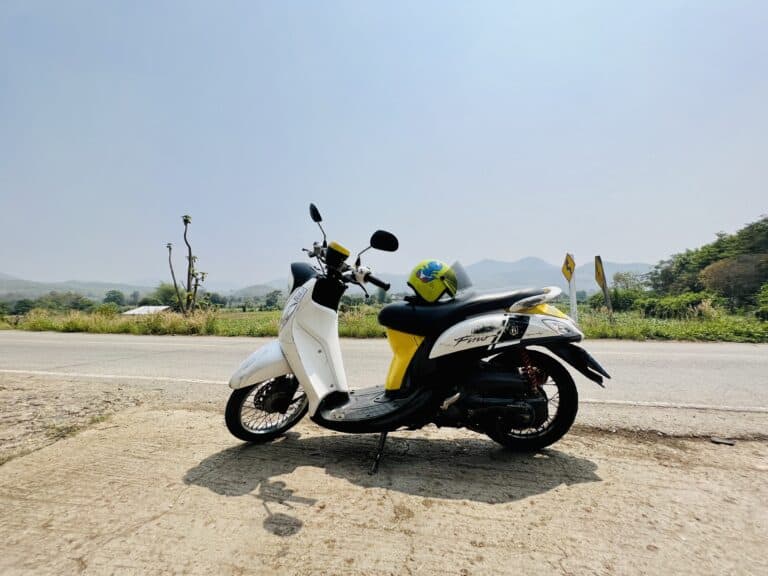
Use Grab. It is the ride-hailing app everyone here uses, it shows you the fixed price before you book, and it kills the single most common tourist headache, which is haggling or getting overcharged by a taxi who takes the long way. Grab does both cars and motorbikes. The motorbike option is cheap and fast for short hops if you are comfortable on the back of a bike. Around the flat central city, short Grab car rides are usually only a couple of dollars, and a motorbike Grab even less. Walking works along the riverfront and the beach. Renting your own motorbike is common, but only do it if you actually know how to ride, in closed shoes, with travel insurance that covers it. Sandals on a scooter is how people come home with no skin on one foot.
Best Time to Visit Da Nang (and What to Avoid)
What is the best time of year to visit Da Nang? The best window is February to May, when the weather is warm and dry, humidity is lower, and the sea is calm. June to August is hot, up into the high 30s Celsius, and busy with domestic beach crowds, plus the Da Nang fireworks festival in early summer. Avoid September to November, the peak of the rainy and typhoon season, when heavy storms, flooding, and rough seas can wipe out the outdoor parts of your trip.
December to February is cooler, in the high teens to low 20s Celsius, pleasant for sightseeing but on the cool side for swimming. If your trip is built around the beach, aim for late spring or summer. If it is built around sightseeing and you want fewer crowds and lower prices, the shoulder around February and March is the honest sweet spot.
One more practical thing that catches Americans out. US citizens need a visa for Vietnam. The simplest route is the 90-day e-visa applied for online ahead of time, which costs $25 for single entry or $50 for multiple entry. Apply two to four weeks before you fly through the official government portal, enter and exit on the same passport, and print your approval. For a normal trip the single-entry 90-day e-visa is plenty.
Da Nang vs. Hoi An vs. Hue: Which Fits Your Trip?
This is the decision most people actually need help with, because these three cities sit within an hour or two of each other and you are choosing where to sleep, not just what to see.
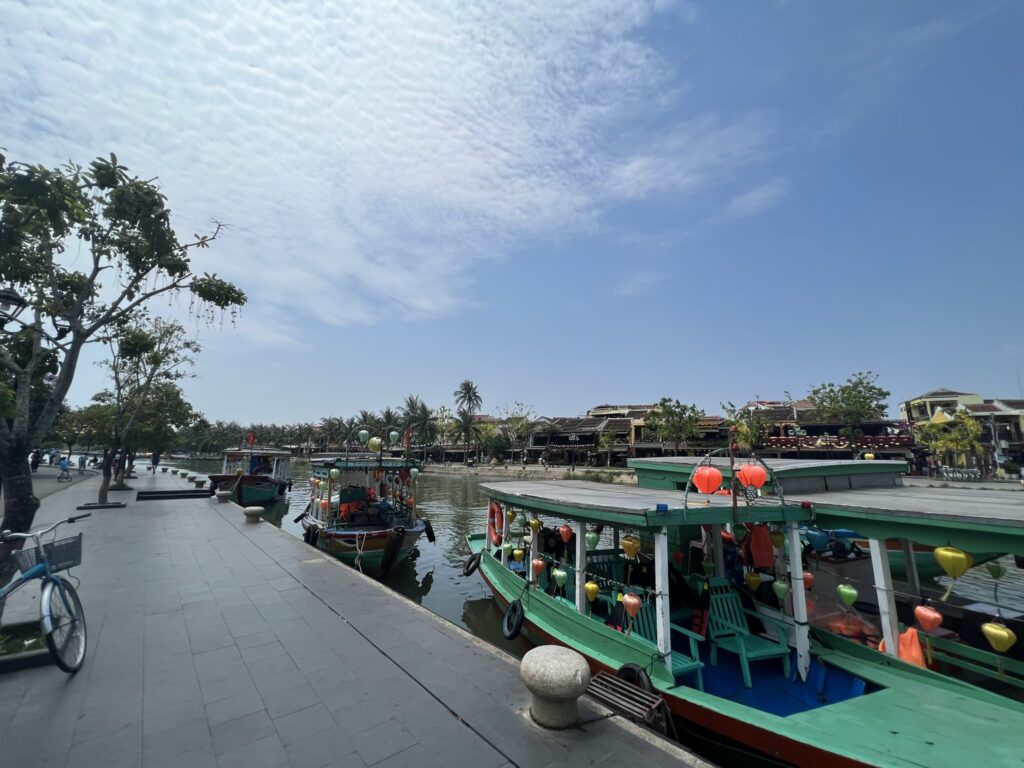
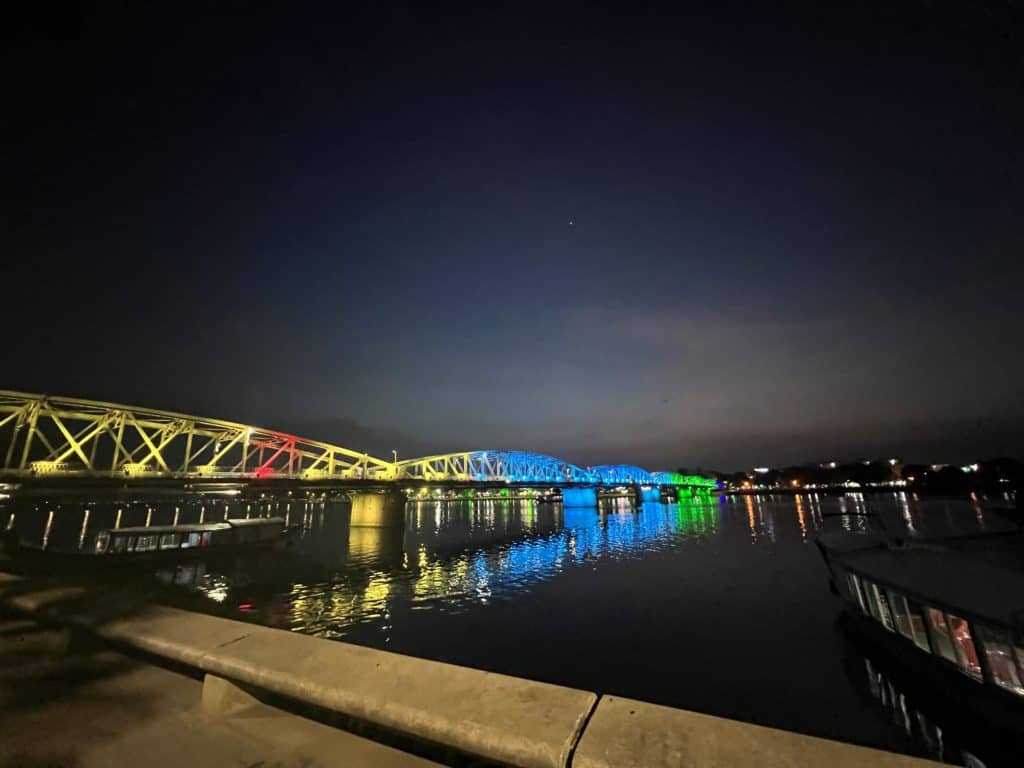
Da Nang is the modern, comfortable base: beach, airport, good food, easy transport, but light on old-town character. Hoi An, about 45 minutes south, is the historic lantern-lit trading town, the most atmospheric of the three and the one most people fall for, though it is also the most touristed. Hue, about two to three hours north over the Hai Van Pass, is the old imperial capital, heavier on history with its citadel and royal tombs, quieter and less polished than the other two.
The honest way to choose: if you want atmosphere and romance, base in Hoi An and treat Da Nang as your arrival airport. If you want a beach and a comfortable hub with day trips, base in Da Nang. If you are a history person, give Hue its own night or two rather than rushing it as a day trip. Most people do Da Nang plus Hoi An together easily, and add Hue if they have the days. For the full side-by-side on the first two, here is the deeper Da Nang vs Hoi An comparison, and if you are weighing the trip up to the old capital, [INTERNAL LINK PLACEHOLDER: How to Travel From Da Nang to Hue].
The Verdict
Da Nang is worth visiting if you go in with the right expectation. It is one of the best bases in central Vietnam, not a once-in-a-lifetime destination in its own right. Use it for the beach, the food, the easy transport, and the day trips, skip or shrink the over-marketed stuff like Ba Na Hills if it is not your kind of thing, and you will get a genuinely good few days out of it. Give it two to three days, pair it with Hoi An, and you have a clean, low-stress central leg for your trip.
And if it does not fit your vision, that is a real answer too. There is no rule that says you have to give Da Nang a day. Better to spend that day somewhere that is unmistakably yours.
If you have decided Da Nang earns a few nights, lock in a base with free cancellation so you can hold a good spot now and still change your mind later: [BOOKING.COM AFFILIATE LINK]. No pressure, that is the point of free cancellation. Book the room, keep planning, and adjust if your itinerary shifts.