The country that surprised me most in eight months of travel is also the one almost nobody I met had actually planned to visit.
Laos sits quietly between Thailand and Vietnam, and most people treat it as a stopover. This is an honest look at whether backpacking Laos deserves real days on your once-in-a-lifetime trip, from someone who spent three weeks there, took the slow boat in, hiked its hills hungover, and crossed out the other side into Vietnam. By the end you’ll know exactly whether Laos is your kind of special, or the one to save for later.
Laos: Is This Your Special Trip, Or A Tourist Trap In Disguise?
Here’s the thing I need to say before you read another word: Laos is my second favorite country in the world, just behind Vietnam. Out of everywhere I went, it’s near the top of the whole list. And I want to be straight with you about why, because part of it was Laos itself, and part of it was where I was in my life when I arrived. You deserve to know which is which before you weigh it against your own trip.
So here’s the honest part. I arrived in Laos about three months into my travels, and I arrived scared I might be dying. Two weeks earlier, in Thailand, a street dog had bitten me. I didn’t think much of it at the time, which was the mistake. By the time I took it seriously and went for the rabies vaccine, the nurse who gave me the first shot told me I’d probably left it too late, that if I’d actually contracted rabies, the vaccine likely wasn’t going to do anything for me. I’m an overthinker on a good day. That sentence lived in my head for weeks. Every mild headache, every bit of discomfort that was almost certainly just a hangover, I’d spiral: this is it, this is the first symptom, I’m going to start foaming at the mouth. I traveled that stretch with an Italian couple who were unbelievably kind to me, who kept pulling me out of my own head when they had no reason to bother. And then I crossed into Laos carrying all of that.
Here’s what Laos did with it. Slowly, that death-at-my-shoulder feeling stopped being pure terror and turned into something closer to gratitude. I wasn’t thinking figuratively that I could die any second, I literally believed it, and it made me notice every small detail of every ordinary day like it might be the last one. I did things and went past my comfort zone in ways I normally wouldn’t have, because what did I have to lose. By the time I’d been there a while, that fear had burned down into one of the most alive, quietly spiritual stretches of my whole life. So when I tell you Laos is near the top of my list, understand that the country earned half of it and my own head handed over the other half. I want you to know that, because your version of Laos won’t come pre-loaded with a rabies scare, and you should weigh the place on its own terms.
What I can tell you plainly is this. I crossed the border from Thailand into Laos and felt the change immediately. The pace dropped. People got more relaxed. The kids in the border town weren’t shy at all, they’d see me walking by and wave and shout “hello, hello” with these huge grins. Thai people are wonderful, don’t get me wrong, but Lao kids had this open, unguarded thing that hit me right away. People say Laos feels like Thailand fifty years ago, before the development, and after a few days I understood exactly what they meant.
Why Laos Might Be The Perfect Fit For Your Travel Style
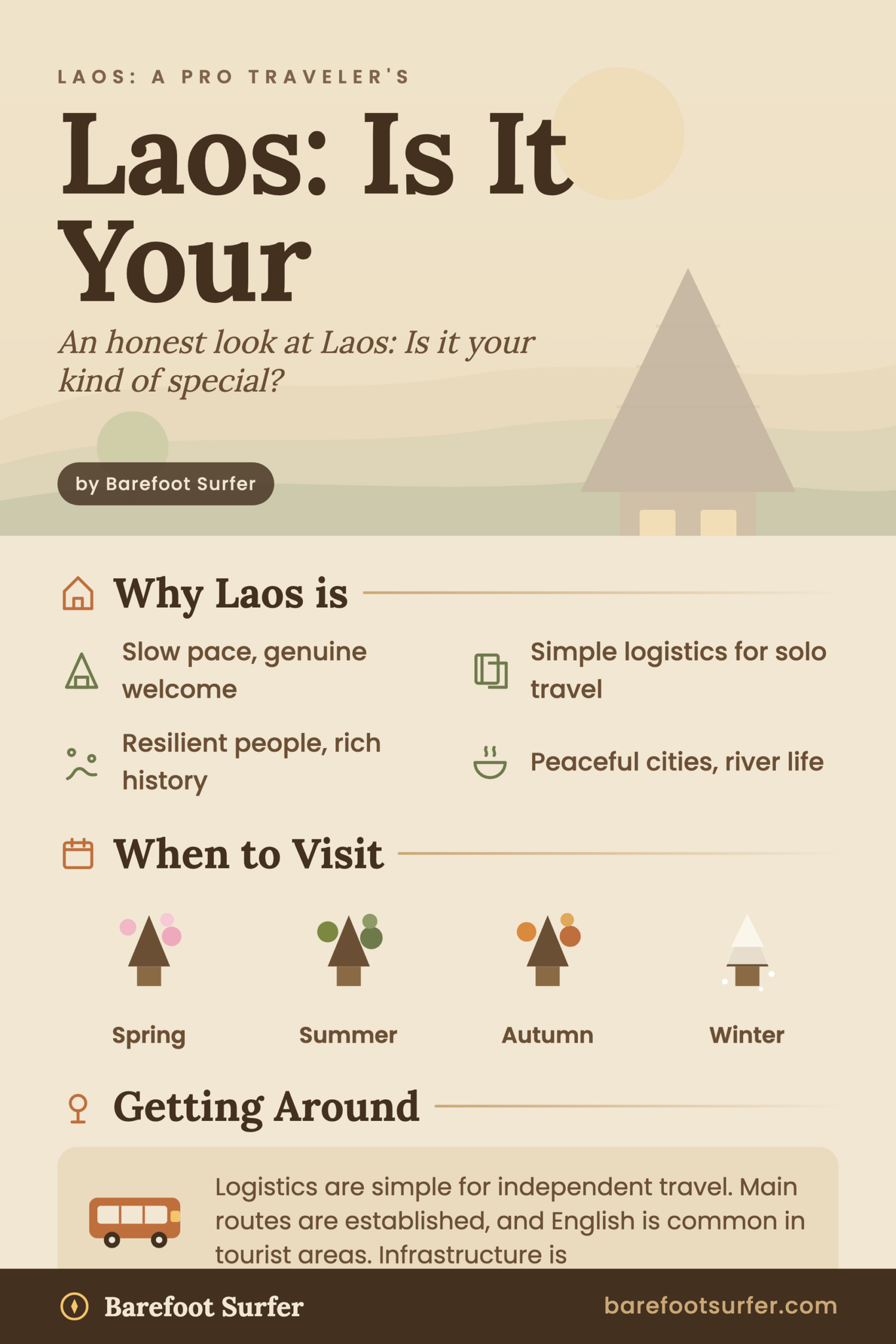
Is Laos a good destination for independent travelers? Yes. Logistics are simple enough to figure out on your own, locals are genuinely welcoming, and the main routes are well established without feeling crowded. English is common in tourist areas. The infrastructure is still developing, but it’s reliable enough to travel independently without a tour.
If your version of a great trip is slowing down, Laos rewards that better than almost anywhere. The whole country runs at a gentler speed. People work hard and then actually enjoy their lives, and you feel it walking down any street. There’s an “it is what it is, we’ll make the most of it” attitude here that I found genuinely moving once I understood the history behind it.
Because the history matters. Laos got the worst deal of anyone in the region. During the Vietnam War era the US dropped an staggering amount of ordnance across the country, and they are still clearing it today. Go hiking somewhere off the main trails and you’ll see warning signs about unexploded bombs in untested areas. That’s not ancient history, that’s now. Laos got set decades behind its neighbors through no fault of its own. And yet the people carry zero visible bitterness about it. They just get on with living well. Seeing that up close changes how you walk through the place.
But Let’s Talk About The Catch: What Laos Is Not (And Why That Matters)
Laos is not for everyone, and I’d rather you know that now than lose three days finding out.
If you want high energy, nightlife on tap, hyper-modern cities, or a country full of polished luxury resorts, Laos will frustrate you. This is not that place. The infrastructure is thinner than Thailand or Vietnam. Some roads are genuinely rough. Choices are fewer. If you measure a trip by how much you pack into a day, Laos will feel slow.
But if what you actually want is a place that still feels human, where a city can be peaceful and a river afternoon can be the whole point, then the “catch” is the entire reason to go. The quietness isn’t a shortcoming here. It’s the product.
What Makes Laos Special: Beyond The Backpacker Basics
I timed my visit for April 2023, which happened to be Pi Mai, the Lao New Year. It was the first one they could celebrate completely unrestricted since COVID, and the whole country turned into a water fight and a street party for days. Some of the warmth I felt was probably that. But even accounting for the celebration, the places themselves held up.
I’ll walk you through the ones worth your time, honestly, including the one I chose to skip.
Luang Prabang: Is It Worth The Hype For Your Style?
Luang Prabang, the old royal capital, is a town I could genuinely picture living in. It’s a proper town, not a village, and yet it stays peaceful in a way that bigger destinations in the region simply are not. The closest comparison I can give you is Chiang Mai in Thailand, except Chiang Mai has become a full tourist and digital nomad hub with everything that brings. Luang Prabang hasn’t. There’s no major international airport dropping planeloads in. It sits in a less-visited country. So it kept its calm.
I liked it enough that I ended up there twice. It’s where I first landed in Laos, and it’s where I came back to after Vang Vieng, which tells you something, I don’t usually double back on a trip like that.
The return time was during Pi Mai, the Lao New Year, and that pushed it into the top three experiences of my entire life, right under being born, and having my first girlfriend, no exaggeration.
Picture festival floats for Miss Lao rolling through the streets, the entire town soaking each other with water for days, and the whole place turning into a party after dark. It was unbelievable. Now, a fair warning: that’s a specific window. If you come during Pi Mai (mid-April) you’re getting the version I got, chaotic and joyful and wet. Come outside it and Luang Prabang is a quieter, gentler town, which for a lot of travelers is actually the better trip. Know which one you’re signing up for.
Worth it either way, but for the right reasons. Come to slow down, wander temple streets, and take the short trip out to the Kuang Si waterfalls, which are the kind of turquoise that doesn’t look real in photos. I’ve written the whole thing up here: Kuang Si Waterfall guide. Don’t come expecting a checklist of blockbuster sights. The town itself is the experience.

Vientiane: Stop Or Skip This Capital City?
I’ll be honest with you in a way most guides won’t: I skipped Vientiane entirely.
I read up on it, weighed it against where I actually wanted to go, and decided the capital wasn’t worth pulling my route toward. I was heading north, and I was saving the south of Laos for a future trip. So I can’t hand you a first-hand walk through Vientiane, and I’m not going to pretend otherwise.
Here’s my honest read for your planning: Vientiane is a legitimate skip if your days are precious and you’re after the parts of Laos that make it special. It’s a functional capital with a few temples and a riverside, but it isn’t the reason anyone falls in love with this country. If it lines up with your entry or exit logistics, a night is plenty. If it doesn’t, don’t force it. Put those days in Luang Prabang or the north.
Vang Vieng: Adventure Hub Or Backpacker Party?
Vang Vieng has a reputation, and the reputation is out of date.
Twenty years ago this small town became infamous for tubing down the river drunk, floating from riverside bar to riverside bar, and a lot of tourists died doing it. The authorities cracked down hard, banned much of it around the early 2010s, and then slowly brought it back under control. The tubing still exists, but it’s a shadow of the old days. You now float past roughly three bars instead of a river lined end to end with them. The town has deliberately pivoted from the party image toward outdoor adventure, and honestly, that’s the better version.
The scenery is the reason to come. You’ve probably seen the famous photo, the one with the little motorbike and the flag parked on a ledge with the whole valley of limestone peaks behind it. It’s as good as it looks. I hiked up to that viewpoint at five in the morning on about two hours of sleep, still half-hungover from going to bed at three. Rough. But the climb earns it, and I mean that literally, it’s not a set of paid concrete steps, it’s a genuine steep trail that takes about an hour. You have to work for the view, which is exactly why it still feels worth it. There’s also a hot air balloon scene here now if that’s your thing.
I’ve got the full breakdown of what to do and skip in my Vang Vieng guide.
For where I went instead of the tourist track, I headed north to Nong Khiaw, a small town on the river that’s beautiful and far less visited. It still has hostels and guesthouses for foreigners, so you’re not roughing it with zero infrastructure, but the pace is far more local. If you want the feeling of Laos without the crowds, this is the kind of place to point yourself toward.
The Mekong River: More Than Just A Boat Ride
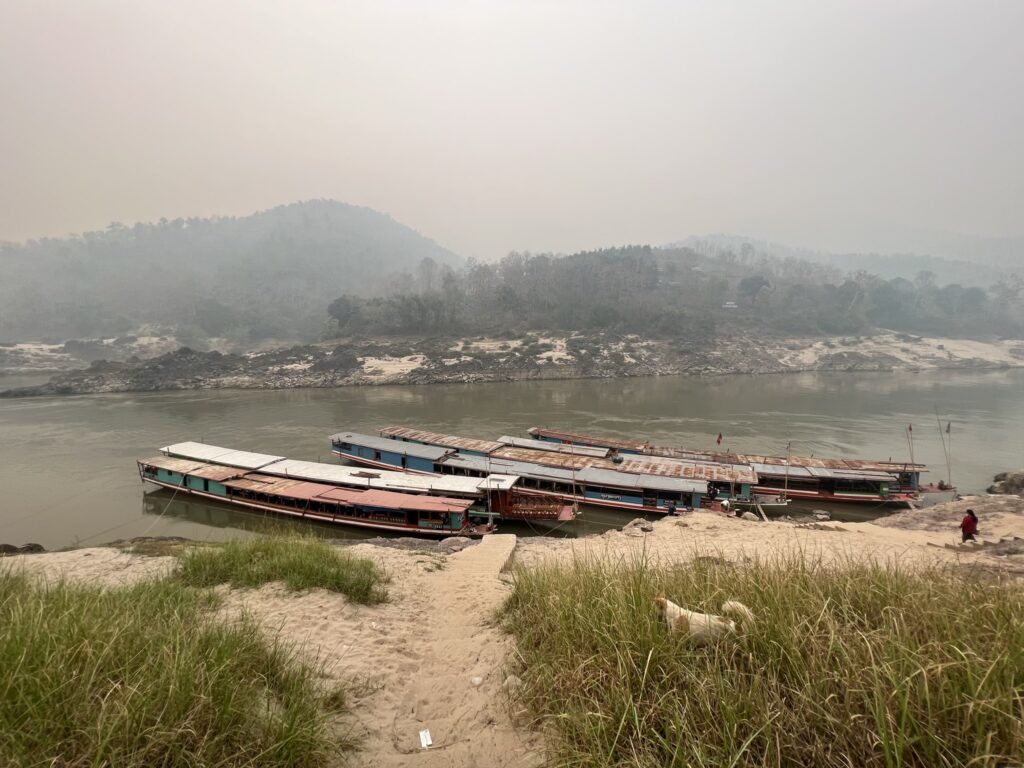
The Mekong slow boat was my first real experience of Laos, and I’d tell you not to skip it.
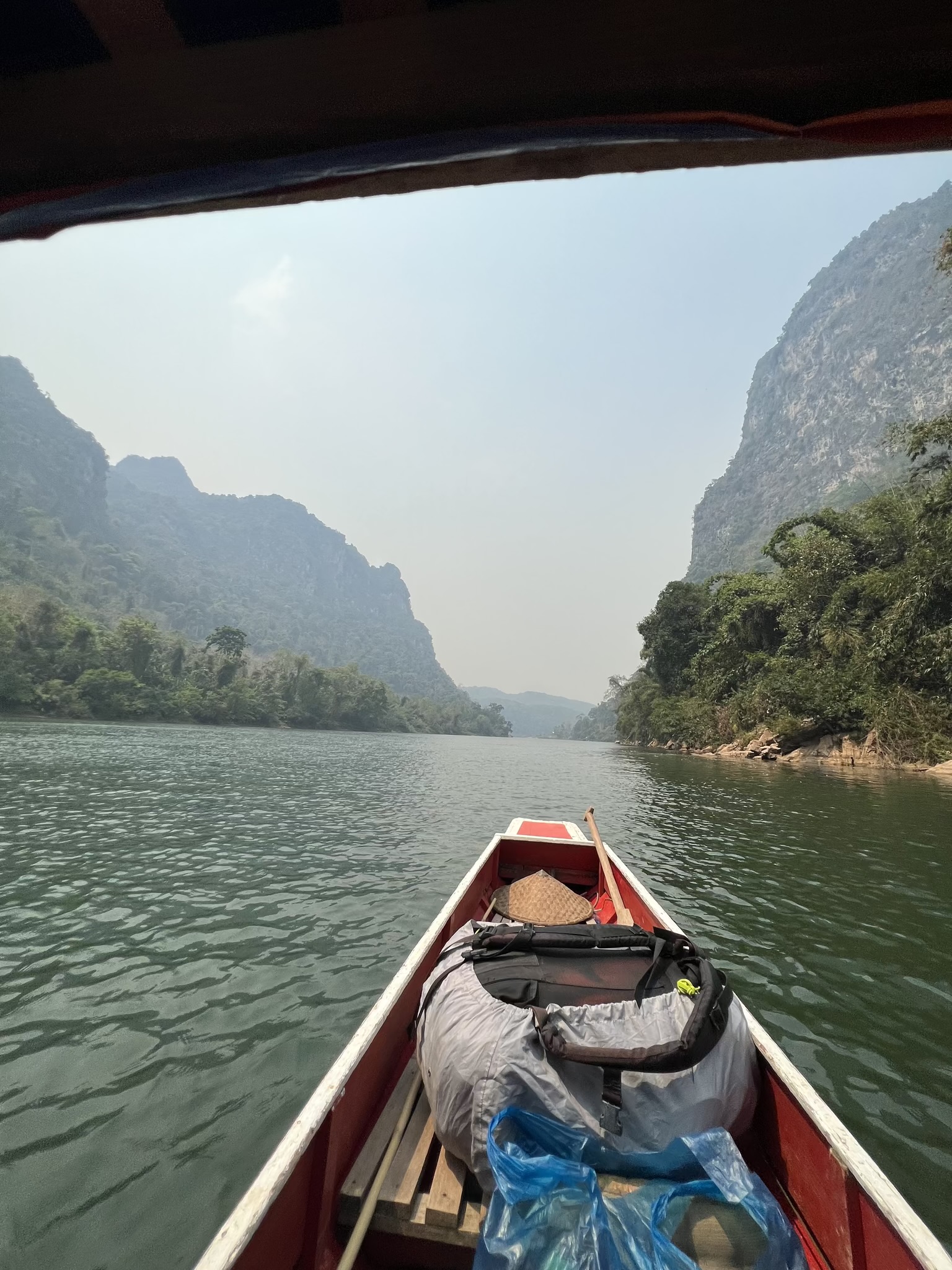
I rolled into the border town of Huay Xai, bought my ticket, and boarded a long wooden boat for the two-day journey downriver. What made it wasn’t just the scenery, though the river winding between green hills is genuinely calming. It was the people. I fell in with a group of Australian and British lads, and we spent those two days on the water together, killing time, sharing food, watching the country drift past. Some of the best friendships on a trip happen when you’re stuck on a boat with nothing to do but talk.
It’s slow, and slow is the point. This is not efficient transport, it’s an experience you happen to travel through. I wrote the whole thing up, from tickets to what the boat is actually like, here: the Laos slow boat guide. If you’ve got the time, do it.
Planning Your Valuable Laos Days: Practical Truths For The Discerning Traveler
Now the logistics, framed for a trip that values your time.
How long should you plan for Laos? For a real feel of the highlights, Luang Prabang, Vang Vieng, and the Mekong, give it 10 to 14 days. That’s enough to move at a comfortable pace without rushing. Seven days is doable but tight. Three weeks lets you go deeper, including the south, which is a genuinely different side of the country.
Getting Around Laos: Your Options For Time-Efficient Travel
What’s the best way to travel between cities in Laos? The new Laos-China Railway is easily the best option for the main north-south corridor. Vientiane to Luang Prabang takes about 2 hours for roughly $16 to $20, versus a punishing 10-hour road trip. Vientiane to Vang Vieng is about an hour. For anywhere the train doesn’t reach, you’re on buses or minivans.
Let me set expectations on the roads. The train is genuinely excellent, it was built in partnership with China and it feels modern, clean, and fast, with proper stations. But the moment you leave the rail line, transport in Laos is nothing spectacular. Even main highways between towns are often unpaved, potholed, or just packed dirt. Riding in a suspension-free sprinter van on leaf springs over that is basically an off-roading adventure. Budget extra time and a strong stomach for anything off the train network. One more honest note: transport in Laos actually costs more than in Vietnam or Thailand. It surprised me too. It’s part of the deal.
Two practical things for the train, because they trip people up. Stations sit several kilometers outside the town centers, so factor in a tuk-tuk on each end. And tickets sell out, so book online in advance rather than showing up hoping for a same-day seat.
Where To Stay: Quality Over Cheapest Beds
I’ll be transparent: I backpacked Laos on a tight budget and stayed in hostels. That was right for me and my trip. It is almost certainly not right for yours, so here’s my honest recommendation for how you should actually do it.
What accommodation should you expect? Laos punches well above its price for comfort. In Luang Prabang especially, you’ll find boutique guesthouses and 3-to-4-star hotels with real local character in the $50 to $150 per night range, often with a pool. Vientiane leans more toward international chains. My advice is to skip the cheapest beds without a second thought, spend a little for a place with good reviews, air conditioning, a private bathroom, and character. In Laos that upgrade costs a fraction of what it would at home, and it’s exactly the kind of thing worth paying for on a trip you’ll only take once.
When you’re ready to lock in a place, I use Booking.com for Laos because free cancellation gives you room to change plans, which you will. If Laos sounds like your kind of special, you can start browsing hotels that fit your taste here: [BOOKING.COM AFFILIATE LINK]. No pressure to commit now, just have it saved for the moment you’re sure.
Visa For Laos: No Surprises For Your Arrival
What’s the visa process for U.S. citizens? Straightforward. You can get a visa on arrival for about $35 to $40 USD at the international airports (Vientiane, Luang Prabang) and major land borders, or apply for an e-visa online in advance at laoevisa.gov.la, which processes in about three business days. You’ll need a passport valid for at least 6 months, a passport photo, and cash for the fee. The visa is good for 30 days and can be extended.
One warning that’s easy to miss and genuinely matters if you’re pairing Laos with Vietnam: the Laos e-visa is NOT valid at most Laos-Vietnam land border crossings. Only one crossing (Dansavanh / Lao Bao) issues visa on arrival for that route. If you’re crossing between the two by land anywhere else, sort your Lao visa at an embassy first, or fly. People get turned away at these borders regularly.
Small personal aside, since it comes up: I hold Japanese citizenship, and Japanese passport holders enter Laos visa-free. If you happen to have a second passport, it’s worth checking which one gives you the easier entry.
Is Laos Safe For Thoughtful Travelers?
Is Laos safe? For the most part, yes. Violent crime against tourists is rare, and it’s a country where solo travelers, including women, consistently report feeling comfortable. The US State Department currently advises exercising increased caution, but the real risks are practical rather than dramatic.
Here’s what to actually watch for. Road accidents are the number one danger, especially on motorbikes on those rough roads, so ride carefully and wear a helmet. There’s petty theft in tourist areas, including bag-snatching from passing motorbikes, so keep your valuables close and never hand over your passport as rental collateral. Stay on marked trails when you hike, because of the unexploded ordnance I mentioned, that danger is real once you leave the marked paths. And skip the “happy” or “special” menu items some places offer, they’re illegal and unpredictable. If you use normal street smarts, Laos is one of the more relaxed countries you’ll travel in. For the wider picture, I go deeper here: is Southeast Asia safe to travel solo.
Laos Or Vietnam? Choosing The Right Southeast Asia Adventure For You
This is the comparison I’m best placed to make, because I backpacked Laos and I now live in Vietnam. And the difference between them is something you feel in your body the second you cross the border.
Leaving Laos and entering Vietnam was an instant, total change, snap of the fingers. I went from that laid-back, relaxed, easy rhythm to big signs and bright colors everywhere, even in the small border town on the Vietnam side. Every building follows the same tall, narrow townhouse style, families stacked right next to each other, and almost every ground floor is a shop or business the family owns or rents out, with everyone living upstairs. People are louder, faster, and everywhere there’s the constant sound of motorbike horns, which is cultural rather than angry, just a quick honk to say “I’m passing,” though the bigger cities are starting to rein it in.
So here’s your honest decision:
- Choose Laos if you want to slow down, if peace and nature and a gentler pace are the point, if you’d rather have fewer, deeper days than a packed itinerary.
- Choose Vietnam if you want energy, incredible food, more to do, and a country that hustles, in a good way, while still holding onto a family-first, enjoy-your-life core. It’s my favorite country in the world, and that’s why.
They’re both wonderful. They’re just wonderful in opposite directions. If your trip is short and you want one, pick based on which of those two feelings you’re actually chasing. If you’re crossing between them, read my Laos to Vietnam border crossing guide first, that transition has some real logistics to it.
The Verdict: Should You Spend Your Days On Laos?
Here’s where I land, no fence-sitting.
Laos is absolutely worth your irreplaceable days if you’re after a slower pace, real culture, and natural beauty away from the tourist frenzy. It’s peaceful in a way that’s getting rare, the people are among the warmest I’ve met anywhere, and it rewards the kind of traveler who wants to feel a place rather than tick it off. It is not the right call if you’re chasing high energy, modern polish, or wall-to-wall luxury. Know which traveler you are, and the decision makes itself.
For me, it was second only to Vietnam out of everywhere I’ve been, and I’m already planning to go back for the south I haven’t seen yet. If that sounds like your kind of special, it probably is.
When you’re ready to start building it, browse places to stay that match your taste here: [BOOKING.COM AFFILIATE LINK].